沙特阿拉伯有意对巴基斯坦稻米领域进行企业化农业投资,通过两国结构化长期安排,确保稳定、可靠的大米供应。
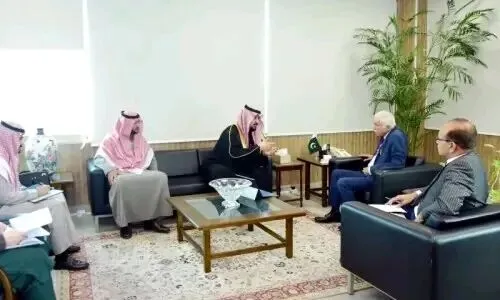
这一议题在周三巴基斯坦商务部长贾姆·卡迈勒·汗与沙特投资部助理部长易卜拉欣·穆巴拉克的会谈中进行了讨论。会议审议并推进了双方在贸易、投资以及区域市场联合参与方面的双边合作。
会后发布的官方公告指出,沙方表示有意在稻米领域开展企业化农业。会议认为,巴基斯坦已符合相关质量标准,对企业化规模种植、机械化、仓储和物流进行投资,将有助于实现对沙特稳定的大米出口。
更广泛而言,双方围绕农业与粮食安全,重点讨论了在大米、饲料(包括苜蓿)、肉类及特定农产品领域的合作。双方还探讨了沙特金融机构支持巴基斯坦与出口相关的农业和基础设施项目的潜在作用,特别是以沙特保障包销安排为基础的项目。
会议还审议了以企业化农业与机械化作为长期解决方案,应对包括棉花在内的作物产能制约问题——棉花单产下降、劳动力成本高企已削弱其竞争力。
卡迈勒先生表示,以出口为导向的投资模式有助于恢复农业产出,同时强化纺织、纱线等下游产业。
会议体现出双方在采取投资驱动、伙伴关系导向的经济合作方式上高度一致。双方均强调,需提升竞争力、扩大产能、强化价值链,以释放巴基斯坦出口潜力,并以可持续、协调的方式应对区域日益增长的需求。
讨论的核心之一是共同开拓区域市场,特别是中亚、非洲和东盟,这些地区被视为增长潜力巨大、合作空间广阔的市场。
双方一致认为,巴沙两国可依托各自优势形成互补伙伴关系:结合巴基斯坦的生产能力与沙特的资本、市场准入和区域联通优势。
人力资源开发成为另一重点合作领域。双方一致认为,医疗、酒店及服务业最紧缺的并非高级专业人才,而是护士、护理人员、技术人员及酒店业中层服务人员。
穆巴拉克先生分享了沙特在职业培训与技能开发方面的经验,并表示愿意将相关培训与就业输出模式在巴基斯坦复制,将系统化培训项目与海外就业机会对接。
双方还讨论了建材及建筑原材料领域的机遇。沙方表示,对石灰石、大理石、骨料等本地稀缺产品存在大量进口需求。双方同意,通过巴方供应商与沙特建材贸易企业的精准对接,可推动私营部门直接合作,尽早取得成果。
双方还就扩大在医药、体育用品、鞋类及轻工制造业的合作交换了意见,认可巴基斯坦不断成长的工业基础,以及通过合资、合同制造、分段生产模式面向区域和全球市场开展合作的空间。
Saudi Arabia has shown interest in investing in corporate farming in Pakistan’s rice sector to ensure a stable, reliable supply of rice through structured, long-term arrangements between the two countries.
The issue came up for discussion in a meeting between Commerce Minister Jam Kamal Khan and Assistant Minister of Investment of Saudi Arabia Ibrahim Al-Mubarak on Wednesday. The meeting reviewed and advanced bilateral cooperation in trade, investment, and joint engagement in regional markets.
An official announcement released after the meeting noted that the Saudi side expressed interest in pursuing corporate farming in the rice sector. It was observed that Pakistan already meets the required quality standards, and that investment in corporate-scale farming, mechanisation, storage, and logistics could support steady rice exports to Saudi Arabia. More broadly, discussions on agriculture and food security focused on cooperation in rice, fodder (including alfalfa), meat, and selected agricultural products. Both sides also examined the potential role of Saudi financing institutions in supporting export-linked agricultural and infrastructure projects in Pakistan, particularly those structured around guaranteed offtake arrangements with Saudi Arabia.
Kingdom keen on investing in corporate farming, long-term rice supply
The meeting also reviewed corporate farming and mechanisation as long-term responses to productivity constraints, including in crops such as cotton, where declining yields and high labour input costs have weakened competitiveness.
Mr Kamal observed that export-oriented investment models could help restore agricultural output while strengthening downstream industries, including textiles and yarn.
The meeting reflected strong alignment on pursuing an investment-driven, partnership-based approach to economic cooperation. Both sides underscored the need to enhance competitiveness, expand production capacity, and strengthen value chains to unlock Pakistan’s export potential and respond to growing regional demand in a sustainable, coordinated manner.
A central focus of the discussions was the joint exploration of regional markets, particularly Central Asia, Africa, and ASEAN, which were identified as high-growth regions offering substantial opportunities for collaboration.
Both sides agreed that, by leveraging their respective strengths, Pakistan and Saudi Arabia can position themselves as complementary partners, combining Pakistan’s production capacity with Saudi Arabia’s capital, market access, and regional connectivity.
Human resource development emerged as another key area of collaboration. Both sides agreed that the most pressing shortages across healthcare, hospitality, and services are concentrated among nurses, caregivers, technicians, and mid-level hospitality staff rather than senior professionals.
Mr Al-Mubarak shared Saudi Arabia’s experience in vocational training and skills development. He conveyed openness to replicating the training to deploy models in Pakistan, linking structured training programs with employment opportunities overseas.
Opportunities in building materials and construction inputs were also discussed, with the Saudi side noting substantial import requirements for products such as limestone, marble, aggregates, and other materials not locally available. It was agreed that focused engagement between Pakistani suppliers and Saudi building material trading companies could deliver early outcomes through direct private-sector matchmaking.
Both sides also exchanged views on expanding cooperation in pharmaceuticals, sports goods, footwear, and light manufacturing, recognising Pakistan’s growing industrial base and the scope for joint ventures, contract manufacturing, and split-production models targeting regional and global markets.

 10个月宝宝每天需要喝多少奶粉?