Plant, Cell & Environment 29 Mar 2026
A Non-Host Pathogen Elicitor Induces Blast Resistance Mediated by OsNAC78-Pir7b Module in Rice
Author
Xie Y, Lai Y, Wu X…Cai Q, Xie H, Zhang J*.
*:Rice Research Institute, Fujian Academy of Agricultural Sciences, Fuzhou, China
Abstract
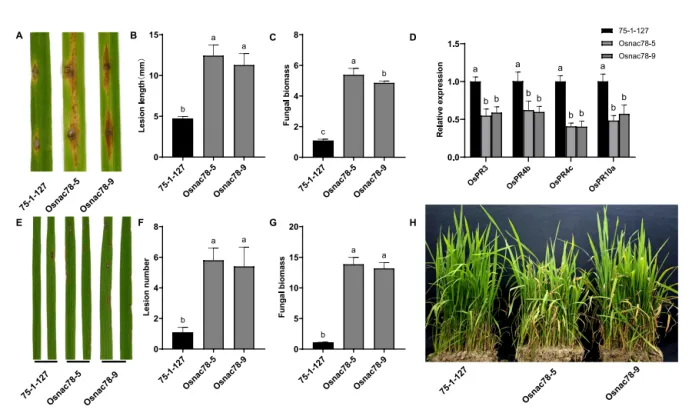
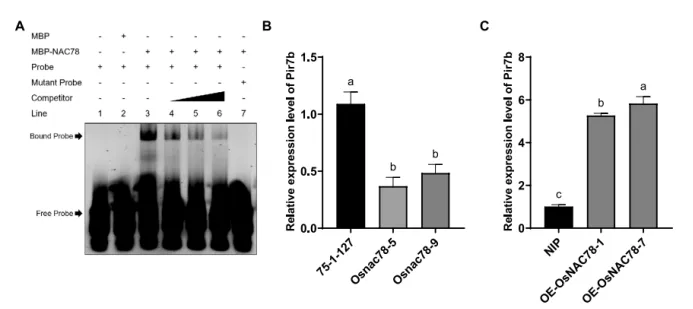
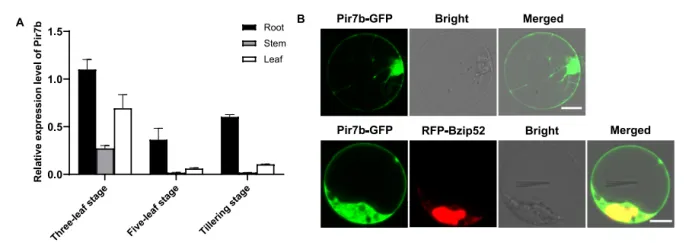
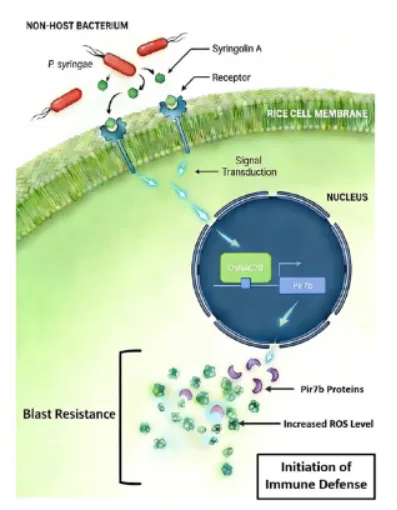
Plants exhibit broad-spectrum and persistent resistance induced by non-host pathogens. Previous studies have found that syringolin A secreted by Pseudomonas syringae pv. Syringae can activate the expression of defense-related gene Pir7b in non-host rice, but the underlying mechanism remains ambiguous. In this study, we found that OsNAC78, a transcription factor upstream of Pir7b, is possible to participate in the immune pathway. First, the OsNAC78 transgenic plants were inoculated with Magnaporthe oryzae, showing that OsNAC78 is a positive regulator for blast resistance. Meanwhile, the transgenic lines overexpressing or knocking out Pir7b were constructed and evaluated for resistance, displaying that Pir7b confers blast resistance. Subsequently, OsNAC78-Pir7b module is activated by enhancing activity of OsNAC78 and Pir7b promoters under the syringolin A treatment. The transcriptional activation of Pir7b is blocked in the absence of OsNAC78, indicating that OsNAC78 is a key regulator of Pir7b expression. Further, it was found that syringolin A can activate the strongest resistance in the wild type, while the weakest in the Osnac78/pir7b mutant, suggesting that syringolin A induces rice immunity through the OsNAC78-Pir7b module. Overall, we discovered that syringolin A secreted by non-host pathogens can induce the expression of the transcription factor OsNAC78 in rice, subsequently upregulate the transcription of the downstream gene Pir7b, and ultimately trigger blast resistance by ROS accumulation. This study reveals how the secretion of non-host pathogen stimulates plant immune system, providing new insights for plant disease control.






 10个月宝宝每天需要喝多少奶粉?