当前位置:首页>农业>蚂蚁种田六千万年:从末日求生到“农业天花板”

蚂蚁种田六千万年:从末日求生到“农业天花板”

  • 2026-02-13 00:40:37
蚂蚁种田六千万年:从末日求生到“农业天花板”

PBS Eons

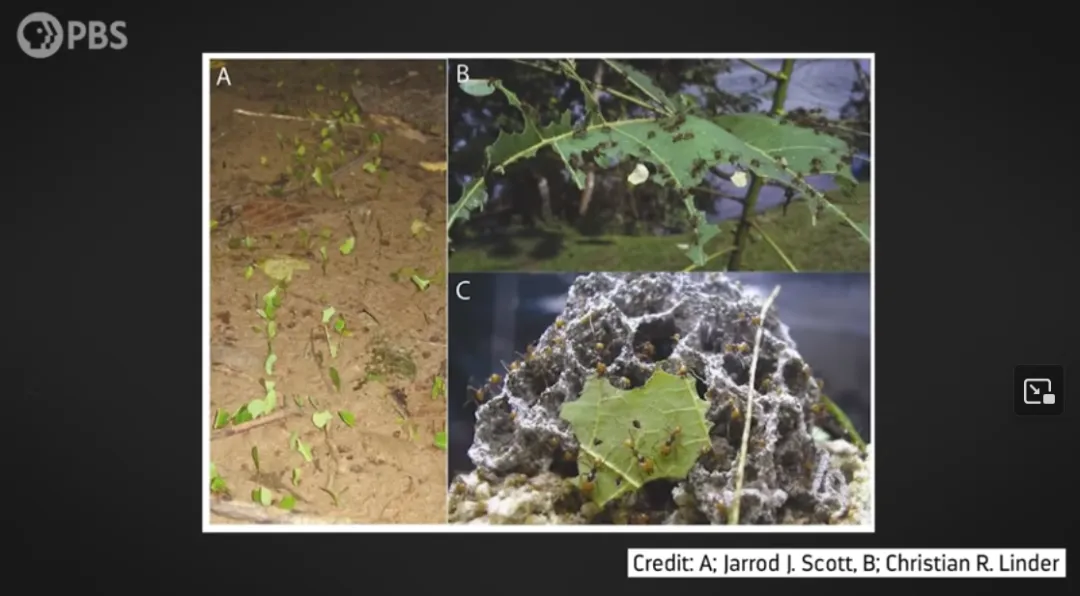
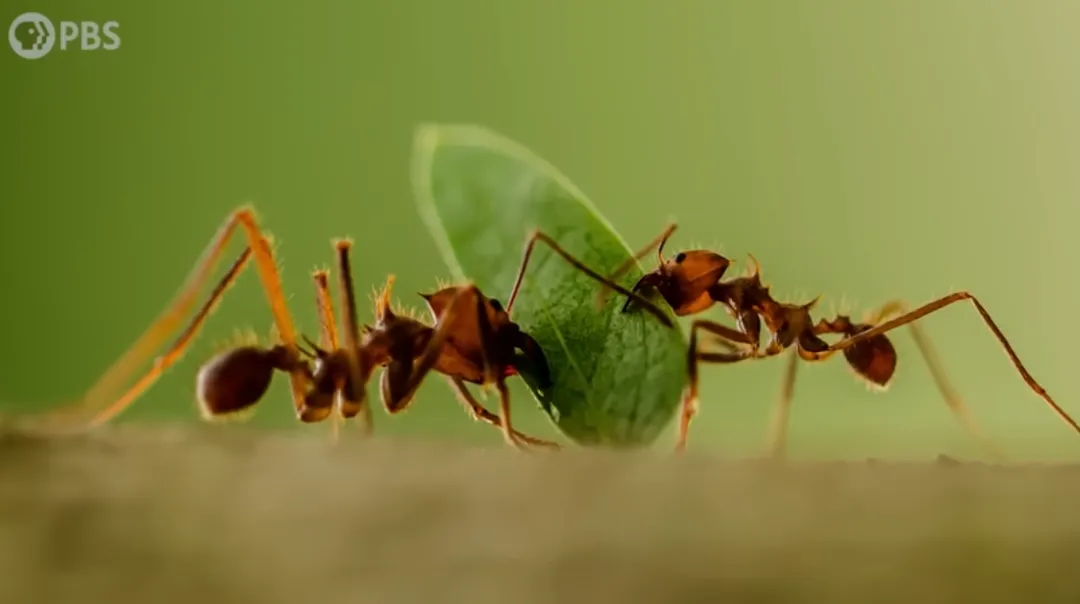
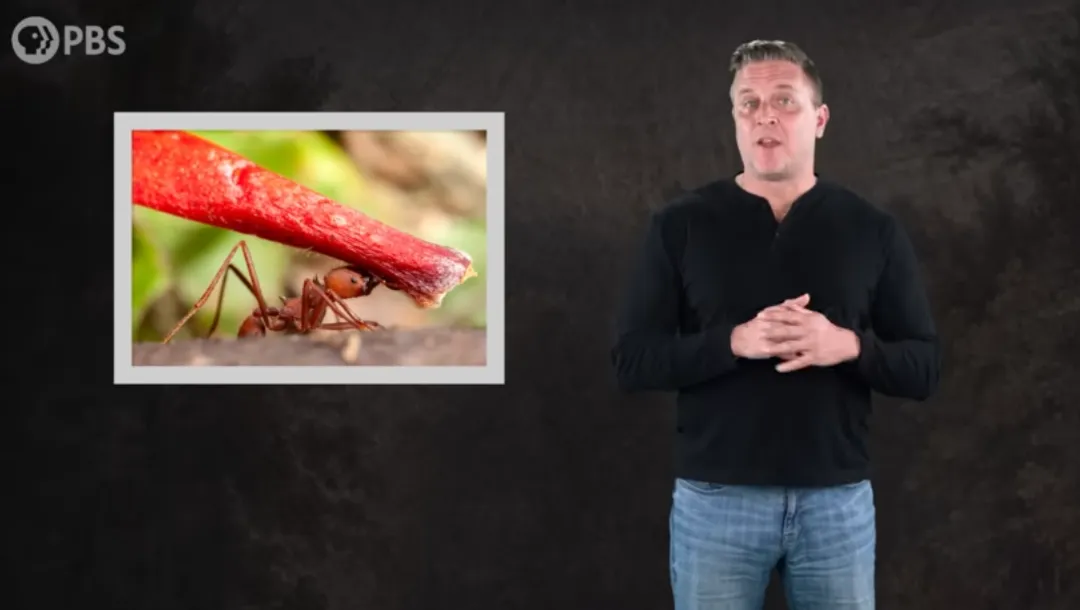
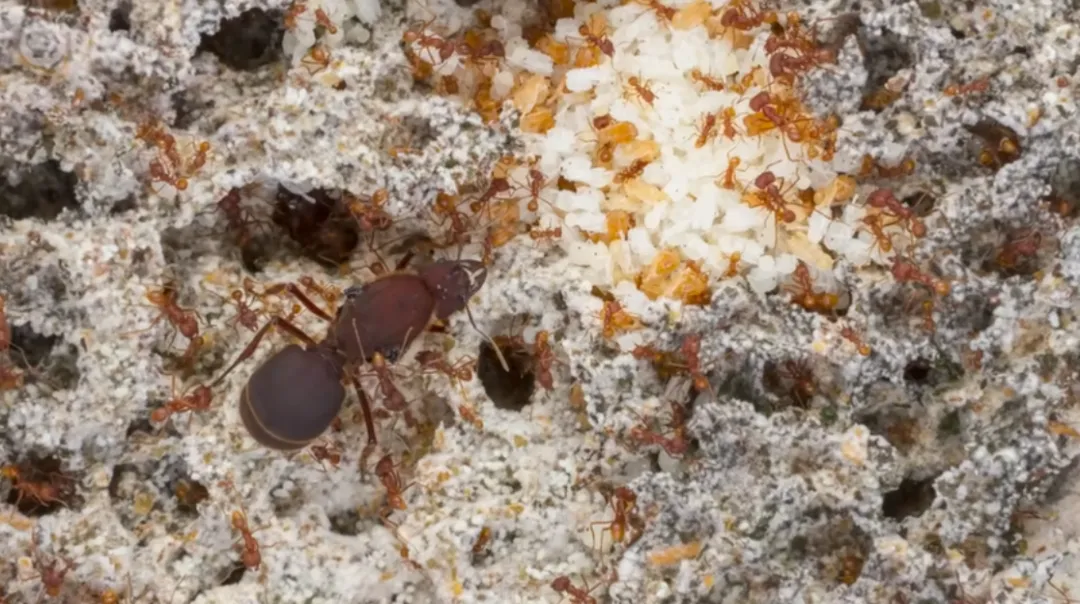
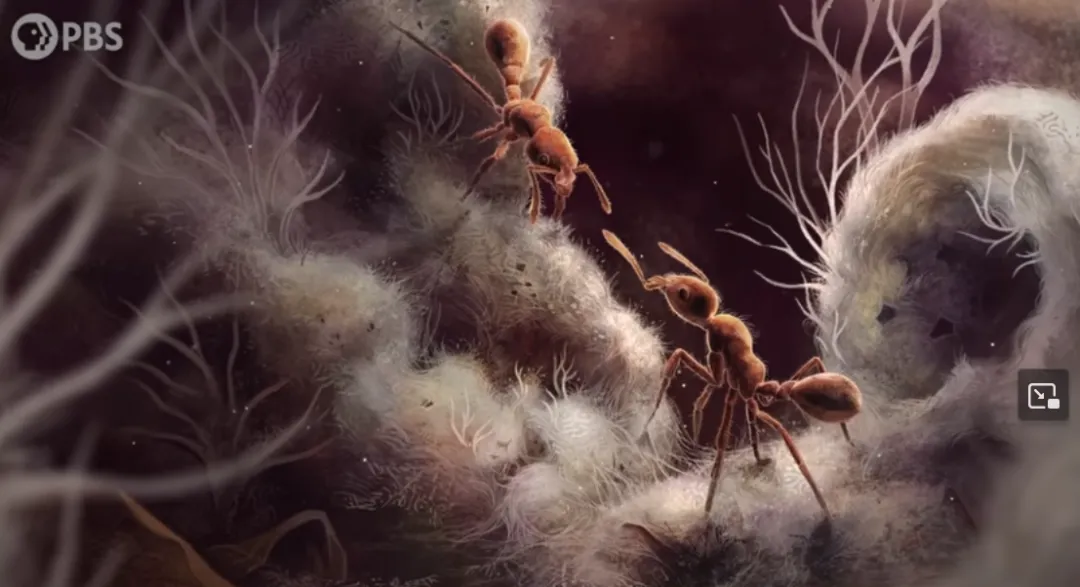
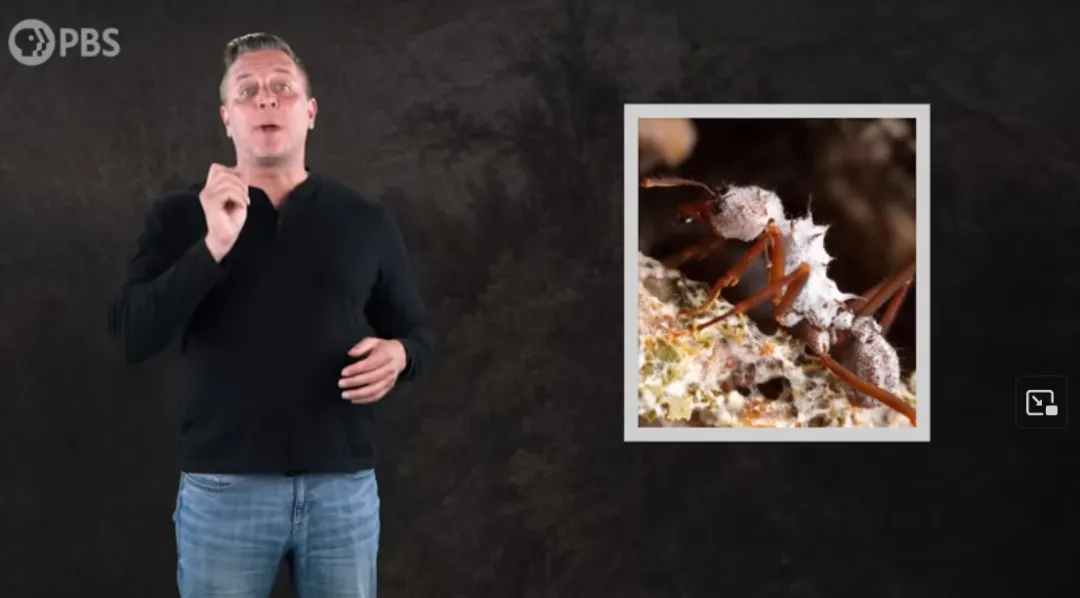
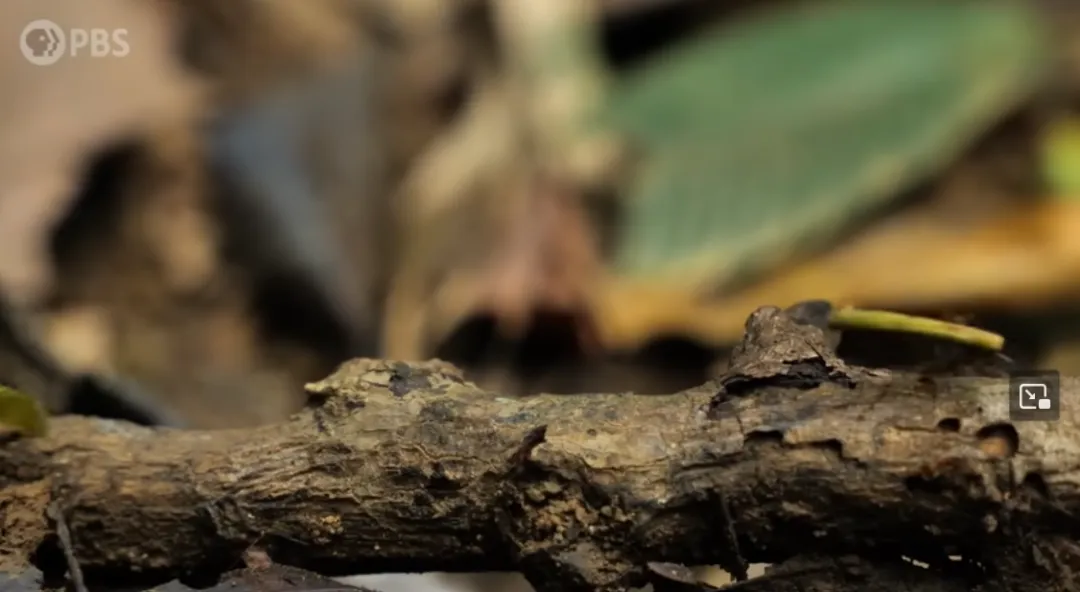
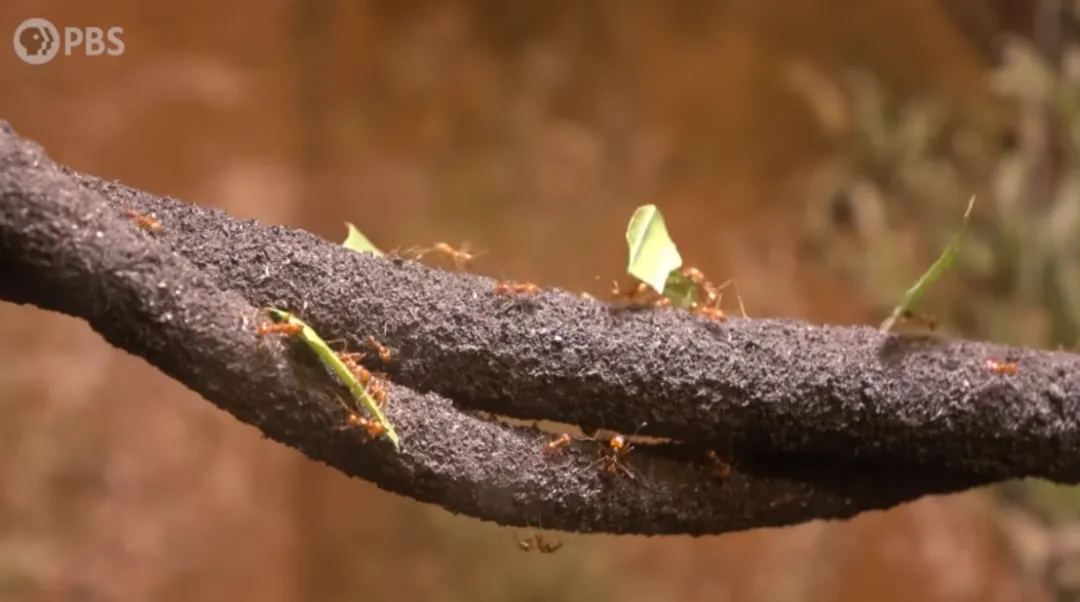
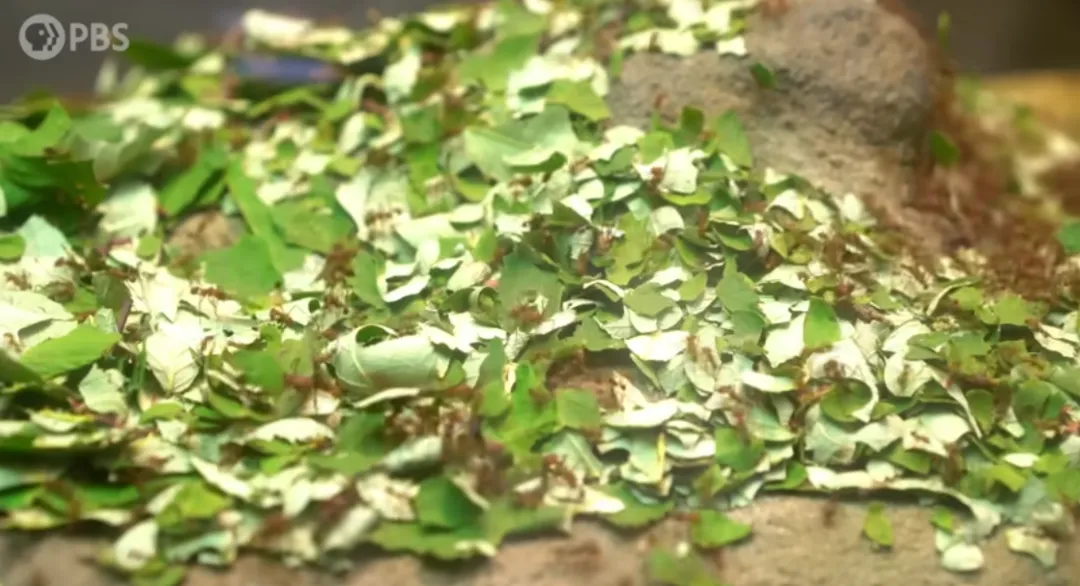
如果你去中美洲和南美洲的热带雨林旅行,或许有机会看到一支浩浩荡荡的队伍——切叶蚁(leaf-cutter ants)正排成长龙,把一片片叶子扛回巢穴。场面相当震撼。

但你知道吗?这些蚂蚁把叶子搬回家,并不是自己吃的。

说实话,我以前也不知道。

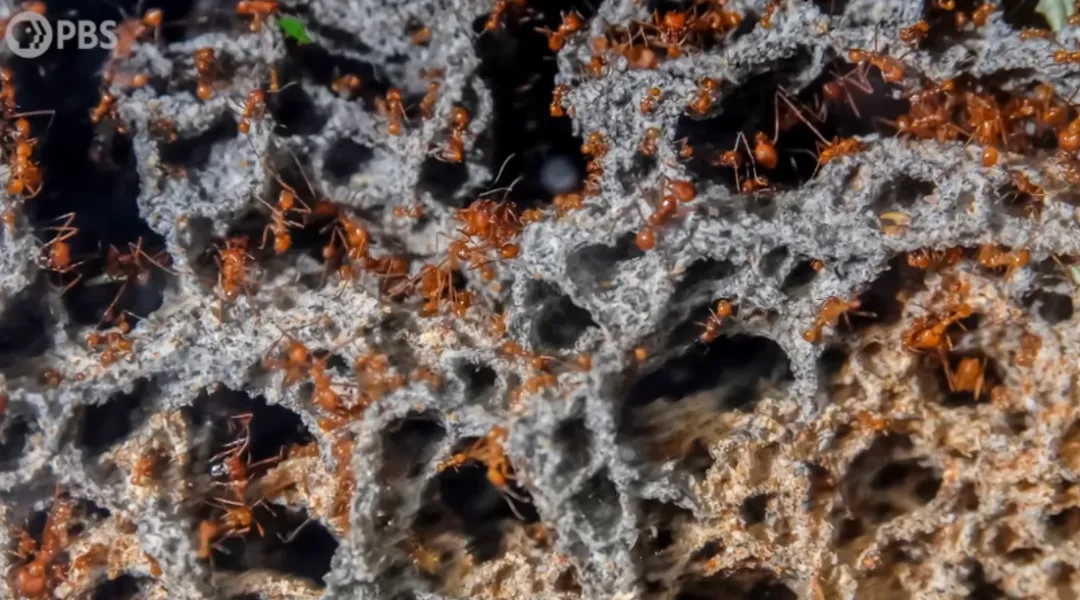
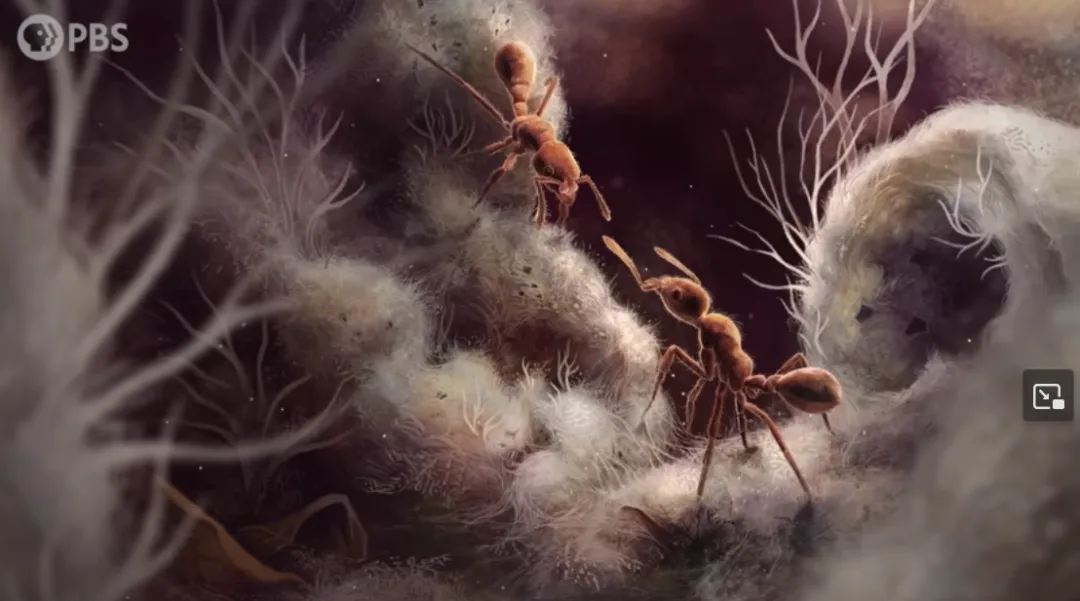
事实上,它们根本无法靠植物为生。它们带回巢穴的叶子,是用来喂养蘑菇——准确地说,是用来培育真菌花园的。而这些真菌,才是它们真正、也是唯一的主食来源。

更厉害的是,这些小农场的历史和技术含量,可能会让我们人类汗颜。人类农业历史大约只有1万到12千年,而这些蚂蚁的祖先,已经种田种了大约6000万年。在这漫长岁月中,它们经历了多次农业革命,不仅改变了耕作方式,甚至连蚂蚁自身和所培育真菌的生物学结构都被彻底改造。

那么问题来了:蚂蚁究竟是何时、如何、又为什么开始种田的?

从觅食者到农夫:一场始于灭绝的革命

蚂蚁和真菌之间的关系,很可能诞生于一次毁灭性的全球大灾难之后。

最早的这些蚂蚁并不是菌农。在很长一段历史里,它们和今天大多数蚂蚁一样,走到哪吃到哪——看到什么吃什么。某种程度上,这也是我个人的人生策略。

但一切在它们开始种田后改变了。

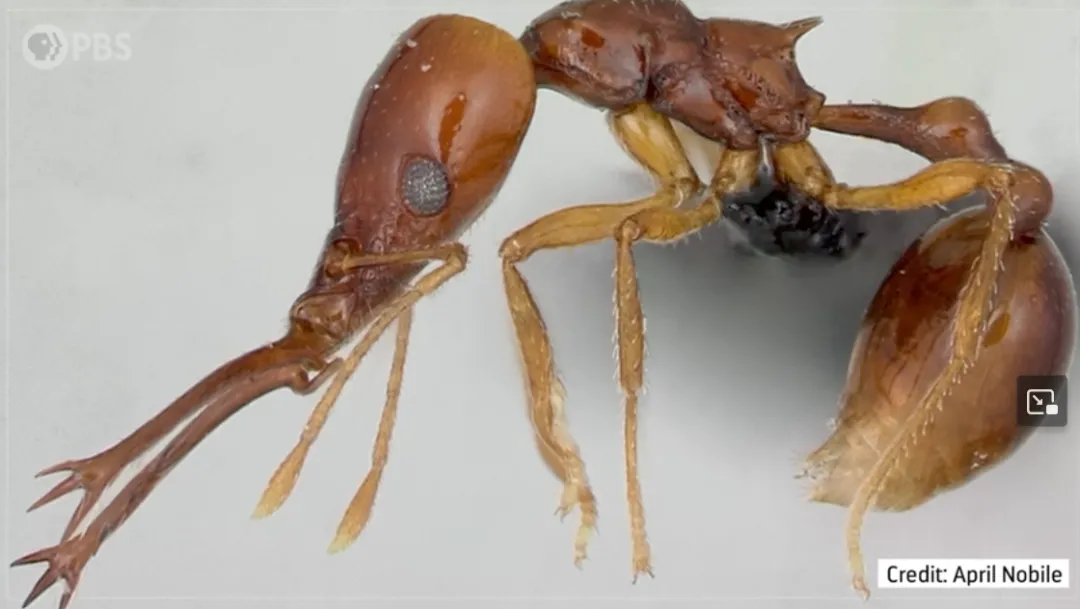
这个转变只发生过一次,出现在一个叫做阿廷蚁族Attini)的亚群中——虽然它们个头确实很小,但名字不是因为“teeny”才这么叫的。

目前已知有超过250种阿廷蚁族物种,全部生活在西半球,而且全部都是真菌农夫。不过,它们的农业方式并不完全一样。

低级农业 vs. 高级农业

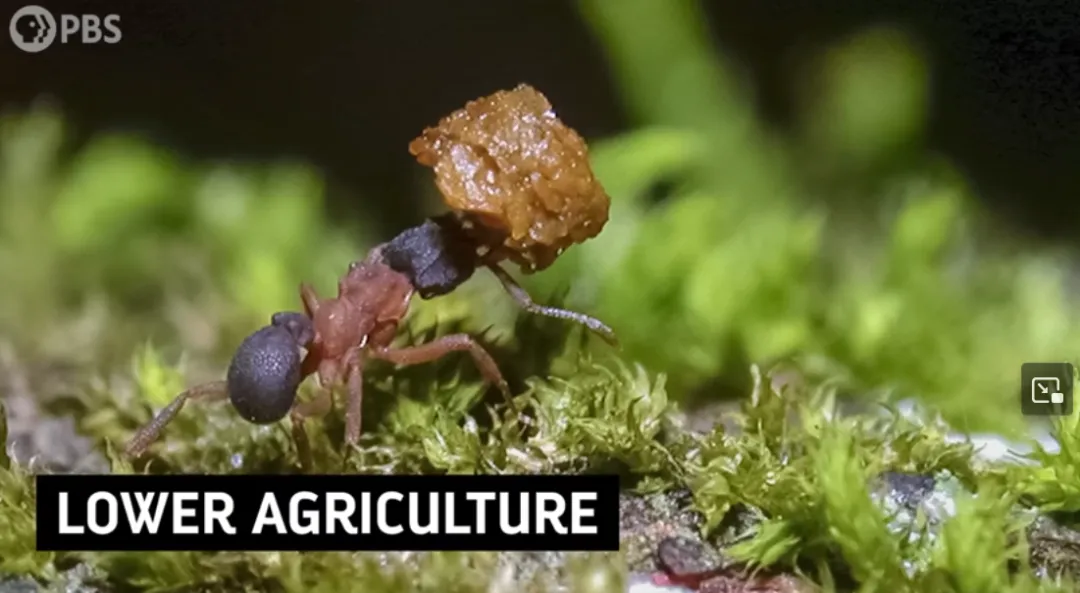
大多数阿廷蚁实行的是研究者所说的低级农业。这是结构最简单、也是最早演化出的农业系统。

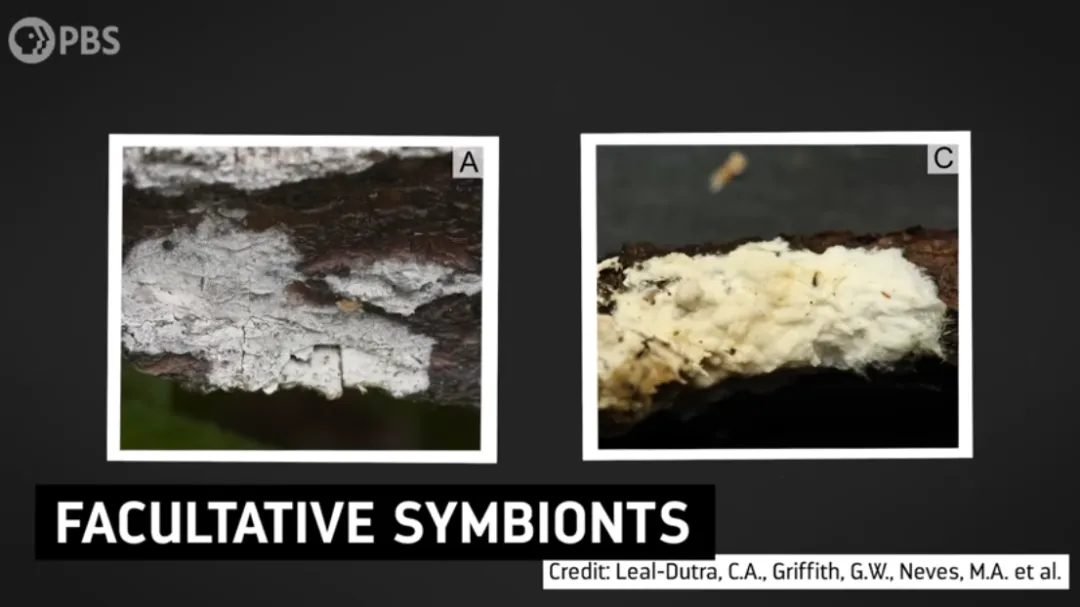
在这种系统中,真菌并不是完全依赖蚂蚁生存。它们属于兼性共生体,也就是说,离开蚂蚁也能存活,还能和野生真菌交配繁殖。因此,它们还算不上完全被驯化。如果菌株在巢穴中消失,蚂蚁还可以从野外重新补货

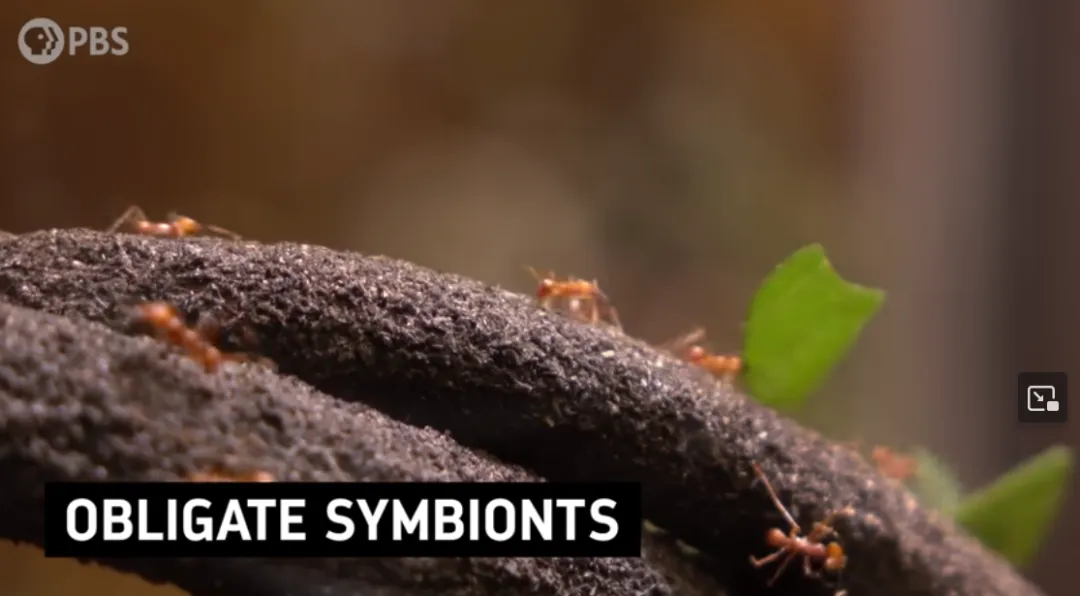
但包括切叶蚁在内的另一部分蚂蚁,实行的是高级农业

在这些巢穴里,真菌是专性共生体”——完全依赖蚂蚁,无法在野外独立存活,也不能与自由生活的真菌交配。它们已经被彻底驯化。驯化者,正是蚂蚁。

而且,农业甚至成了蚂蚁的一种文化。比如,当年轻蚁后离开母巢建立新王国时,她会带上一小块真菌作为种子,代代相传。是不是有点像随身带祖传酵母去开新面包店?

化石不够?那就用基因说话

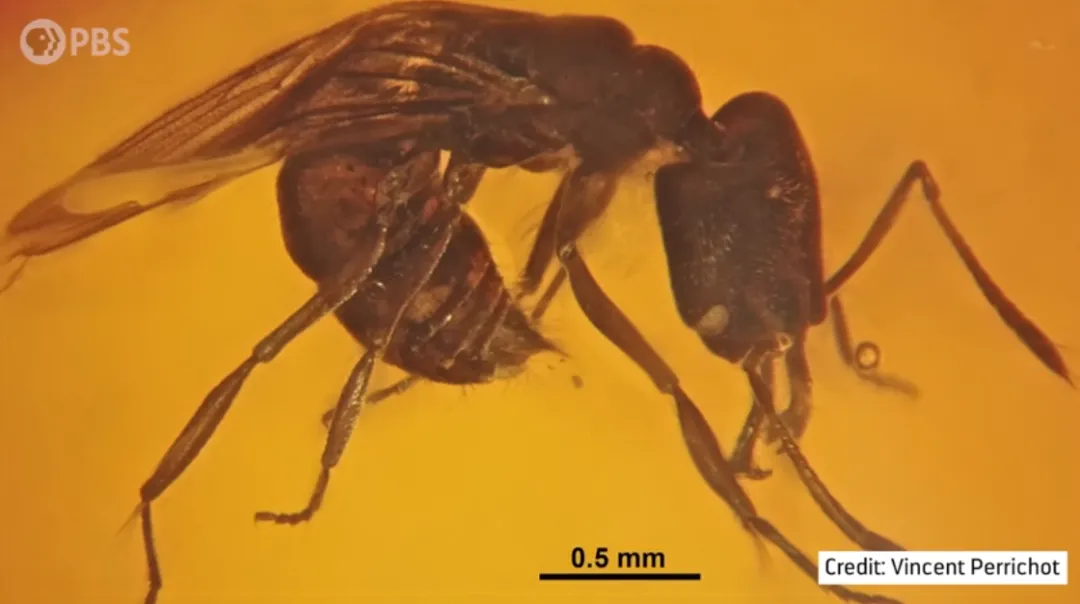
化石记录给我们的信息很有限。虽然我们有很多被琥珀包裹的蚂蚁化石,但它们并不能告诉我们这些蚂蚁是怎么生活的。

确实存在一些罕见证据——比如在古老阿廷蚁巢穴中发现的真菌丝痕迹。但这些只追溯到大约500万到1000万年前,时间并不算久远。

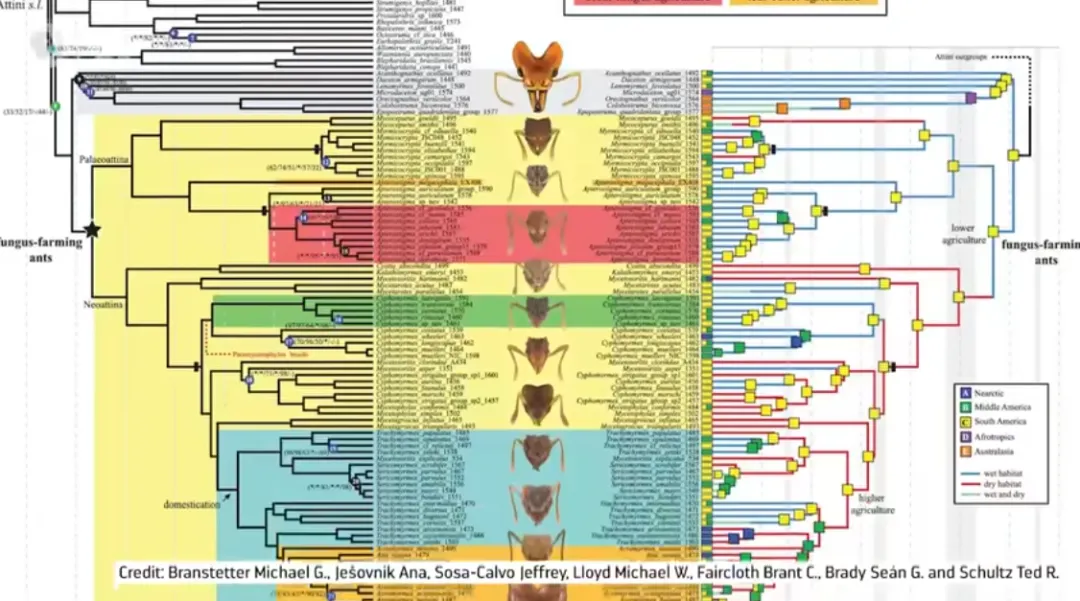
于是科学家换了种方式:系统基因组学(phylogenomics)。简单说,就是用基因数据重建进化史。

2017年,史密森尼学会的研究人员分析了西半球100多种蚂蚁的DNA,包括:

  • 实行高级农业的
  • 实行低级农业的
  • 以及根本不种田的

通过比较它们的基因差异和分化时间,科学家重建了它们的家族树。结果揭示了农业系统起源的时间和背景。

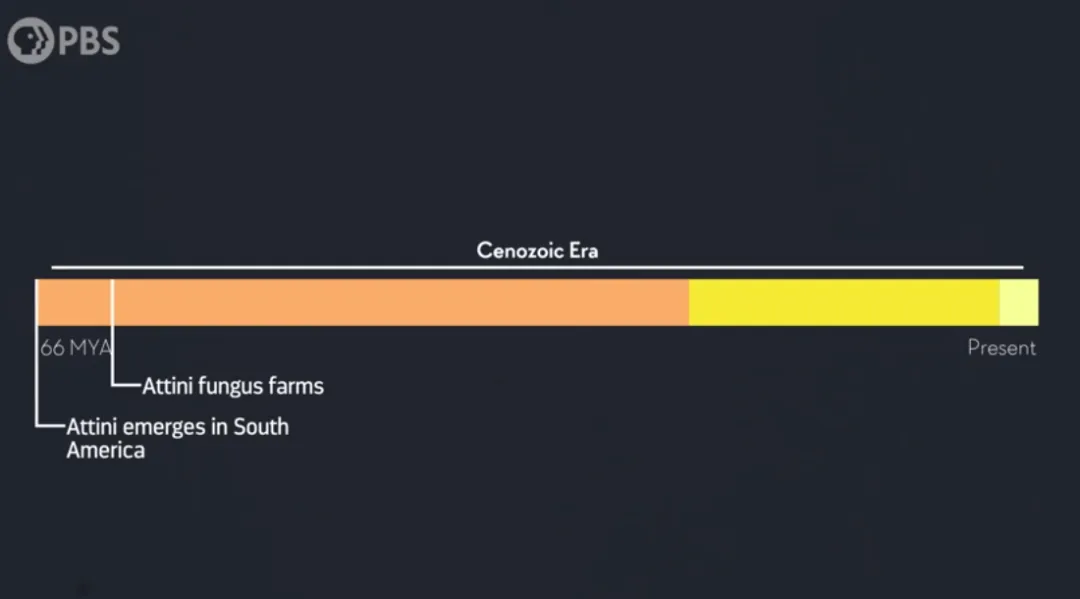
6600万年前:恐龙灭绝后的机会窗口

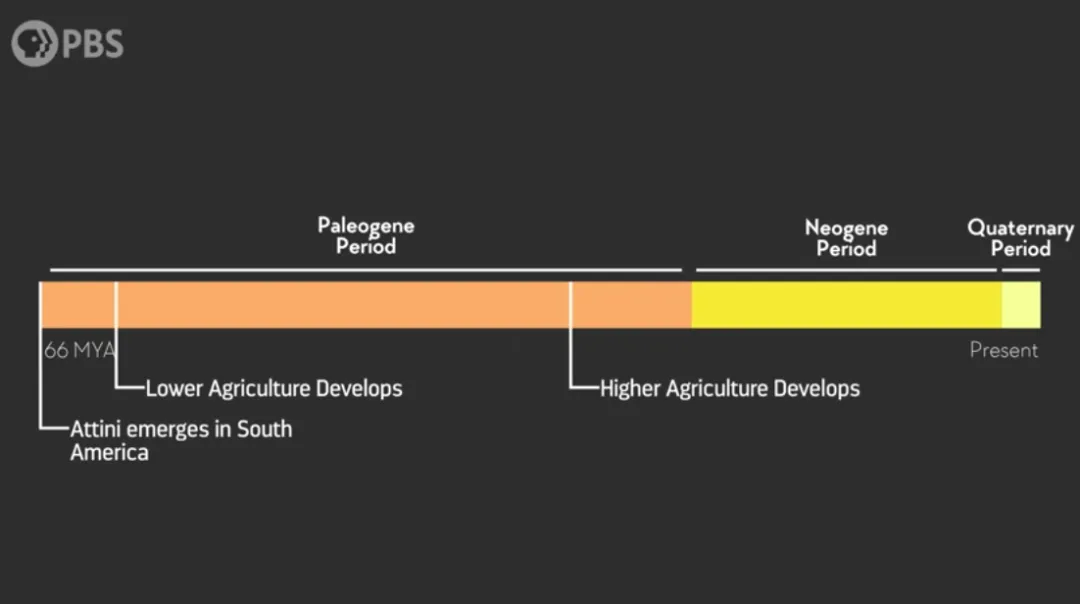
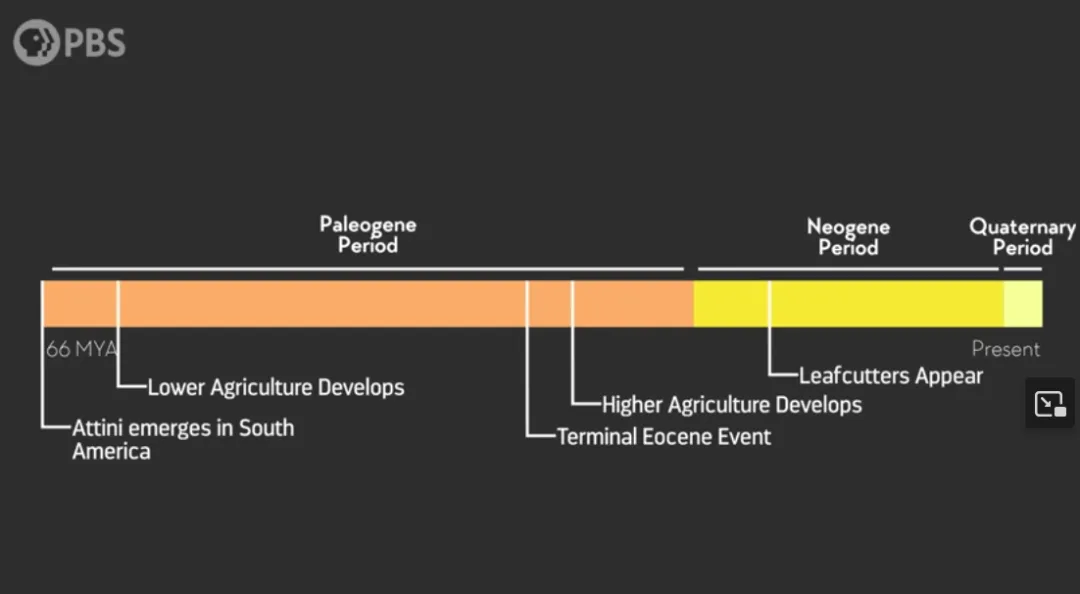
研究显示,阿廷蚁族大约在6600万年前出现在南美雨林,并迅速分化扩散。到6100万年前,它们已经成为稳定的低级农业者

这个时间点听起来熟悉吗?

没错——这正是K-Pg大灭绝之后。那场小行星撞击和火山爆发,终结了非鸟类恐龙的统治。

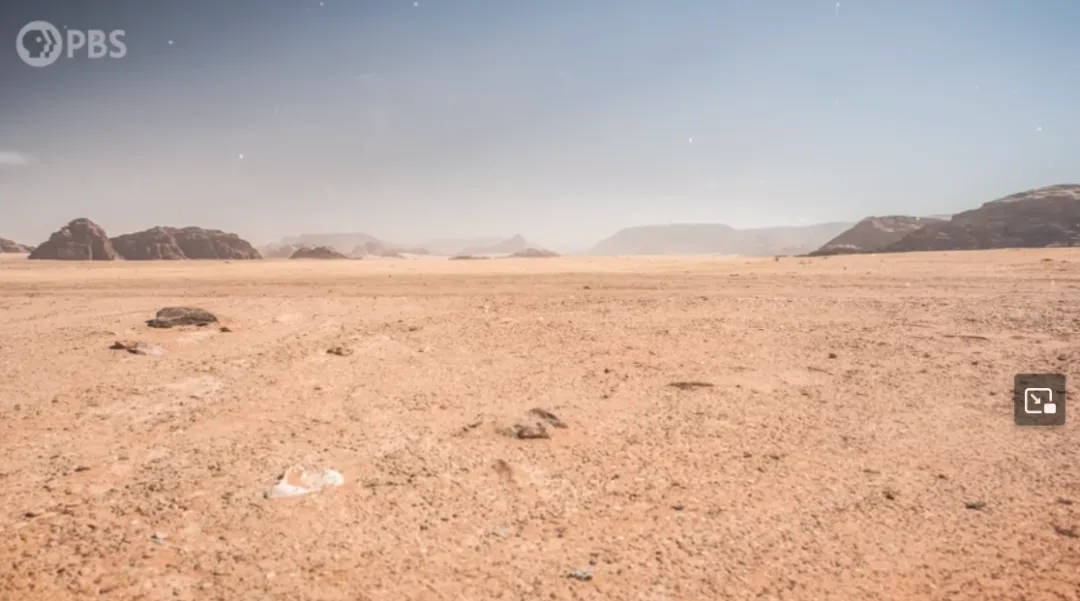
撞击产生的尘埃遮天蔽日,形成类似核冬天的环境。依赖阳光的植物遭受重创,整个食物链动摇。

但真菌不需要阳光,它们是分解者。黑暗、潮湿、满是腐烂生物的世界,对真菌来说简直是天堂。

而对早期阿廷蚁来说,地面觅食变得异常困难。

在这种环境下,把真菌圈养在地下农场,作为稳定可靠的食物来源,显然是一种聪明的末日生存策略。

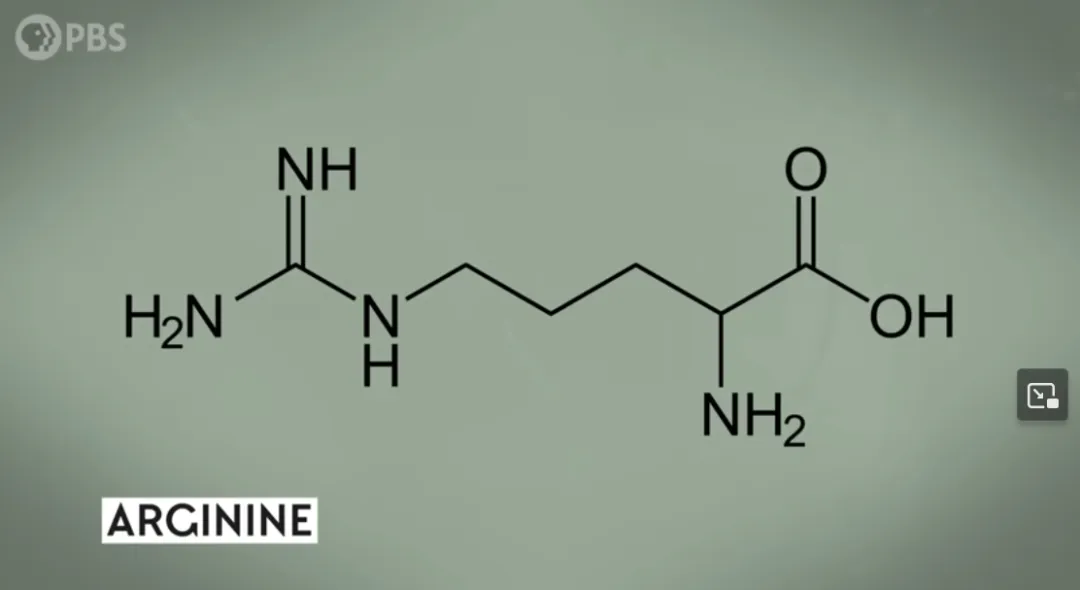
更有意思的是,研究发现阿廷蚁在进化早期就失去了合成一种关键氨基酸——精氨酸的能力。从那以后,它们完全依赖真菌提供这种营养。

这也解释了为什么至今没有发现任何阿廷蚁停止种田——它们真的离不开庄稼。

第二次农业革命:气候变冷带来的改变

大约3000万年后,阿廷蚁迎来了第二次农业革命——从低级农业转向高级农业。

基因信号显示,这次转变发生在2700万至3100万年前,正值渐新世早期。

时间再次巧合地对应了一次全球气候动荡——始新世末期的终末始新世事件(约3400万年前)。那时地球经历了全球降温,干燥环境扩张。

部分阿廷蚁离开南美雨林,进入更干燥的栖息地,并带着它们的真菌一起迁移。

问题来了:干燥环境对真菌极其不友好。

于是,真菌逐渐完全依赖蚂蚁精心维护的地下潮湿花园。它们与野生亲戚隔离,转变为专性共生体。

这一转变,也标志着低级农业高级农业的跃迁。

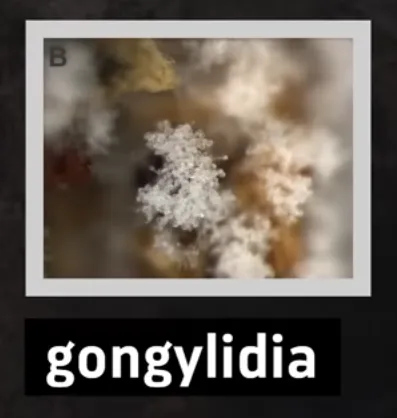
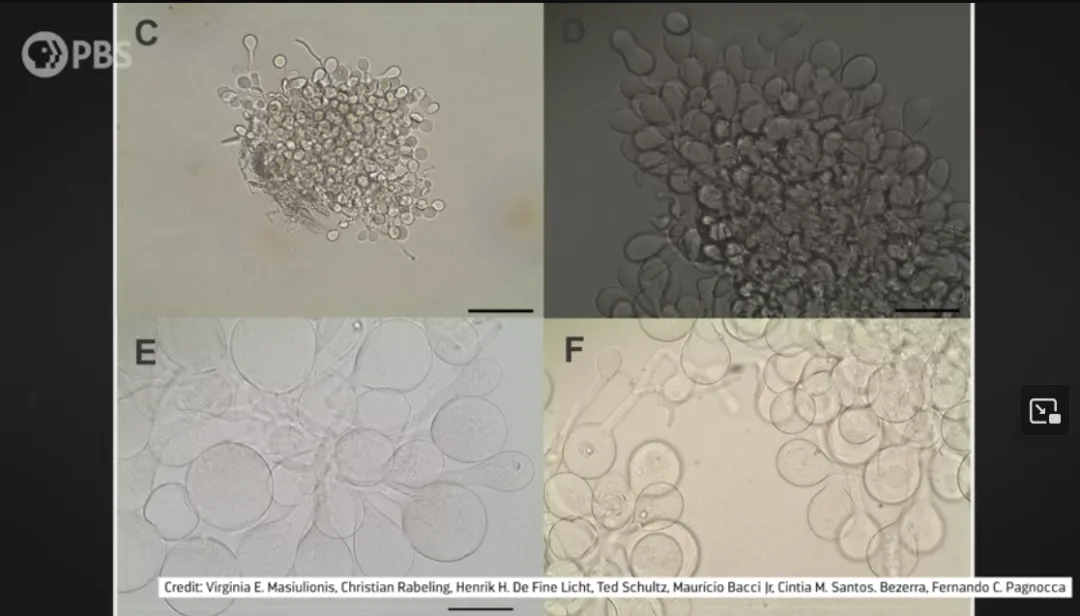
高级农业中的真菌甚至演化出一种特殊结构——“菌球gongylidia),富含营养,专门供蚂蚁收割食用。野生真菌和低级农业系统里都没有这种结构。

切叶蚁:农业天花板选手

这种关系在切叶蚁身上达到了巅峰。

切叶蚁约有50个物种,分布于南美、中美洲、墨西哥以及美国南部。它们大约在1800万到1900万年前出现,是高级农业中最晚进化的一支。

它们的巢穴规模庞大,真菌花园结构复杂,还拥有精细的卫生系统:

  • 专门的垃圾区,避免污染农场
  • 身上携带产生抗菌物质的细菌,用来防御病原体
说实话,我也想要这种随身抗菌外挂。

而且,它们不像其他阿廷蚁那样捡现成的腐败有机物,而是直接从植物上切下最新鲜的叶子——可以说是食材控的极致。

事实上,切叶蚁消耗的植物总量巨大,被认为是新热带地区最强大的草食动物群体,比任何其他动物采集的植物总量都多。

某种意义上,它们让真菌农业兜了一圈

最初或许是为了在植物匮乏的末日环境中求生,如今却高度依赖植物维持整个系统。

6000万年的创新故事

阿廷蚁的故事告诉我们:千万别低估一只蚂蚁的创新能力。

6000万年的进化长河中,面对一次次全球环境巨变,它们和真菌不断适应、调整、共生、繁荣。

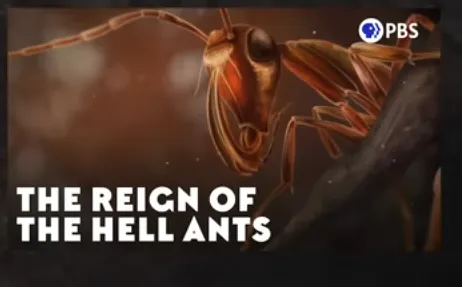
如果你被蚂蚁圈粉了,不妨看看《地狱蚁的统治》(The Reign of the Hell Ants)。

最后送大家一个冷笑话:

大花对小花说了什么?“What's up, bud!”(怎么啦,小花苞?)

可爱吧。

感谢你阅读到这里。关注我们,继续一起探索地球上这些奇妙又疯狂的小生命世界。

If you visit the tropical forests of Central and South America, you might be lucky enough to spot a parade of leaf-cutter ants, tirelessly carrying food back to their nests. But did you know that those ants aren’t taking those leaf-cuttings home to eat? Because I did not know that. The fact is, they physically can’t survive on plant material. Instead, the ants use those leaves to feed the gardens of fungi that they grow in their colonies, which are their primary source of food. And both the age and the sophistication of these little farms put our own farms to shame. While we’ve been farming for around 10,000 to 12,000 years, the ancestors of these ants have been doing it for around 60 million years. And over that time, they’ve been through many of their own agricultural revolutions that have changed not just how they farm, but also the very biology of the fungi that they grow, and the biology of the ants themselves. So when, and how, and why did ants start farming? It looks like the relationship between ants and fungi may have emerged from the ashes of a famously devastating extinction event. Now these ants didn’t start out as fungus-farmers. For much of their history, they did what most ants today still do: they go out into the world and eat the things they find, which also is how I go through life. But everything changed for them when they started farming, and this transition happened only once, in the subgroup known as the Attini, because they're teeny ants, that's not why they call them that actually. There are more than 250 species of these ants, all of them in the western hemisphere and all of them fungus-farmers. But not all of these Attine ants farm the same way. Most practice what some researchers have called “lower agriculture,” the system with the least complex farms, which is thought to have been the first to evolve. In this system, the fungi aren’t fully dependent on the ants. They’re what are known as facultative symbionts: they can survive without the ants and interbreed with other wild fungi, so they’re not really fully domesticated, and if they end up disappearing from the colony somehow, the ants can just replace them with wild versions of the cultivated fungi species. But other ants, including the leaf-cutters, practice higher agriculture. In these colonies, the fungi are obligate symbionts: they’re completely dependent on their ant farmers, they can’t survive in the wild, and they can’t interbreed with free-living fungi. They’ve been fully domesticated by ants. And just like with us, farming is even a part of the ants’ culture, if you can call it that. Like when young queens of these ant species leave their families to start new colonies, they take a piece of fungus with them to start their own gardens, passing these strains down from queen to queen across generations. So how did this relationship between ants and fungus actually start, and how did it evolve over time into the different agricultural systems we see today? Well, the fossil record has only given us some pieces of the story, mainly because while we do have lots of fossils of ants, many trapped in amber, they can’t easily tell us how those ants actually lived. But there is some extremely rare fossil evidence of fungus-farming in ancient Attine ants in the form of nests that contain traces of fungus filaments, though these are from relatively recently, like around 5 to 10 million years ago. This means that to dig deeper into the origins of fungus-farming in ants, we’ve had to find another way to study them. Enter the field of phylogenomics, or using genomic data to reconstruct an organism’s evolutionary history. In a paper published in 2017, researchers at the Smithsonian tried to trace the history of fungus-farming in ants across deep time using their genomes. They compared the DNA of more than a hundred different ant species from around the Western Hemisphere, some that practiced higher agriculture, some that practiced lower agriculture, and some that didn’t farm at all. By comparing their genetic relatedness and how long ago the different groups diverged from one another based on the mutations that each lineage had accumulated, they could reconstruct their evolutionary family tree, and this revealed some intriguing clues about where, when, and why each agricultural system first evolved. The tree seemed to suggest that the Attini, which contains all fungus-farming ant species, originally emerged in the rainforests of South America around 66 million years ago, and almost immediately they diversified really quickly, radiating into many different groups. By 61 million years ago, they had established themselves as lower agriculturalists, full-time fungus farmers, and if this time period rings a bell, there’s a good reason for that. This was the direct aftermath of the K-Pg mass extinction, with the asteroid and the volcanism and the end of the reign of the dinosaurs, the non-avian dinosaurs anyway. And the fact that the origin of fungus-farming in ants lines up with a period of global ecological chaos is probably not a coincidence. After all, the impact must’ve caused all kinds of environmental mayhem, including a sort of nuclear winter in which clouds of dust and ash blocked out sunlight. This would have been catastrophic for photosynthesizers like plants at the base of the food chain and for species that relied on them. But fungi are decomposers and don’t rely on sunlight for growth, so they might actually have thrived in these apocalyptic conditions. The dark, humid, post-K-Pg world, filled with dead and decaying organisms, would’ve been a paradise for fungi. The earliest Attine ants, on the other hand, would have had a much harder time, as suddenly foraging for food would have been a real challenge, at least above ground. So it’s easy to imagine why Attine ants might’ve begun harnessing fungi as their sole food source, a stable and reliable crop they could grow underground, perfectly suited to the apocalypse. And this changed not just their lifestyle but elements of their biology too. Research has shown that Attine ants lost the ability to produce an important amino acid called arginine very early on in their evolution, and ever since then they’ve been totally reliant on fungi to get that amino acid. This may explain why we’ve yet to find a single example of an Attine ant species that’s stopped farming. They literally can’t survive without their crops. So while the evidence is kind of circumstantial, it’s at least plausible that the devastation of the K-Pg was the catalyst for the first agricultural revolution in Attine ants, transitioning from foragers to farmers. But it wasn’t until 30 million years later that one group of ants experienced their second agricultural revolution, transitioning from lower to higher agriculture. The researchers found the genetic signal of this transition at somewhere between 27 million to 31 million years ago in the early Oligocene epoch. This is when the group of ants that practice higher agriculture seems to have emerged and branched off from the other Attines. And just like the ants’ first agricultural revolution, the timing of this one matched up with a period of environmental upheaval. This was the aftermath of the Terminal Eocene Event that took place at the end of the Eocene Epoch around 34 million years ago. For reasons we still don’t fully understand, the planet went through a period of global cooling at this time, which allowed drier, less humid habitats to expand. And some Attine ants left the rainforests of South America for drier habitats and brought their fungi with them, which may have spurred a radical shift in their relationship. After all, dry habitats are pretty inhospitable to fungi. So researchers think that in these new environments the fungi became completely dependent on the ants for survival. They couldn’t live outside of the well-tended, humid, underground gardens of the ant colony, and over time they became reproductively isolated from their free-living relatives, which had largely remained in the rainforests. This marked the switch from facultative to obligate symbiosis in the fungi and from lower to higher agriculture in the ants. These fungi are now found only in higher Attine ant colonies, and they’ve developed some specific adaptations in this fully domesticated existence. For example, they have nutrient-rich swellings called gongylidia that can be efficiently harvested and eaten by the ants. These structures aren’t seen in wild fungi or in lineages grown by ants that practice lower agriculture. And this relationship seems to have reached new heights in the leaf-cutter ants. This group is represented by around 50 species, which are widespread in South America, Central America, Mexico, and some southern parts of the US. And the researchers’ analysis suggests that the leaf-cutters were the most recent group of higher agriculturalists to evolve, emerging around 18 to 19 million years ago. They have incredibly complex colonies, with big fungal gardens and even sophisticated hygiene practices to protect their fungal crops from disease. Like there are certain areas of their nests where they leave their waste to keep it away from their gardens, and some ants even have bacteria on them that produce antimicrobial compounds which help protect the fungus from pathogens. I kinda wish I had that. And unlike other Attines, which usually just collect whatever dead plant and animal material they can find to feed their fungi, leaf-cutter ants source only the finest, freshest biomass, cutting it straight off the plant, chef's kiss. In fact, leaf-cutters get through so much plant material they’re considered the dominant herbivore of the neotropics, harvesting more total plant material than any other animal group. So in a way, the leaf-cutter ants have kind of brought fungus-farming full-circle. What may have started as a way to survive without plants after the K-Pg mass extinction has now come all the way back around to depending on plants for the system to keep going. If the story of the Attine ants tells us anything, it’s never to underestimate their ability to innovate over time. Through 60 million years of evolution, facing challenge after challenge in the form of global environmental change, the ants and their fungi adapted, adjusted, and thrived. If this got you itching for more ant content, then check out our episode, “The Reign of the Hell Ants.” Gi/ant/ thanks this month’s /fun/gi Eontologists! Become an Eonite at patreon.com/eons and you can get fun perks like submitting a joke for us to read, like this one from Sophie Parsons. Okay, brace yourself Blake: what did the big flower say to the small flower? What’s up bud! Oh that’s cute! And as always thanks for joining me in the Adam Lowe studio. Subscribe at youtube.com/eons for more creature features!
最新文章

随机文章

基本 文件 流程 错误 SQL 调试
  1. 请求信息 : 2026-02-13 16:15:49 HTTP/2.0 GET : https://h.mffb.com.cn/a/473972.html
  2. 运行时间 : 0.323730s [ 吞吐率:3.09req/s ] 内存消耗:4,494.87kb 文件加载:140
  3. 缓存信息 : 0 reads,0 writes
  4. 会话信息 : SESSION_ID=b54a0c99bcc110a27694ac39cfc4e9aa
  1. /yingpanguazai/ssd/ssd1/www/h.mffb.com.cn/public/index.php ( 0.79 KB )
  2. /yingpanguazai/ssd/ssd1/www/h.mffb.com.cn/vendor/autoload.php ( 0.17 KB )
  3. /yingpanguazai/ssd/ssd1/www/h.mffb.com.cn/vendor/composer/autoload_real.php ( 2.49 KB )
  4. /yingpanguazai/ssd/ssd1/www/h.mffb.com.cn/vendor/composer/platform_check.php ( 0.90 KB )
  5. /yingpanguazai/ssd/ssd1/www/h.mffb.com.cn/vendor/composer/ClassLoader.php ( 14.03 KB )
  6. /yingpanguazai/ssd/ssd1/www/h.mffb.com.cn/vendor/composer/autoload_static.php ( 4.90 KB )
  7. /yingpanguazai/ssd/ssd1/www/h.mffb.com.cn/vendor/topthink/think-helper/src/helper.php ( 8.34 KB )
  8. /yingpanguazai/ssd/ssd1/www/h.mffb.com.cn/vendor/topthink/think-validate/src/helper.php ( 2.19 KB )
  9. /yingpanguazai/ssd/ssd1/www/h.mffb.com.cn/vendor/topthink/think-orm/src/helper.php ( 1.47 KB )
  10. /yingpanguazai/ssd/ssd1/www/h.mffb.com.cn/vendor/topthink/think-orm/stubs/load_stubs.php ( 0.16 KB )
  11. /yingpanguazai/ssd/ssd1/www/h.mffb.com.cn/vendor/topthink/framework/src/think/Exception.php ( 1.69 KB )
  12. /yingpanguazai/ssd/ssd1/www/h.mffb.com.cn/vendor/topthink/think-container/src/Facade.php ( 2.71 KB )
  13. /yingpanguazai/ssd/ssd1/www/h.mffb.com.cn/vendor/symfony/deprecation-contracts/function.php ( 0.99 KB )
  14. /yingpanguazai/ssd/ssd1/www/h.mffb.com.cn/vendor/symfony/polyfill-mbstring/bootstrap.php ( 8.26 KB )
  15. /yingpanguazai/ssd/ssd1/www/h.mffb.com.cn/vendor/symfony/polyfill-mbstring/bootstrap80.php ( 9.78 KB )
  16. /yingpanguazai/ssd/ssd1/www/h.mffb.com.cn/vendor/symfony/var-dumper/Resources/functions/dump.php ( 1.49 KB )
  17. /yingpanguazai/ssd/ssd1/www/h.mffb.com.cn/vendor/topthink/think-dumper/src/helper.php ( 0.18 KB )
  18. /yingpanguazai/ssd/ssd1/www/h.mffb.com.cn/vendor/symfony/var-dumper/VarDumper.php ( 4.30 KB )
  19. /yingpanguazai/ssd/ssd1/www/h.mffb.com.cn/vendor/topthink/framework/src/think/App.php ( 15.30 KB )
  20. /yingpanguazai/ssd/ssd1/www/h.mffb.com.cn/vendor/topthink/think-container/src/Container.php ( 15.76 KB )
  21. /yingpanguazai/ssd/ssd1/www/h.mffb.com.cn/vendor/psr/container/src/ContainerInterface.php ( 1.02 KB )
  22. /yingpanguazai/ssd/ssd1/www/h.mffb.com.cn/app/provider.php ( 0.19 KB )
  23. /yingpanguazai/ssd/ssd1/www/h.mffb.com.cn/vendor/topthink/framework/src/think/Http.php ( 6.04 KB )
  24. /yingpanguazai/ssd/ssd1/www/h.mffb.com.cn/vendor/topthink/think-helper/src/helper/Str.php ( 7.29 KB )
  25. /yingpanguazai/ssd/ssd1/www/h.mffb.com.cn/vendor/topthink/framework/src/think/Env.php ( 4.68 KB )
  26. /yingpanguazai/ssd/ssd1/www/h.mffb.com.cn/app/common.php ( 0.03 KB )
  27. /yingpanguazai/ssd/ssd1/www/h.mffb.com.cn/vendor/topthink/framework/src/helper.php ( 18.78 KB )
  28. /yingpanguazai/ssd/ssd1/www/h.mffb.com.cn/vendor/topthink/framework/src/think/Config.php ( 5.54 KB )
  29. /yingpanguazai/ssd/ssd1/www/h.mffb.com.cn/config/app.php ( 0.95 KB )
  30. /yingpanguazai/ssd/ssd1/www/h.mffb.com.cn/config/cache.php ( 0.78 KB )
  31. /yingpanguazai/ssd/ssd1/www/h.mffb.com.cn/config/console.php ( 0.23 KB )
  32. /yingpanguazai/ssd/ssd1/www/h.mffb.com.cn/config/cookie.php ( 0.56 KB )
  33. /yingpanguazai/ssd/ssd1/www/h.mffb.com.cn/config/database.php ( 2.48 KB )
  34. /yingpanguazai/ssd/ssd1/www/h.mffb.com.cn/vendor/topthink/framework/src/think/facade/Env.php ( 1.67 KB )
  35. /yingpanguazai/ssd/ssd1/www/h.mffb.com.cn/config/filesystem.php ( 0.61 KB )
  36. /yingpanguazai/ssd/ssd1/www/h.mffb.com.cn/config/lang.php ( 0.91 KB )
  37. /yingpanguazai/ssd/ssd1/www/h.mffb.com.cn/config/log.php ( 1.35 KB )
  38. /yingpanguazai/ssd/ssd1/www/h.mffb.com.cn/config/middleware.php ( 0.19 KB )
  39. /yingpanguazai/ssd/ssd1/www/h.mffb.com.cn/config/route.php ( 1.89 KB )
  40. /yingpanguazai/ssd/ssd1/www/h.mffb.com.cn/config/session.php ( 0.57 KB )
  41. /yingpanguazai/ssd/ssd1/www/h.mffb.com.cn/config/trace.php ( 0.34 KB )
  42. /yingpanguazai/ssd/ssd1/www/h.mffb.com.cn/config/view.php ( 0.82 KB )
  43. /yingpanguazai/ssd/ssd1/www/h.mffb.com.cn/app/event.php ( 0.25 KB )
  44. /yingpanguazai/ssd/ssd1/www/h.mffb.com.cn/vendor/topthink/framework/src/think/Event.php ( 7.67 KB )
  45. /yingpanguazai/ssd/ssd1/www/h.mffb.com.cn/app/service.php ( 0.13 KB )
  46. /yingpanguazai/ssd/ssd1/www/h.mffb.com.cn/app/AppService.php ( 0.26 KB )
  47. /yingpanguazai/ssd/ssd1/www/h.mffb.com.cn/vendor/topthink/framework/src/think/Service.php ( 1.64 KB )
  48. /yingpanguazai/ssd/ssd1/www/h.mffb.com.cn/vendor/topthink/framework/src/think/Lang.php ( 7.35 KB )
  49. /yingpanguazai/ssd/ssd1/www/h.mffb.com.cn/vendor/topthink/framework/src/lang/zh-cn.php ( 13.70 KB )
  50. /yingpanguazai/ssd/ssd1/www/h.mffb.com.cn/vendor/topthink/framework/src/think/initializer/Error.php ( 3.31 KB )
  51. /yingpanguazai/ssd/ssd1/www/h.mffb.com.cn/vendor/topthink/framework/src/think/initializer/RegisterService.php ( 1.33 KB )
  52. /yingpanguazai/ssd/ssd1/www/h.mffb.com.cn/vendor/services.php ( 0.14 KB )
  53. /yingpanguazai/ssd/ssd1/www/h.mffb.com.cn/vendor/topthink/framework/src/think/service/PaginatorService.php ( 1.52 KB )
  54. /yingpanguazai/ssd/ssd1/www/h.mffb.com.cn/vendor/topthink/framework/src/think/service/ValidateService.php ( 0.99 KB )
  55. /yingpanguazai/ssd/ssd1/www/h.mffb.com.cn/vendor/topthink/framework/src/think/service/ModelService.php ( 2.04 KB )
  56. /yingpanguazai/ssd/ssd1/www/h.mffb.com.cn/vendor/topthink/think-trace/src/Service.php ( 0.77 KB )
  57. /yingpanguazai/ssd/ssd1/www/h.mffb.com.cn/vendor/topthink/framework/src/think/Middleware.php ( 6.72 KB )
  58. /yingpanguazai/ssd/ssd1/www/h.mffb.com.cn/vendor/topthink/framework/src/think/initializer/BootService.php ( 0.77 KB )
  59. /yingpanguazai/ssd/ssd1/www/h.mffb.com.cn/vendor/topthink/think-orm/src/Paginator.php ( 11.86 KB )
  60. /yingpanguazai/ssd/ssd1/www/h.mffb.com.cn/vendor/topthink/think-validate/src/Validate.php ( 63.20 KB )
  61. /yingpanguazai/ssd/ssd1/www/h.mffb.com.cn/vendor/topthink/think-orm/src/Model.php ( 23.55 KB )
  62. /yingpanguazai/ssd/ssd1/www/h.mffb.com.cn/vendor/topthink/think-orm/src/model/concern/Attribute.php ( 21.05 KB )
  63. /yingpanguazai/ssd/ssd1/www/h.mffb.com.cn/vendor/topthink/think-orm/src/model/concern/AutoWriteData.php ( 4.21 KB )
  64. /yingpanguazai/ssd/ssd1/www/h.mffb.com.cn/vendor/topthink/think-orm/src/model/concern/Conversion.php ( 6.44 KB )
  65. /yingpanguazai/ssd/ssd1/www/h.mffb.com.cn/vendor/topthink/think-orm/src/model/concern/DbConnect.php ( 5.16 KB )
  66. /yingpanguazai/ssd/ssd1/www/h.mffb.com.cn/vendor/topthink/think-orm/src/model/concern/ModelEvent.php ( 2.33 KB )
  67. /yingpanguazai/ssd/ssd1/www/h.mffb.com.cn/vendor/topthink/think-orm/src/model/concern/RelationShip.php ( 28.29 KB )
  68. /yingpanguazai/ssd/ssd1/www/h.mffb.com.cn/vendor/topthink/think-helper/src/contract/Arrayable.php ( 0.09 KB )
  69. /yingpanguazai/ssd/ssd1/www/h.mffb.com.cn/vendor/topthink/think-helper/src/contract/Jsonable.php ( 0.13 KB )
  70. /yingpanguazai/ssd/ssd1/www/h.mffb.com.cn/vendor/topthink/think-orm/src/model/contract/Modelable.php ( 0.09 KB )
  71. /yingpanguazai/ssd/ssd1/www/h.mffb.com.cn/vendor/topthink/framework/src/think/Db.php ( 2.88 KB )
  72. /yingpanguazai/ssd/ssd1/www/h.mffb.com.cn/vendor/topthink/think-orm/src/DbManager.php ( 8.52 KB )
  73. /yingpanguazai/ssd/ssd1/www/h.mffb.com.cn/vendor/topthink/framework/src/think/Log.php ( 6.28 KB )
  74. /yingpanguazai/ssd/ssd1/www/h.mffb.com.cn/vendor/topthink/framework/src/think/Manager.php ( 3.92 KB )
  75. /yingpanguazai/ssd/ssd1/www/h.mffb.com.cn/vendor/psr/log/src/LoggerTrait.php ( 2.69 KB )
  76. /yingpanguazai/ssd/ssd1/www/h.mffb.com.cn/vendor/psr/log/src/LoggerInterface.php ( 2.71 KB )
  77. /yingpanguazai/ssd/ssd1/www/h.mffb.com.cn/vendor/topthink/framework/src/think/Cache.php ( 4.92 KB )
  78. /yingpanguazai/ssd/ssd1/www/h.mffb.com.cn/vendor/psr/simple-cache/src/CacheInterface.php ( 4.71 KB )
  79. /yingpanguazai/ssd/ssd1/www/h.mffb.com.cn/vendor/topthink/think-helper/src/helper/Arr.php ( 16.63 KB )
  80. /yingpanguazai/ssd/ssd1/www/h.mffb.com.cn/vendor/topthink/framework/src/think/cache/driver/File.php ( 7.84 KB )
  81. /yingpanguazai/ssd/ssd1/www/h.mffb.com.cn/vendor/topthink/framework/src/think/cache/Driver.php ( 9.03 KB )
  82. /yingpanguazai/ssd/ssd1/www/h.mffb.com.cn/vendor/topthink/framework/src/think/contract/CacheHandlerInterface.php ( 1.99 KB )
  83. /yingpanguazai/ssd/ssd1/www/h.mffb.com.cn/app/Request.php ( 0.09 KB )
  84. /yingpanguazai/ssd/ssd1/www/h.mffb.com.cn/vendor/topthink/framework/src/think/Request.php ( 55.78 KB )
  85. /yingpanguazai/ssd/ssd1/www/h.mffb.com.cn/app/middleware.php ( 0.25 KB )
  86. /yingpanguazai/ssd/ssd1/www/h.mffb.com.cn/vendor/topthink/framework/src/think/Pipeline.php ( 2.61 KB )
  87. /yingpanguazai/ssd/ssd1/www/h.mffb.com.cn/vendor/topthink/think-trace/src/TraceDebug.php ( 3.40 KB )
  88. /yingpanguazai/ssd/ssd1/www/h.mffb.com.cn/vendor/topthink/framework/src/think/middleware/SessionInit.php ( 1.94 KB )
  89. /yingpanguazai/ssd/ssd1/www/h.mffb.com.cn/vendor/topthink/framework/src/think/Session.php ( 1.80 KB )
  90. /yingpanguazai/ssd/ssd1/www/h.mffb.com.cn/vendor/topthink/framework/src/think/session/driver/File.php ( 6.27 KB )
  91. /yingpanguazai/ssd/ssd1/www/h.mffb.com.cn/vendor/topthink/framework/src/think/contract/SessionHandlerInterface.php ( 0.87 KB )
  92. /yingpanguazai/ssd/ssd1/www/h.mffb.com.cn/vendor/topthink/framework/src/think/session/Store.php ( 7.12 KB )
  93. /yingpanguazai/ssd/ssd1/www/h.mffb.com.cn/vendor/topthink/framework/src/think/Route.php ( 23.73 KB )
  94. /yingpanguazai/ssd/ssd1/www/h.mffb.com.cn/vendor/topthink/framework/src/think/route/RuleName.php ( 5.75 KB )
  95. /yingpanguazai/ssd/ssd1/www/h.mffb.com.cn/vendor/topthink/framework/src/think/route/Domain.php ( 2.53 KB )
  96. /yingpanguazai/ssd/ssd1/www/h.mffb.com.cn/vendor/topthink/framework/src/think/route/RuleGroup.php ( 22.43 KB )
  97. /yingpanguazai/ssd/ssd1/www/h.mffb.com.cn/vendor/topthink/framework/src/think/route/Rule.php ( 26.95 KB )
  98. /yingpanguazai/ssd/ssd1/www/h.mffb.com.cn/vendor/topthink/framework/src/think/route/RuleItem.php ( 9.78 KB )
  99. /yingpanguazai/ssd/ssd1/www/h.mffb.com.cn/route/app.php ( 1.72 KB )
  100. /yingpanguazai/ssd/ssd1/www/h.mffb.com.cn/vendor/topthink/framework/src/think/facade/Route.php ( 4.70 KB )
  101. /yingpanguazai/ssd/ssd1/www/h.mffb.com.cn/vendor/topthink/framework/src/think/route/dispatch/Controller.php ( 4.74 KB )
  102. /yingpanguazai/ssd/ssd1/www/h.mffb.com.cn/vendor/topthink/framework/src/think/route/Dispatch.php ( 10.44 KB )
  103. /yingpanguazai/ssd/ssd1/www/h.mffb.com.cn/app/controller/Index.php ( 4.81 KB )
  104. /yingpanguazai/ssd/ssd1/www/h.mffb.com.cn/app/BaseController.php ( 2.05 KB )
  105. /yingpanguazai/ssd/ssd1/www/h.mffb.com.cn/vendor/topthink/think-orm/src/facade/Db.php ( 0.93 KB )
  106. /yingpanguazai/ssd/ssd1/www/h.mffb.com.cn/vendor/topthink/think-orm/src/db/connector/Mysql.php ( 5.44 KB )
  107. /yingpanguazai/ssd/ssd1/www/h.mffb.com.cn/vendor/topthink/think-orm/src/db/PDOConnection.php ( 52.47 KB )
  108. /yingpanguazai/ssd/ssd1/www/h.mffb.com.cn/vendor/topthink/think-orm/src/db/Connection.php ( 8.39 KB )
  109. /yingpanguazai/ssd/ssd1/www/h.mffb.com.cn/vendor/topthink/think-orm/src/db/ConnectionInterface.php ( 4.57 KB )
  110. /yingpanguazai/ssd/ssd1/www/h.mffb.com.cn/vendor/topthink/think-orm/src/db/builder/Mysql.php ( 16.58 KB )
  111. /yingpanguazai/ssd/ssd1/www/h.mffb.com.cn/vendor/topthink/think-orm/src/db/Builder.php ( 24.06 KB )
  112. /yingpanguazai/ssd/ssd1/www/h.mffb.com.cn/vendor/topthink/think-orm/src/db/BaseBuilder.php ( 27.50 KB )
  113. /yingpanguazai/ssd/ssd1/www/h.mffb.com.cn/vendor/topthink/think-orm/src/db/Query.php ( 15.71 KB )
  114. /yingpanguazai/ssd/ssd1/www/h.mffb.com.cn/vendor/topthink/think-orm/src/db/BaseQuery.php ( 45.13 KB )
  115. /yingpanguazai/ssd/ssd1/www/h.mffb.com.cn/vendor/topthink/think-orm/src/db/concern/TimeFieldQuery.php ( 7.43 KB )
  116. /yingpanguazai/ssd/ssd1/www/h.mffb.com.cn/vendor/topthink/think-orm/src/db/concern/AggregateQuery.php ( 3.26 KB )
  117. /yingpanguazai/ssd/ssd1/www/h.mffb.com.cn/vendor/topthink/think-orm/src/db/concern/ModelRelationQuery.php ( 20.07 KB )
  118. /yingpanguazai/ssd/ssd1/www/h.mffb.com.cn/vendor/topthink/think-orm/src/db/concern/ParamsBind.php ( 3.66 KB )
  119. /yingpanguazai/ssd/ssd1/www/h.mffb.com.cn/vendor/topthink/think-orm/src/db/concern/ResultOperation.php ( 7.01 KB )
  120. /yingpanguazai/ssd/ssd1/www/h.mffb.com.cn/vendor/topthink/think-orm/src/db/concern/WhereQuery.php ( 19.37 KB )
  121. /yingpanguazai/ssd/ssd1/www/h.mffb.com.cn/vendor/topthink/think-orm/src/db/concern/JoinAndViewQuery.php ( 7.11 KB )
  122. /yingpanguazai/ssd/ssd1/www/h.mffb.com.cn/vendor/topthink/think-orm/src/db/concern/TableFieldInfo.php ( 2.63 KB )
  123. /yingpanguazai/ssd/ssd1/www/h.mffb.com.cn/vendor/topthink/think-orm/src/db/concern/Transaction.php ( 2.77 KB )
  124. /yingpanguazai/ssd/ssd1/www/h.mffb.com.cn/vendor/topthink/framework/src/think/log/driver/File.php ( 5.96 KB )
  125. /yingpanguazai/ssd/ssd1/www/h.mffb.com.cn/vendor/topthink/framework/src/think/contract/LogHandlerInterface.php ( 0.86 KB )
  126. /yingpanguazai/ssd/ssd1/www/h.mffb.com.cn/vendor/topthink/framework/src/think/log/Channel.php ( 3.89 KB )
  127. /yingpanguazai/ssd/ssd1/www/h.mffb.com.cn/vendor/topthink/framework/src/think/event/LogRecord.php ( 1.02 KB )
  128. /yingpanguazai/ssd/ssd1/www/h.mffb.com.cn/vendor/topthink/think-helper/src/Collection.php ( 16.47 KB )
  129. /yingpanguazai/ssd/ssd1/www/h.mffb.com.cn/vendor/topthink/framework/src/think/facade/View.php ( 1.70 KB )
  130. /yingpanguazai/ssd/ssd1/www/h.mffb.com.cn/vendor/topthink/framework/src/think/View.php ( 4.39 KB )
  131. /yingpanguazai/ssd/ssd1/www/h.mffb.com.cn/vendor/topthink/framework/src/think/Response.php ( 8.81 KB )
  132. /yingpanguazai/ssd/ssd1/www/h.mffb.com.cn/vendor/topthink/framework/src/think/response/View.php ( 3.29 KB )
  133. /yingpanguazai/ssd/ssd1/www/h.mffb.com.cn/vendor/topthink/framework/src/think/Cookie.php ( 6.06 KB )
  134. /yingpanguazai/ssd/ssd1/www/h.mffb.com.cn/vendor/topthink/think-view/src/Think.php ( 8.38 KB )
  135. /yingpanguazai/ssd/ssd1/www/h.mffb.com.cn/vendor/topthink/framework/src/think/contract/TemplateHandlerInterface.php ( 1.60 KB )
  136. /yingpanguazai/ssd/ssd1/www/h.mffb.com.cn/vendor/topthink/think-template/src/Template.php ( 46.61 KB )
  137. /yingpanguazai/ssd/ssd1/www/h.mffb.com.cn/vendor/topthink/think-template/src/template/driver/File.php ( 2.41 KB )
  138. /yingpanguazai/ssd/ssd1/www/h.mffb.com.cn/vendor/topthink/think-template/src/template/contract/DriverInterface.php ( 0.86 KB )
  139. /yingpanguazai/ssd/ssd1/www/h.mffb.com.cn/runtime/temp/32b793ebdcbdb96aeb8bb24c123b0bef.php ( 11.98 KB )
  140. /yingpanguazai/ssd/ssd1/www/h.mffb.com.cn/vendor/topthink/think-trace/src/Html.php ( 4.42 KB )
  1. CONNECT:[ UseTime:0.000753s ] mysql:host=127.0.0.1;port=3306;dbname=h_mffb;charset=utf8mb4
  2. SHOW FULL COLUMNS FROM `fenlei` [ RunTime:0.001757s ]
  3. SELECT * FROM `fenlei` WHERE `fid` = 0 [ RunTime:0.002385s ]
  4. SELECT * FROM `fenlei` WHERE `fid` = 63 [ RunTime:0.000822s ]
  5. SHOW FULL COLUMNS FROM `set` [ RunTime:0.001597s ]
  6. SELECT * FROM `set` [ RunTime:0.014486s ]
  7. SHOW FULL COLUMNS FROM `article` [ RunTime:0.001734s ]
  8. SELECT * FROM `article` WHERE `id` = 473972 LIMIT 1 [ RunTime:0.014140s ]
  9. UPDATE `article` SET `lasttime` = 1770970549 WHERE `id` = 473972 [ RunTime:0.003842s ]
  10. SELECT * FROM `fenlei` WHERE `id` = 64 LIMIT 1 [ RunTime:0.007594s ]
  11. SELECT * FROM `article` WHERE `id` < 473972 ORDER BY `id` DESC LIMIT 1 [ RunTime:0.009114s ]
  12. SELECT * FROM `article` WHERE `id` > 473972 ORDER BY `id` ASC LIMIT 1 [ RunTime:0.023748s ]
  13. SELECT * FROM `article` WHERE `id` < 473972 ORDER BY `id` DESC LIMIT 10 [ RunTime:0.068524s ]
  14. SELECT * FROM `article` WHERE `id` < 473972 ORDER BY `id` DESC LIMIT 10,10 [ RunTime:0.029202s ]
  15. SELECT * FROM `article` WHERE `id` < 473972 ORDER BY `id` DESC LIMIT 20,10 [ RunTime:0.054491s ]
0.328442s