Plant Biotechnol J., 09 Feb 2026
CpERF-WRI1 Manipulates Ethylene Sensing by Regulating the Expression of CpERS1 and Fruit Ripening in Papaya
Author
Ziling Wu, Jiahui Cai, Faiz Ur Rahman…Weixin Chen, Xueping Li, Xiaoyang Zhu*
*: Guangdong Provincial Key Laboratory of Postharvest Science of Fruits and Vegetables/Engineering Research Center for Postharvest Technology of Horticultural Cropsin South China, Ministry of Education, College of Horticulture, South China Agricultural University, Guangzhou, Guangdong, China
Abstract
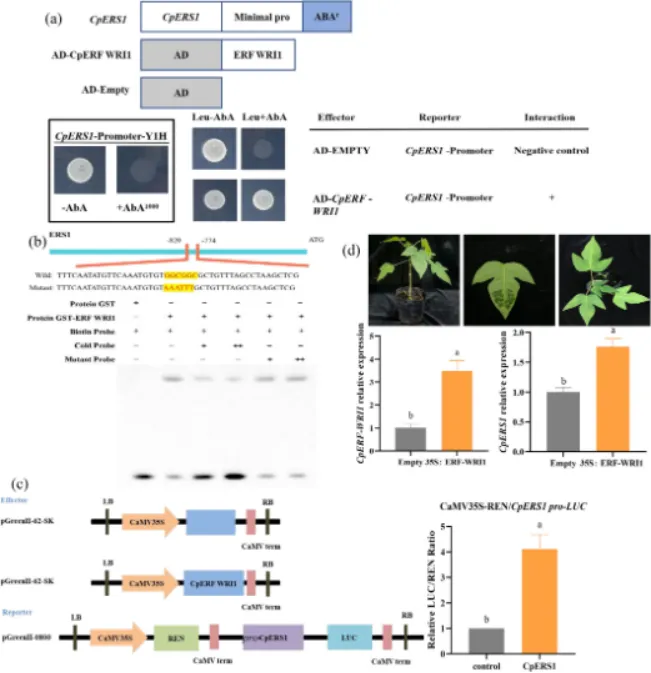
Ethylene plays a crucial role in fruit ripening and is perceived by specialised receptor proteins embedded in the endoplasmic reticulum (ER) membrane. As an ethylene antagonist, 1-methylcyclopropene (1-MCP) binds to these receptors and delays papaya ripening, but improper use can cause ripening disorders. The expression of CpERS1 and CpERF-WRI1 is markedly upregulated during ripening yet is suppressed by inappropriate 1-MCP treatments. Similar ripening disorders and expression patterns of CpERS1 and CpERF-WRI1 were observed in immature, chilled and heat-stressed papaya fruits, indicating that these genes may play key roles in ripening disorder. CpERF-WRI1 binds to and activates the CpERS1 promoter both in vitro and in vivo. Transient overexpression of CpERF-WRI1 in papaya and ectopic expression in tomato accelerated fruit ripening, increased CpERS1 expression and upregulated ripening-related pathways, whereas virus-induced gene silencing (VIGS) of CpERF-WRI1 in papaya delayed ripening and downregulated those pathways. Similarly, overexpressing CpERS1 in papaya and tomato accelerated ripening and boosted the expression of ripening-associated genes, while VIGS-mediated silencing of CpERS1 delayed ripening and suppressed these genes. Together, these results indicate that CpERF-WRI1 regulates CpERS1 expression and modulates ethylene sensing within the system II ethylene signalling pathway to control papaya ripening.