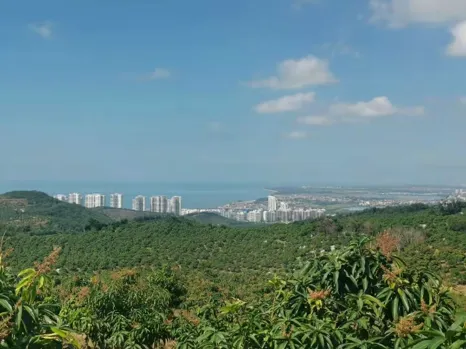
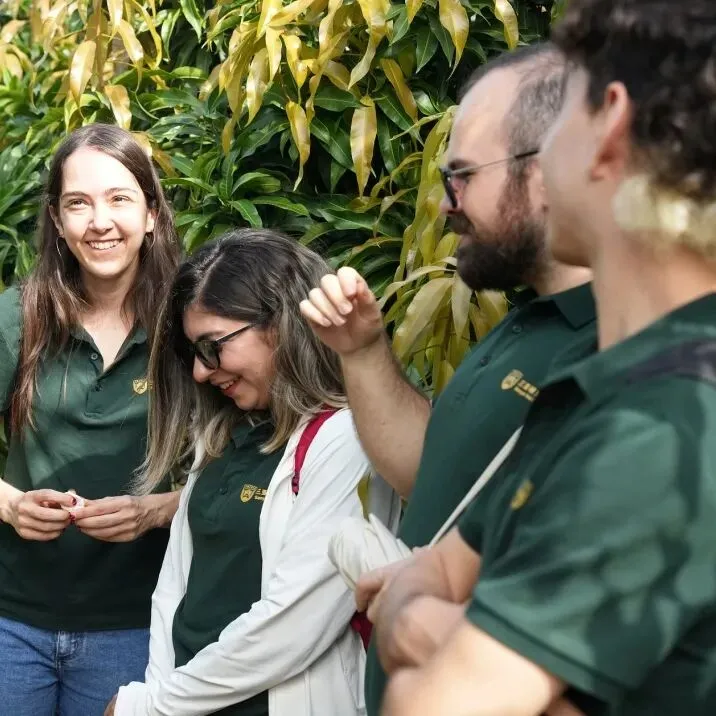
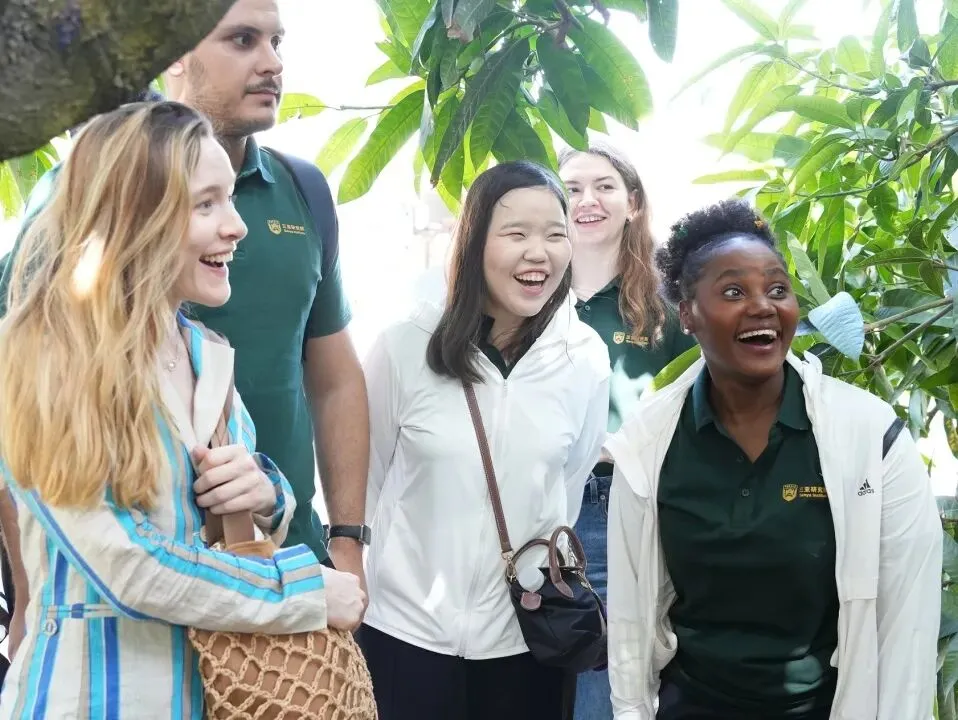
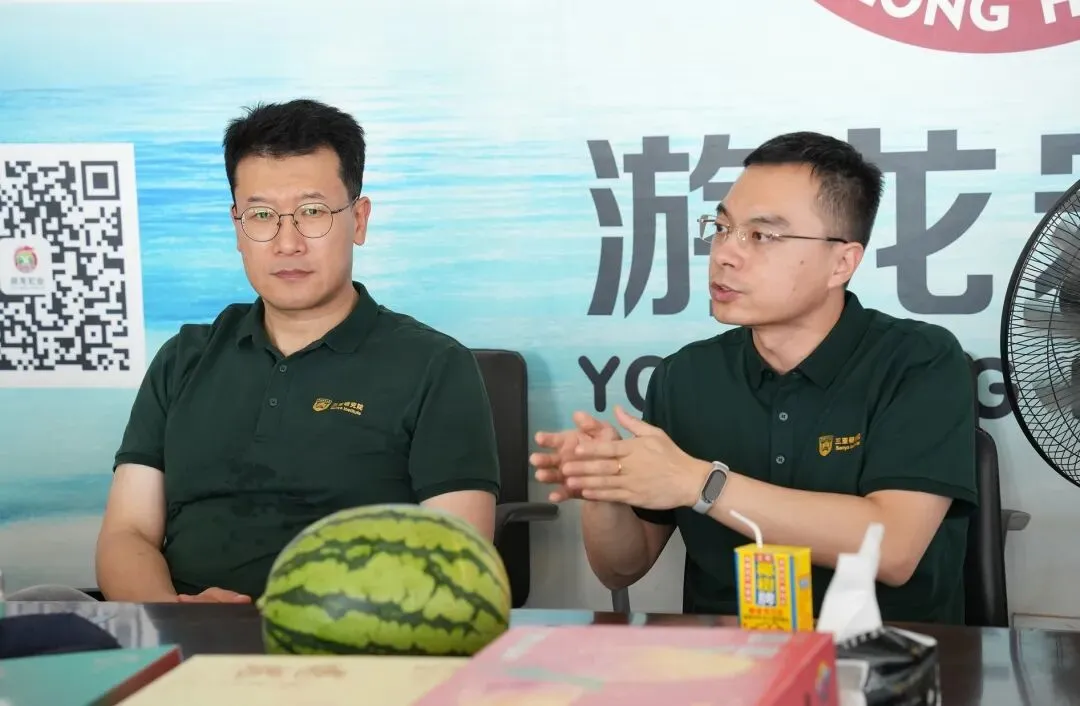
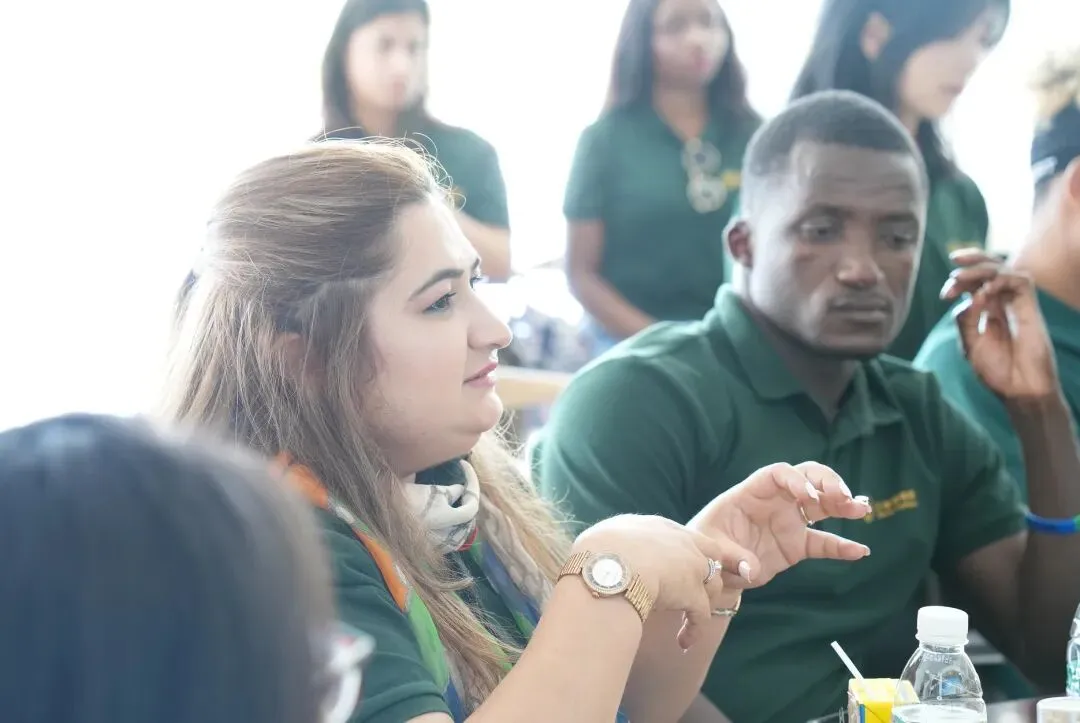
Building on their in-depth understanding of the planting and supply chain segments, the seminar session further focused on the integrated development of the industry. Taking the design proposal of the on-site mango exhibition hall as the starting point, MBA students from China Agricultural University exchanged views with Mr. You on the integrated industrial development.Faced with intensifying market competition and price pressures, the enterprise is actively exploring new development directions—building a mango-themed cultural tourism town. It plans to leverage the tourist flow in Haitang Bay, construct a landmark mango-shaped venue, and attract visitors through the integration of the primary, secondary and tertiary industries.
As the atmosphere of on-site exchanges grew increasingly lively, Dr. Dr. Gu posed a pivotal question: "If you were to define the mango industry with three key words, what would they be, Mr. You?" Mr. You explicitly pointed out that "technology, standards and brand" are the critical elements driving industrial development.
The discussion then shifted to the underlying logic of building a cultural tourism town. Mr. You further elaborated on its three core components: "industrial foundation, cultural experience and geographical advantages". This insightful perspective sparked in-depth reflections among the students, and the on-site discussions became even more heated.
The discussion then shifted to the underlying logic of building a cultural tourism town. Mr. You further elaborated on its three critical components: "industrial foundation, cultural experience and geographical advantages". This insightful response sparked in-depth discussions among the students.
In the concluding session of the seminar, drawing on their previous analysis of the business model and strategic direction, the faculty and students put forward actionable recommendations for the future development of the mango-themed cultural tourism town. These included strengthening the cultivation of professional talents and team building, further optimizing tourist experience design, and deepening industrial cooperation models, thus laying a more solid foundation for the long-term sustainable development of the project.