Synthetic microbiomes in bioengineered rhizospheres: new frontiers for climate-resilient agriculture 生物工程根际中的合成微生物组:气候适应性农业的新前沿。
(1)Climate change poses significant threats to global agricultural productivity, necessitating innovative strategies to ensure food security and ecological sustainability.气候变化对全球农业生产力构成了重大威胁,因此需要创新的策略来确保粮食安全和生态可持续性。
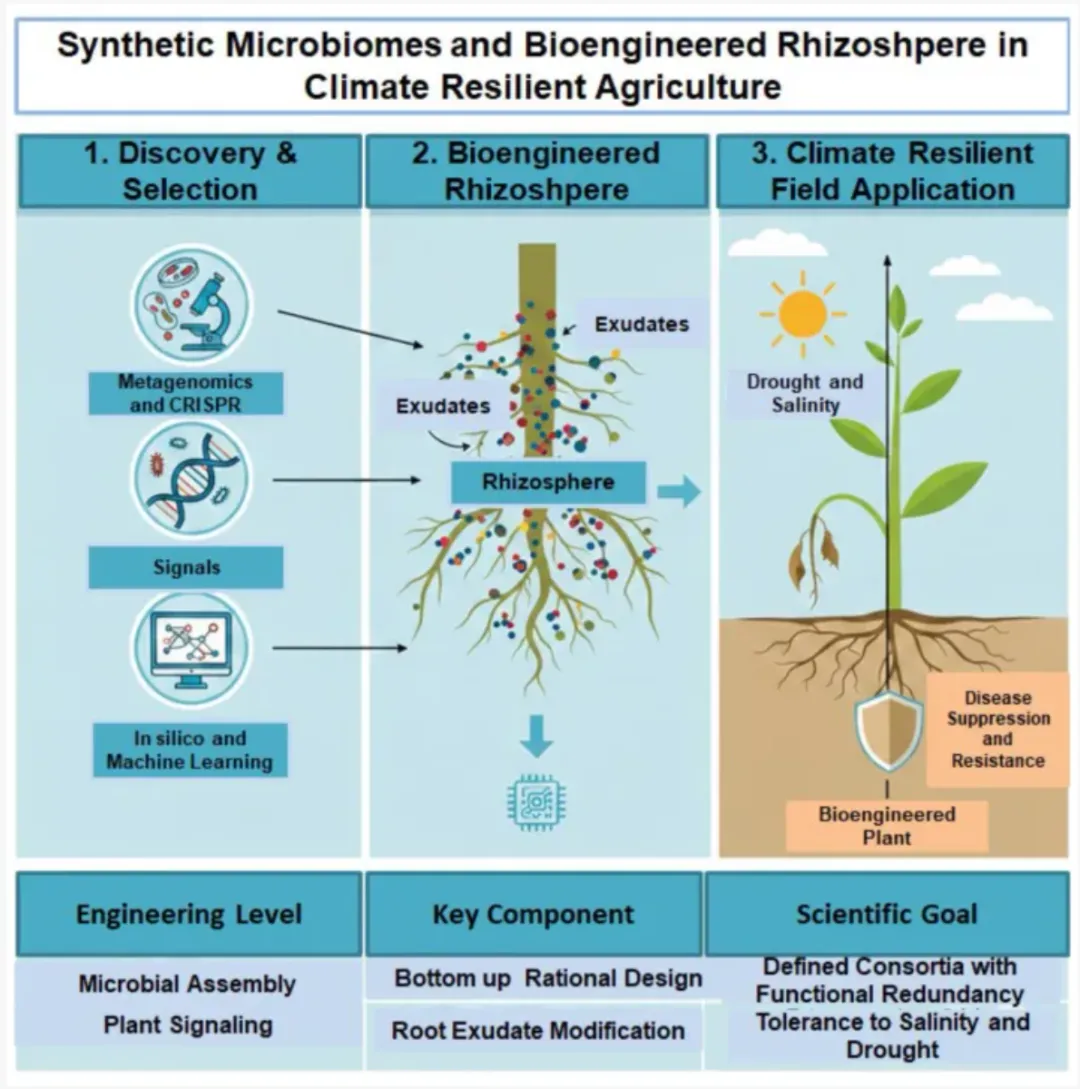
(2)One promising avenue lies in the deliberate design and deployment of synthetic microbiomes and engineered rhizospheres to enhance plant resilience under environmental stress.一个有前景的途径在于有意识地设计和部署合成微生物组及工程化根际,以增强植物在环境胁迫下的恢复力。
(3)This review places particular emphasis on multi-kingdom microbial interactions including bacteria, fungi, protists, and archaea and their potential for tailored, stress-specific applications within engineered rhizosphere systems.本综述特别强调多界微生物相互作用,包括细菌、真菌、原生生物和古菌,及其在工程化根际系统中针对特定胁迫进行定制化应用的潜力。
(4)By integrating knowledge from microbial ecology, genomics, and systems biology, researchers have begun to unravel the complex interactions between plants and their associated microbial communities.通过整合微生物生态学、基因组学和系统生物学的知识,研究人员已经开始揭示植物与其相关微生物群落之间的复杂相互作用。
(5)Engineered microbial assemblies tailored to specific host plants and environmental conditions have shown potential in stabilizing crop performance during drought, salinity, and nutrient limitations.针对特定宿主植物和环境条件量身定制的工程化微生物组装体,已在干旱、盐胁迫和养分限制条件下表现出稳定作物性能的潜力
(6)Moreover, the manipulation of root exudation patterns and soil physicochemical properties can be harnessed to recruit beneficial microbes and suppress harmful ones.此外,调控根系分泌物模式和土壤理化性质可用于招募有益微生物并抑制有害微生物。The review also examines the role of synthetic biology tools, such as CRISPR-based genome editing and metabolic pathway engineering, in optimizing microbial traits for enhanced plant support.本综述还探讨了合成生物学工具(如基于CRISPR的基因组编辑和代谢通路工程)在优化微生物性状以增强植物支持方面的作用
(7)However, knowledge gaps remain in understanding multi-kingdom dynamics, optimizing SynComs for specific environmental contexts, and translating laboratory successes to reliable, field-scale applications.然而,在理解多界动态、针对特定环境条件优化合成微生物群落,以及将实验室成功转化为可靠的田间规模应用方面,仍存在知识空白。
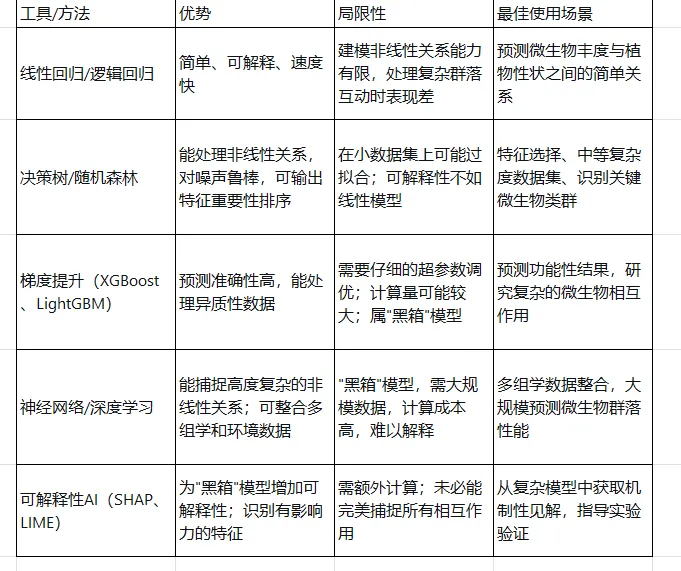
(8)Additionally, advances in high-throughput screening, machine learning, and metagenomic profiling are accelerating the identification of key microbial taxa and functions relevant to plant health.此外,高通量筛选、机器学习和宏基因组分析等技术的进展,正在加速识别与植物健康相关的关键微生物类群和功能。
(9)Despite these promising developments, challenges remain in scaling these approaches for field applications and ensuring their ecological safety and consistency.尽管取得了这些有前景的进展,但在将这些方法推广至田间应用并确保其生态安全性和一致性方面仍面临挑战。
(10)This review explores the need for interdisciplinary efforts to translate laboratory insights into field-ready technologies, ultimately contributing to the development of climate-resilient and sustainable agricultural systems.本综述探讨了通过跨学科努力将实验室见解转化为田间可用技术的必要性,最终为发展具有气候适应性和可持续的农业系统做出贡献。
(11)Result
(12)Natural rhizosphere microbiome: composition and functions 自然根际微生物群:组成和功能
(13)Core microbiome concept (bacteria, fungi, archaea, protists) 核心微生物组概念(细菌、真菌、古菌、原生生物)
(14)Key functional roles: nutrient mobilization, growth promotion, disease suppression 关键功能作用:营养活化、生长促进、疾病抑制
(15)Plant–microbe signaling networks (root exudates, quorum sensing, phytohormones) 植物-微生物信号网络(根系分泌物、群体感应、植物激素)
(16)Ecological drivers shaping rhizosphere communities 塑造根际群落的生态驱动因素
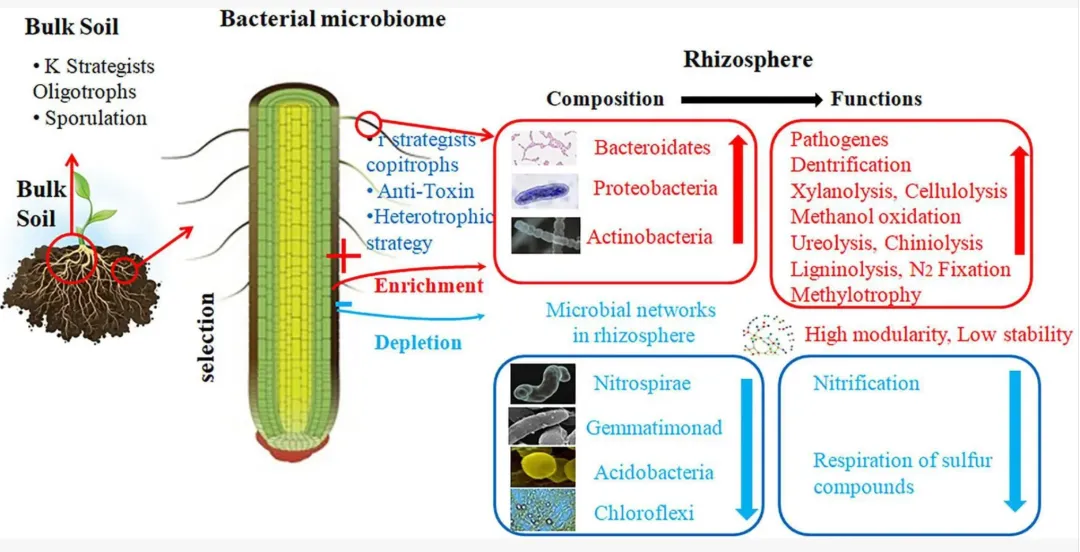
根际如何“筛选”和“重塑”土壤细菌群落。根系分泌物富含易分解的有机物,因此会吸引和滋养那些喜欢营养丰富的“机会主义者”,称为富营养型和异养型细菌。高度模块化:群落被组织成一个个相对独立的功能模块。就像一个高度分工的社会,每个模块(如固氮菌群、分解菌群)专门履行特定功能,效率可能更高。稳定性降低:这种“高效率模块化”的代价是,整个系统的稳定性下降。普通土壤像一个多样化的稳健生态系统,“东方不亮西方亮”;而根际更像一个为服务植物而优化的“特殊团队”,成员之间关联紧密,如果关键菌群受冲击,整个功能网络就可能更容易受到影响。
(17)Synthetic microbiomes in agriculture 农业中的合成微生物群
(18)Approaches to microbiome assembly 微生物组组装方法
(19)Top-down (selective enrichment) 自上而下(选择性浓缩)
(20)Bottom-up (rational design with defined consortia)
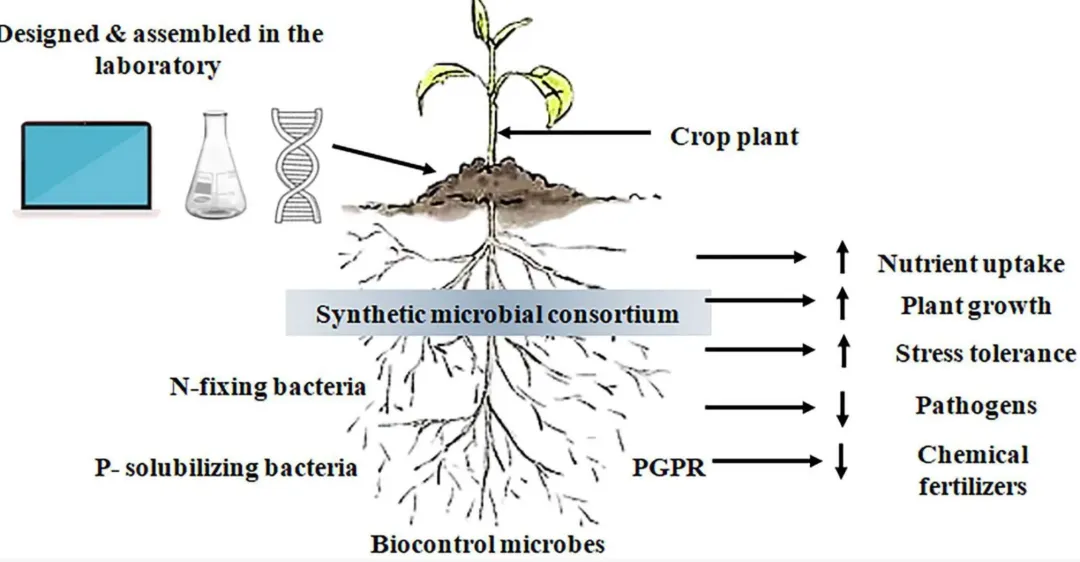
构建“合成微生物群落”的概念框架,其核心是将计算机设计、实验室实验和遗传学知识三者结合,来人工构建一个可以定殖在植物根际的微生物团队。概念框架的核心是 “自上而下”的设计理念:先通过计算机模拟进行理性设计,再回到实验室进行构建和验证。其最终产物是一个功能明确、组成清晰的合成微生物群落,用于在可控条件下精准研究植物与土壤微生物之间复杂的对话。
(21)Criteria for microbial selection (compatibility, functionality, stability) 微生物选择标准(兼容性、功能性、稳定性)
(22)Case studies of synthetic consortia improving drought, salinity, and pathogen resistance 提高抗旱性、抗盐性和抗病原体性的合成联合体案例研究
(23)Bioengineering the rhizosphere 根际生物工程
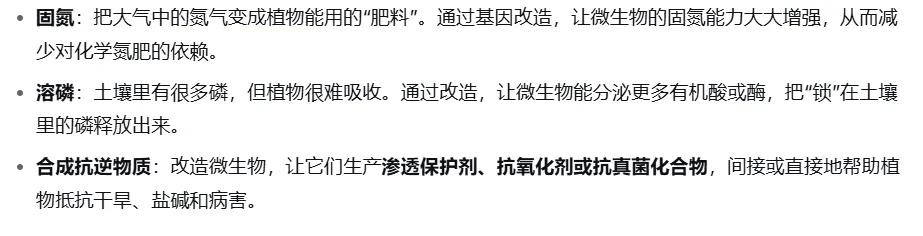
要工具是CRISPR-Cas系统,它像一个“基因剪刀”,能对微生物的基因组进行精准编辑。CRISPRi:不剪断DNA,而是“关闭”某个基因的表达。碱基编辑:直接改变DNA上的一个“字母”,实现精准突变。多重编辑:一次操作同时改造多个基因,高效地优化复杂的代谢通路。
除了直接改造微生物,还有一种策略是改造植物本身,让植物根系分泌特定的“信号”或“食物”,来定向招募或激活有益的微生物,从而塑造一个更理想的根际微生物组。
(24)Plant–microbe interactions under climate stress 气候胁迫下植物-微生物的相互作用
(25)Effects of heat, flooding, salinity, and drought on rhizosphere microbiota 高温、洪水、盐度和干旱对根际微生物区系的影响
(26)Role of synthetic microbiomes in enhancing plant resilience 合成微生物群在增强植物适应性中的作用
(27)Bioengineered rhizospheres for carbon sequestration and climate mitigation 用于固碳和减缓气候变化的生物工程根际土壤
(28)Case studies in major crops (rice, wheat, maize, legumes) 主要作物(水稻、小麦、玉米、豆类)案例研究
(29)Tools and technologies enabling synthetic microbiome research 支持合成微生物组研究的工具和技术
(30)Multi-omics (metagenomics, metatranscriptomics, metabolomics) 多组学(宏基因组学、元转录组学、代谢组学)
(31)Synthetic biology platforms for microbial design 微生物设计的合成生物学平台
(32)Intercellular signaling to coordinate microbial communication 协调微生物通讯的细胞间信号
(33)Engineered syntrophies to build codependent strains 工程合成菌构建相互依赖的菌株
(34)Synthetic biology tools for building microbial consortia with defined behaviors 用于构建具有确定行为的微生物群落的合成生物学工具
(35)Computational modeling of microbial networks 微生物网络的计算建模
(36)Bioreactors and lab-on-chip systems for rhizosphere simulation 用于根际模拟的生物反应器和芯片实验室系统‘
(37)AI and machine learning in predicting plant–microbe interactions 人工智能和机器学习在预测植物-微生物相互作用中的应用
(38)Applications in climate-resilient agriculture 在气候适应性农业中的应用
(39)Biofertilizers and biostimulants based on synthetic consortia
(40)Biofertilizer and biostimulant market
(41)Microbiome engineering for sustainable crop intensification 用于可持续作物强化的微生物组工程
(42)Integration with precision agriculture and smart farming technologies 与精准农业和智能农业技术相结合
(43)Role in reducing chemical fertilizer and pesticide dependence 减少对化肥和农药依赖的作用
(44)Challenges and limitations 挑战和局限
(45)Ecological complexity and unpredictability of field environments
(46)Microbiome stability and persistence across soil types and climates 微生物群在不同土壤类型和气候下的稳定性和持久性
(47)Biosafety, regulatory, and ethical concerns in bioengineering
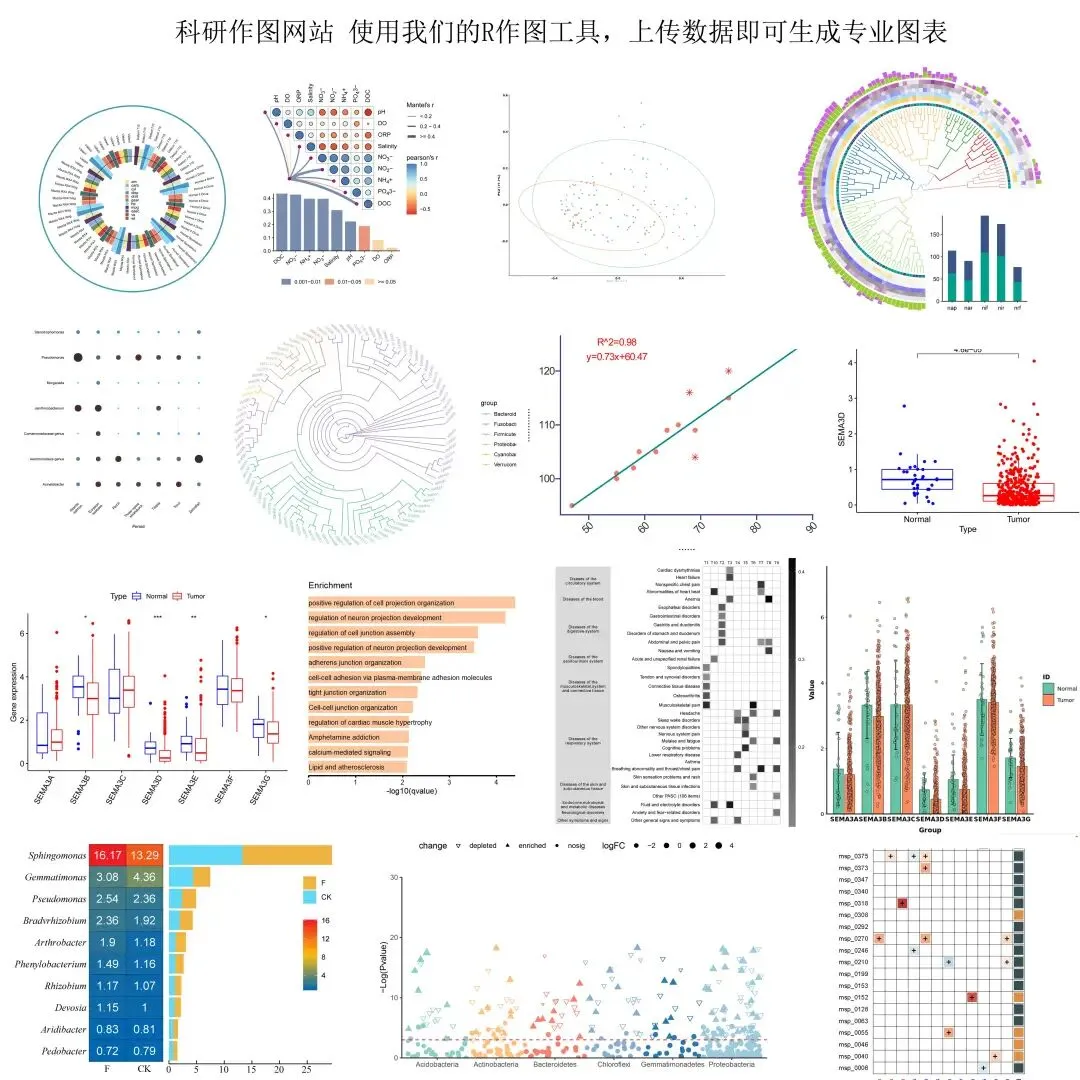
http://www.microbiomeai.cn/plot-tools/