References:
l Duan, W.-J., Liang, L., Pan, M.-H., Lu, D.-H., Wang, T.-M., Li, S.-B., et al. (2020) Theacrine, a purine alkaloid from kucha, protects against Parkinson’s disease through SIRT3 activation. Phytomedicine, 77, 153281.
l Ouyang, S.-H., Zhai, Y.-J., Wu, Y.-P., Xie, G., Wang, G.-E., Mao, Z.-F., et al. (2021) Theacrine, a potent antidepressant purine alkaloid from a special Chinese tea, promotes adult hippocampal neurogenesis in stressed mice. Journal of Agricultural and Food Chemistry, 69, 7016–7027.
l Wang, S., Chen, J., Ma, J., Jin, J., Chen, L. and Yao, M. (2020) Novel insight into theacrine metabolism revealed by transcriptome analysis in bitter tea (Kucha, Camellia sinensis). Scientific Reports, 10, 6286.
l Wang, Y., Yang, X., Zheng, X., Li, J., Ye, C. and Song, X. (2010) Theacrine, a purine alkaloid with anti-inflammatory and analgesic activities. Fitoterapia, 81, 627–631.
l Xu, J.-K., Kurihara, H., Zhao, L. and Yao, X.-S. (2007) Theacrine, a special purine alkaloid with sedative and hypnotic properties from Camellia assamica var. kucha in mice. Journal of Asian Natural Products Research, 9, 665–672.
l Ye, Y., A, H., Xinqiang, Z., Xiujuan, W., Kun, G. and Hongda, Z. (2003) New discovery of pattern of purine alkaloids in wild tea trees. Journal of Sun Yat-sen University, 42, 62–65.
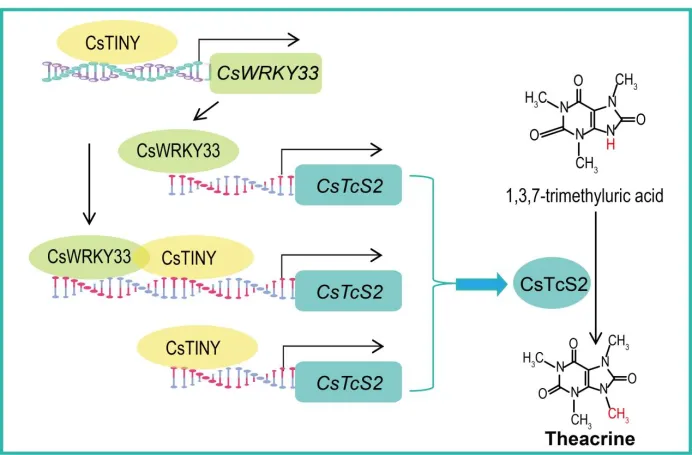
l Zhang, Y.-H., Li, Y.-F., Wang, Y., Tan, L., Cao, Z.-Q., Xie, C., et al. (2020) Identification and characterization of N9-methyltransferase involved in converting caffeine into non-stimulatory theacrine in tea. Nature Communications, 11, 1473.
l Zheng, X.-Q., Ye, C.-X., Kato, M., Crozier, A. and Ashihara, H. (2002) Theacrine (1,3,7,9-tetramethyluric acid) synthesis in leaves of a Chinese tea, kucha (Camellia assamica var. kucha). Phytochemistry, 60, 129–134.
l Zhong, H., Wang, Y., Qu, F.-R., Wei, M.-Y., Zhang, C.-Y., Liu, H.-R., et al. (2022) A novel TcS allele conferring the high-theacrine and low-caffeine traits and having potential use in tea plant breeding. Horticulture Research, 9, uhac191.

 10个月宝宝每天需要喝多少奶粉?