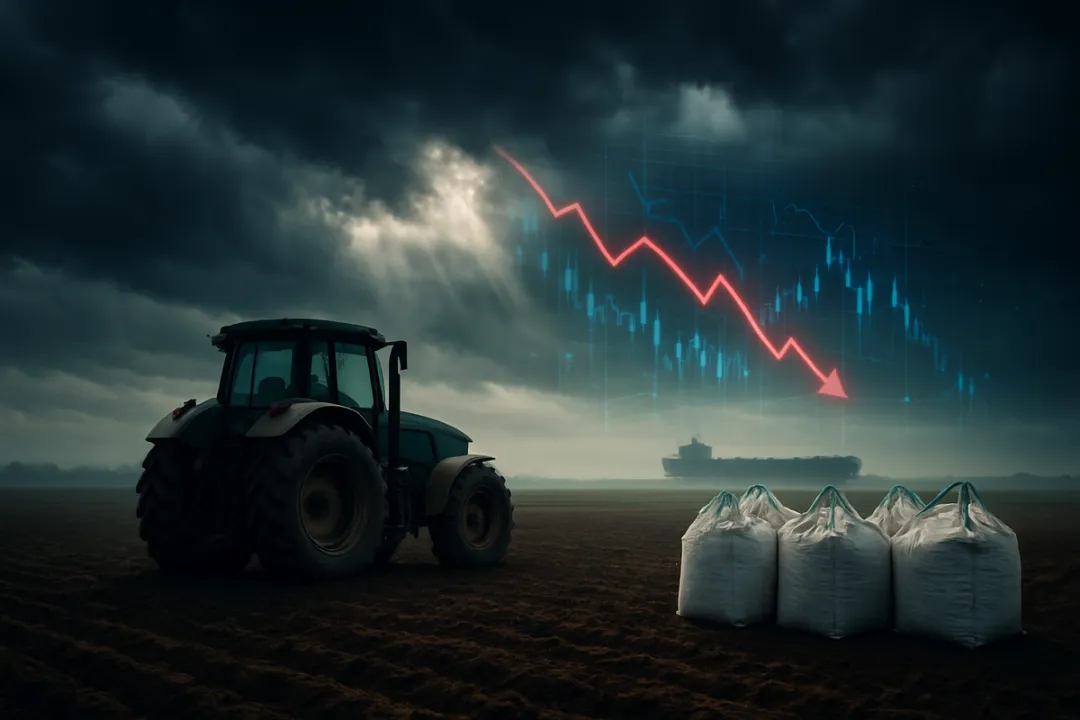
2026 全球化肥危机来袭 2027 农业格局或将重塑
As of March 23, 2026, the global agricultural sector is grappling with a destabilizing supply crisis that threatens to reshape the 2026 and 2027 planting seasons. A convergence of geopolitical conflict in the Middle East and a "sulfur cascade" in the global supply chain has sent fertilizer prices soaring, leaving farmers in the Northern Hemisphere facing some of the most challenging economic conditions in a generation. With urea prices at the Port of New Orleans (NOLA) spiking over 20% in just two weeks to exceed $650 per ton, the immediate impact is a frantic re-evaluation of crop rotations as the spring planting window narrows.截至 2026 年 3 月 23 日,全球农业正遭遇一场破坏性的供应危机,这场危机或将重塑 2026 和 2027 年的种植季。中东地缘政治冲突与全球供应链中的 “硫元素连锁危机” 交织,推动化肥价格飙升,北半球农民面临着一代人以来最严峻的经济形势。新奥尔良港的尿素价格两周内暴涨超 20%,突破每吨 650 美元,随着春耕窗口期不断缩小,农户正紧急重新规划作物轮作模式,这成为危机带来的直接影响。The crisis is not merely a short-term price spike but a structural disruption that analysts warn will persist well into 2027. For the 2026 season, the most visible casualty is nitrogen-heavy corn, which has seen its production costs climb to an estimated $166 per acre. This financial pressure is driving a massive shift in acreage away from corn and toward soybeans, a trend that could lead to significant imbalances in global grain supplies by the end of the year.分析师警告,这场危机并非短期的价格暴涨,而是结构性的供应链断裂,其影响将持续至 2027 年。2026 年种植季,受冲击最明显的是高需氮作物玉米,其种植成本已攀升至每英亩约 166 美元。在这一财务压力下,种植面积正从玉米大规模转向大豆,这一趋势可能导致年底全球粮食供应出现严重失衡。A Perfect Storm: Operation Epic Fury and the Sulfur Blockade
完美风暴:“史诗怒火行动” 与硫元素贸易封锁
The current crisis traces its origins to late February 2026, following a U.S.-led military initiative dubbed "Operation Epic Fury." The operation, aimed at neutralizing regional threats in the Middle East, resulted in the retaliatory closure of the Strait of Hormuz. This single maritime chokepoint is responsible for approximately one-third of the global seaborne fertilizer trade, particularly nitrogen and sulfur exports from hubs in Qatar, Saudi Arabia, and the United Arab Emirates. The sudden removal of this supply has paralyzed global distribution networks, leaving shipments of finished urea and critical inputs physically trapped.当前这场危机的根源可追溯至 2026 年 2 月末,以美国为首的联军发起了名为 “史诗怒火行动” 的军事行动。该行动旨在消除中东地区的局部威胁,却引发了霍尔木兹海峡的报复性关闭。这一海上咽喉要道承载着全球约三分之一的海运化肥贸易,尤其是卡塔尔、沙特阿拉伯和阿联酋等枢纽的氮、硫肥出口。供应链的突然中断导致全球化肥分销网络陷入瘫痪,成品尿素及各类关键生产原料的运输均受困停滞。Beyond the immediate loss of nitrogen, the market is reeling from a "sulfur cascade." With 44% of global sulfur trade passing through the region, the blockade has cut off the lifeblood of phosphate production. Sulfur and sulfuric acid are essential for the production of Monoammonium Phosphate (MAP) and Diammonium Phosphate (DAP). Major producers in China and Morocco, who rely on these imports, have begun to curb exports of finished fertilizers to preserve domestic food security, further tightening global supply. This sequence of events has mirrored the supply shocks of 2022 but with a more acute impact on the raw materials needed for complex fertilizers.除了氮肥供应的直接短缺,市场还遭遇了 “硫元素连锁危机”。全球 44% 的硫贸易途经该地区,海峡封锁直接切断了磷肥生产的命脉。硫和硫酸是生产磷酸一铵(MAP)和磷酸二铵(DAP)的核心原料,中国和摩洛哥等主要化肥生产国高度依赖此类原料进口,为保障国内粮食安全,两国已开始限制成品化肥出口,进一步加剧了全球供应紧张。这一系列事件与 2022 年的供应链危机相似,但对复合化肥所需原材料的冲击更为严重。The initial market reaction has been one of extreme volatility and "price discovery" as retailers and farmers struggle to secure volumes. In many parts of the U.S. Midwest and Europe, fertilizer retailers have temporarily stopped quoting prices altogether, unable to guarantee delivery or manage the risk of further overnight surges. This uncertainty has left many farmers in a defensive posture, delaying purchases and scaling back application rates, a move that could negatively impact yields for the 2026 harvest.由于零售商和农户都难以锁定化肥采购量,市场最初的反应是剧烈的价格波动和持续的 “价格探索”。在美国中西部和欧洲的多个地区,化肥零售商已暂时停止报价,因他们无法保证交货时间,也无力应对夜间价格再度暴涨的风险。这种不确定性让众多农户采取保守策略,推迟采购并降低化肥施用量,这一做法可能会对 2026 年的粮食收成造成负面影响。Corporate Divergence: Winners and Losers in a Volatile Market
企业分化:动荡市场中的赢家与输家
The 2026 crisis has created a stark divide among the major public companies in the fertilizer space, largely dictated by their proximity to low-cost feedstocks. CF Industries (NYSE: CF) has emerged as a clear beneficiary. Leveraging its position as a major North American producer with access to relatively stable domestic natural gas prices at the Henry Hub, CF has maintained high margins while capturing the "scarcity premium" in global markets. The company's stock jumped 13% in early March 2026, following upward revisions to its Q1 earnings estimates, as it continues to export high-margin nitrogen to a desperate global market.2026 年的这场危机让化肥行业的主要上市公司出现了明显分化,而分化的关键在于企业能否获取低成本的生产原料。CF 工业公司(纽约证券交易所代码:CF)成为了明确的受益者。作为北美主要化肥生产商,该公司能以相对稳定的价格获取亨利港的本土天然气,依托这一优势,CF 工业在全球市场赚取 “稀缺溢价” 的同时,始终保持着高利润率。2026 年 3 月初,随着公司第一季度收益预期上调,其股价大涨 13%,目前仍在向需求迫切的全球市场出口高利润氮肥。Nutrien (NYSE: NTR) has also seen its outlook upgraded to a "Buy" by several major analysts. As the world’s largest producer of potash, the company is ramping up production in Canada to fill the supply gap left by continued sanctions on Russian and Belarusian exports. While Nutrien's nitrogen business is also benefiting from the price surge, its integrated retail network is providing a buffer, helping it manage supply chain logistics better than smaller competitors. However, The Mosaic Company (NYSE: MOS) has faced a more complicated landscape. Despite high phosphate prices, Mosaic’s Florida-based operations have been hampered by the doubling of sulfur costs, leading to a reported $250 million EBITDA hit in the first quarter of 2026.多家主流分析师也将加拿大营养公司(纽约证券交易所代码:NTR)的评级上调至 “买入”。作为全球最大的钾肥生产商,该公司正加大加拿大本土的产能,以填补对俄罗斯和白俄罗斯出口制裁造成的供应缺口。尽管加拿大营养公司的氮肥业务也从价格暴涨中获益,但其一体化的零售网络为公司提供了缓冲,使其在供应链物流管理上比小型竞争对手更具优势。而美盛公司(纽约证券交易所代码:MOS)则面临着更为复杂的局面,尽管磷肥价格高企,但硫原料成本翻倍拖累了该公司在佛罗里达的业务,据报道,其 2026 年第一季度的息税折旧摊销前利润损失达 2.5 亿美元。Conversely, European producers like Yara International (OTC: YARIY) are under immense pressure. High European natural gas prices, which have spiked above €60/MWh due to regional energy tensions, have forced Yara to maintain production curtailments of nearly 25% across its European fleet. This inability to run at full capacity during a price peak highlights the structural disadvantage of European manufacturing in the current energy environment. Furthermore, machinery giants like Deere & Company (NYSE: DE) are closely watching the crisis; while they have seen a slight uptick in orders for soybean-specialized equipment, the overall decline in farm profitability—with corn farmers projected to lose over $200 per acre—could dampen overall capital expenditure in the equipment sector through 2027.与之相反,雅苒国际(场外交易代码:YARIY)等欧洲化肥生产商正承受巨大压力。受地区能源紧张影响,欧洲天然气价格飙升至每兆瓦时 60 欧元以上,这迫使雅苒国际将其欧洲工厂的产能维持在减产近 25% 的水平。在化肥价格处于高位时却无法满负荷生产,这凸显了当前能源环境下欧洲制造业的结构性劣势。此外,迪尔公司(纽约证券交易所代码:DE)等农业机械巨头也在密切关注这场危机,尽管大豆专用设备的订单略有增加,但农场整体盈利能力下滑 —— 玉米农户预计每英亩亏损超 200 美元 —— 这一状况可能会抑制 2027 年前农业设备行业的整体资本支出。Agricultural Shifts and Global Food Security
农业格局重构与全球粮食安全
The broader significance of this crisis lies in the fundamental shift in global agricultural strategies. For the 2026 planting season, USDA projections suggest corn acreage will drop to roughly 93 million acres, a sharp decline from the nearly 99 million acres planted in 2025. This shift toward soybeans, which require significantly less nitrogen fertilizer, is an economic necessity for many farmers. The "soybean pivot" is no longer just a trend but a survival strategy, as the loss-per-acre for soybeans is estimated to be nearly $75 less than that of corn under current input costs.这场危机的深层影响在于,全球农业种植策略正发生根本性转变。美国农业部预测,2026 年种植季的玉米种植面积将降至约 9300 万英亩,较 2025 年的近 9900 万英亩大幅下降。大豆对氮肥的需求远低于玉米,转向种植大豆成为众多农户的经济选择。在当前的生产资料成本下,大豆每英亩的亏损预计比玉米少近 75 美元,这场 “大豆转型” 已不再是一种趋势,而是农户的生存策略。This event fits into a larger trend of "resource nationalism," where nations prioritize domestic supply over international trade. Following the precedents set during the 2022 energy crisis, countries are increasingly viewing fertilizers as a matter of national security rather than a global commodity. This shift is likely to lead to more regulatory interventions, such as export taxes or domestic price caps, which could further distort global market signals and lead to long-term inefficiencies in food production.这一现象契合了全球范围内愈演愈烈的 “资源民族主义” 趋势,各国均将本土供应置于国际贸易之上。继 2022 年能源危机后,各国愈发将化肥视为国家安全的重要组成部分,而非普通的全球大宗商品。这一转变可能引发更多的监管干预,如征收出口税、设置国内价格上限等,这些措施或将进一步扭曲全球市场信号,导致粮食生产出现长期的效率低下。Historically, such price shocks have led to a "tail" of high food inflation. As fertilizer is the single largest variable cost for grain production, the 2026 price surge will likely manifest in higher grocery prices by early 2027. The ripple effects will be felt most acutely in emerging markets that are dependent on imported grain and fertilizers, potentially leading to renewed concerns over global food stability similar to the "Arab Spring" period or the post-pandemic inflation cycles.从历史经验来看,此类价格冲击会引发粮食高通胀的 “长尾效应”。化肥是粮食生产中最大的单一可变成本,2026 年的化肥价格暴涨,大概率会在 2027 年初体现为食品零售价格的上涨。依赖粮食和化肥进口的新兴市场将受到最严重的波及,全球粮食安全或再度引发担忧,堪比 “阿拉伯之春” 时期或疫情后的通胀周期。The Long Road to 2027: Strategic Pivots and New Realities
迈向 2027:战略转型与新现实
Looking ahead to the 2027 planting season, the market is bracing for a "new normal" where fertilizer prices remain structurally higher than historical averages. Short-term relief is unlikely until the geopolitical situation in the Middle East stabilizes and the Strait of Hormuz is fully reopened to commercial traffic. In the meantime, the industry is accelerating its pivot toward "Green Ammonia" and localized production methods to reduce dependence on volatile global supply chains and fossil fuel feedstocks.展望 2027 年种植季,市场正准备迎接化肥价格长期高于历史平均水平的 “新常态”。除非中东地缘政治局势企稳、霍尔木兹海峡全面恢复商业通航,否则化肥市场难以迎来短期缓解。在此期间,化肥行业正加速向 “绿色氨肥” 和本土化生产转型,以降低对动荡的全球供应链和化石燃料原料的依赖。For farmers, the 2027 season will require even more sophisticated management. We are seeing an increase in "second-year soybeans" and the adoption of precision agriculture technologies that allow for ultra-targeted fertilizer application. While these adaptations offer some resilience, they require significant upfront investment, which may be out of reach for smaller operations. Market opportunities may emerge for specialized biological fertilizer companies and tech firms that can demonstrate proven reductions in synthetic fertilizer needs.对于农户而言,2027 年的种植季需要更精细化的管理。目前,“连作大豆” 的种植模式日益普及,精准农业技术也得到更多应用,该技术可实现化肥的超精准施用。这些调整虽能提升农业生产的抗风险能力,但需要大量的前期投入,这对小型农场而言可能难以承受。而能有效减少化肥施用量的专业生物肥企业和农业科技公司,或将迎来新的市场机遇。The potential for a "second wave" of new capacity in 2027—particularly from projects in Canada and potentially renewed flows from Eastern Europe—remains a wildcard. If this capacity comes online as global demand softens due to the acreage shift, the market could see a sharp correction in late 2027. However, the immediate challenge remains the massive logistical hurdle of moving existing supplies to where they are needed most.2027 年化肥行业可能迎来新一轮的产能扩张,尤其是加拿大的新建项目,以及东欧可能恢复的化肥供应,这一变量仍存在不确定性。如果这些新产能在全球种植结构调整导致需求疲软时投产,2027 年末化肥市场可能出现大幅回调。但目前最紧迫的挑战,仍是将现有化肥库存运输至需求最迫切地区的巨大物流难题。Summary and Investor Outlook
总结与投资者展望
The 2026 fertilizer crisis is a watershed moment for global agriculture, driven by a combination of maritime blockades and soaring input costs. The immediate result is a significant shift in crop acreage and a profitability squeeze for farmers that will likely reverberate through the food supply chain for years. For investors, the key takeaways involve the divergence in performance between North American producers like CF Industries and their energy-starved European counterparts.受海运封锁和生产原料价格暴涨双重影响,2026 年化肥危机成为全球农业发展的分水岭。其直接后果是作物种植面积的大幅调整,以及农户盈利能力的受压,而这一影响或将在未来数年持续传导至整个食品供应链。对于投资者而言,核心看点是 CF 工业等北美化肥生产商,与能源短缺的欧洲同行之间的业绩分化。Moving forward, the market will be characterized by high volatility and a focus on supply security. Investors should closely monitor natural gas prices at the Henry Hub, any movement toward reopening the Strait of Hormuz, and the USDA's final acreage reports for 2026. The ability of companies to manage input costs—particularly sulfur and natural gas—will be the primary driver of earnings in the coming quarters. As we look toward the 2027 cycle, the agricultural sector's ability to adapt to these high-cost environments will determine the next era of global food production.未来,化肥市场将呈现高波动性和供应安全导向的特征。投资者应密切关注亨利港天然气价格、霍尔木兹海峡通航的最新进展,以及美国农业部发布的 2026 年最终种植面积报告。企业控制生产原料成本 —— 尤其是硫和天然气成本 —— 的能力,将成为未来几个季度企业盈利的核心驱动力。展望 2027 年种植周期,农业行业能否适应这一高成本环境,将决定全球粮食生产的下一个发展阶段。