Plant Biotechnology Journal., 25 Feb 2026
AaSIZ1-Mediated SUMOylation of AaMYB31 Positively Regulates Freezing Tolerance in Actinidia arguta
Author
Liu L, Cao L, Tang N…Liu Y*, Zhang C*, Zheng P*.
*:Anhui Province Key Laboratory of Horticultural Crop Ouality Biology, School of Horticulture, Anhui Agricultural University, Hefei, China
Abstract
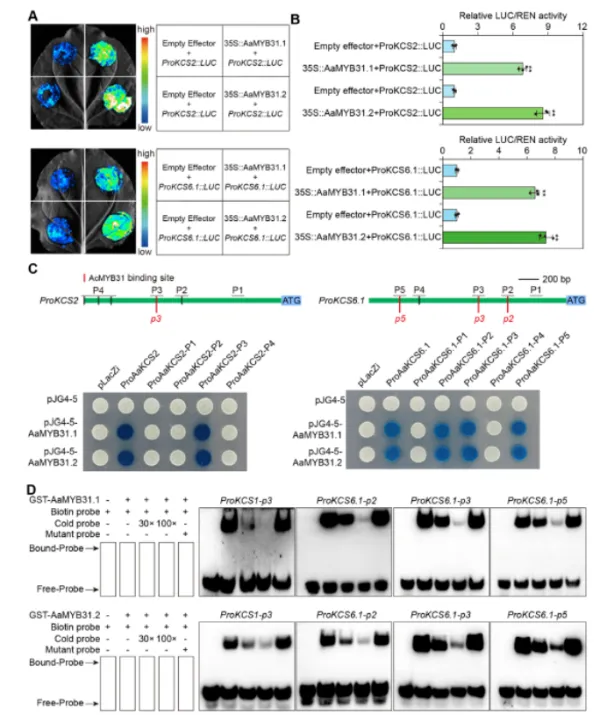
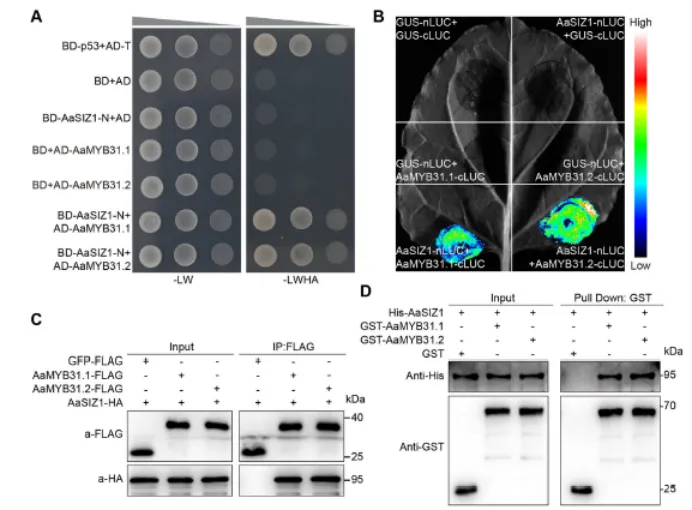
Several studies revealed that wax accumulation enhances plant tolerance to cold stress. However, the molecular regulation mechanism of wax synthesis under cold stress is still unclear in Actinidia arguta, a hardy kiwifruit species. Here, we found that cold stress significantly induces wax accumulation in Actinidia arguta leaves, which is driven by the robust upregulation of wax biosynthetic genes, particularly AaKCS2 and AaKCS6.1. Overexpression of AaKCS2/6.1 in Actinidia chinensis not only elevated wax biosynthesis but also enhanced freezing tolerance. Furthermore, we identified that the R2R3-MYB transcription factor AaMYB31.1 and AaMYB31.2 are transcriptionally activated by cold stress and directly bind to the promoters of AaKCS2/6.1 to activate their expression. Overexpression of AaMYB31s in Actinidia chinensis significantly promoted wax biosynthesis under cold stress, thus enhancing the freezing tolerance of kiwifruit. Besides, we identified that AaSIZ1, a small ubiquitin-like modifier (SUMO) E3 ligase from Actinidia arguta, interacts with AaMYB31s to mediate the SUMOylation of AaMYB31s to enhance their protein stability. The functional validation in Actinidia chinensis further revealed that overexpression of AaSIZ1 robustly upregulated the cuticular wax biosynthesis and enhanced freezing tolerance. Importantly, our evidence suggests that the interaction between AaMYB31s and AaSIZ1 and the AaSIZ1-mediated SUMOylation of AaMYB31s were significantly enhanced under cold stress. Therefore, we conclude that the AaSIZ1-AaMYB31s-AaKCSs module positively regulates wax synthesis in response to freezing stress.







 10个月宝宝每天需要喝多少奶粉?

