Plant Physiology18 Jan 2026
Overexpression of TRYPTOPHAN DECARBOXYLASE from Aegilops variabilis enhances flavonoid biosynthesis and germination in wheat
Author
He Y, Li Z, Dong H…Wang S, Long H, Wang J*.
*: State Key Laboratory of Crop Gene Exploration and Utilization in Southwest China, Sichuan Agricultural University, Chengdu 611130, China.
Abstract
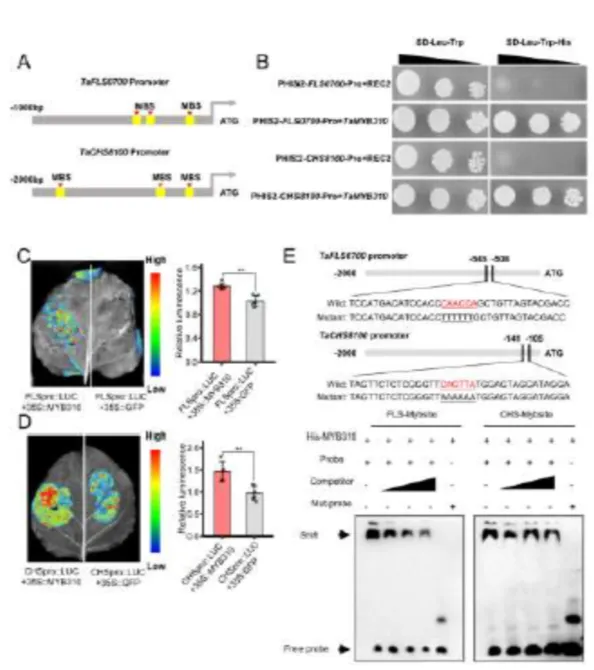
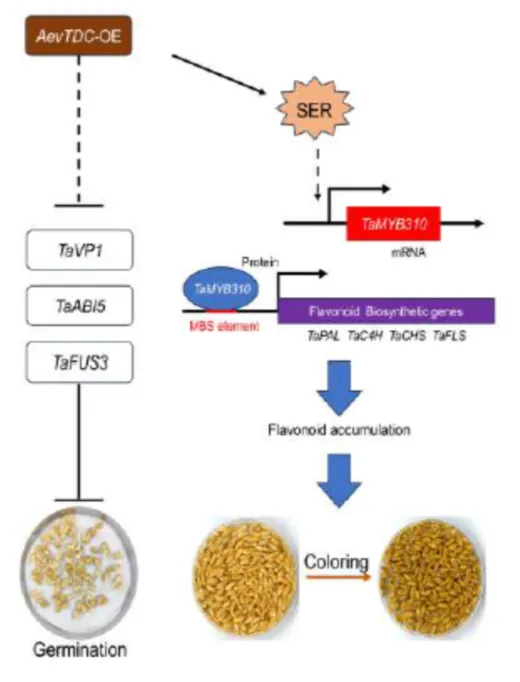
Tryptophan decarboxylase (TDC) plays an important role in plant hormonal balance and secondary metabolite synthesis by catalyzing the conversion of tryptophan to tryptamine. Prior research has indicated that AevTDC from Aegilops variabilis, a relative of wheat (Triticum aestivum L.), enhances wheat resistance to the pathogen cereal cyst nematode by influencing salicylic acid and flavonoid pathways. Expanding on these findings, this study demonstrates that AevTDC promotes both serotonin and flavonoid synthesis, resulting in altered wheat grain color. Furthermore, we observed that AevTDC overexpression induces the expression of TaMYB310, which is closely associated with flavonoid biosynthesis. TaMYB310 activates the expression of CHS (encoding chalcone synthase) and FLS (encoding flavonol synthase) by directly binding to the MYB binding site (MBS), thereby promoting flavonoid biosynthesis. Additionally, overexpression of AevTDC reduced wheat seed sensitivity to abscisic acid (ABA), providing an explanation for the accelerated seed germination. In summary, this study reveals the critical role of AevTDC in regulating wheat metabolism, emphasizing its importance in promoting serotonin and flavonoid synthesis, altering grain color, and accelerating seed germination. These findings offer insights into plant metabolic regulation mechanisms and their applications in agricultural improvement.