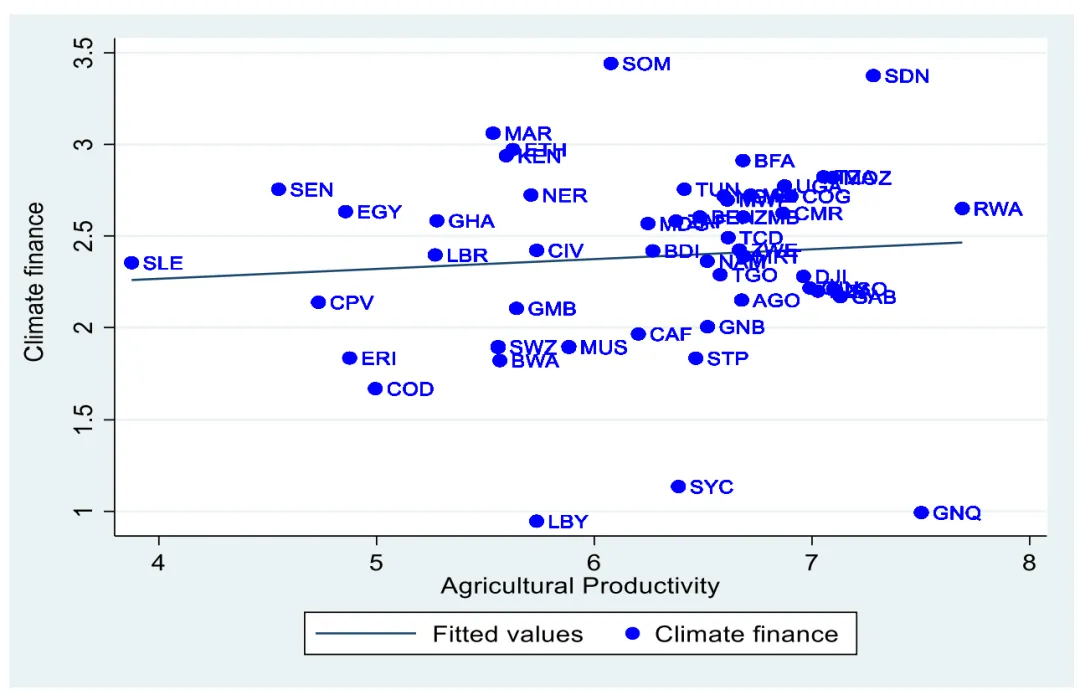
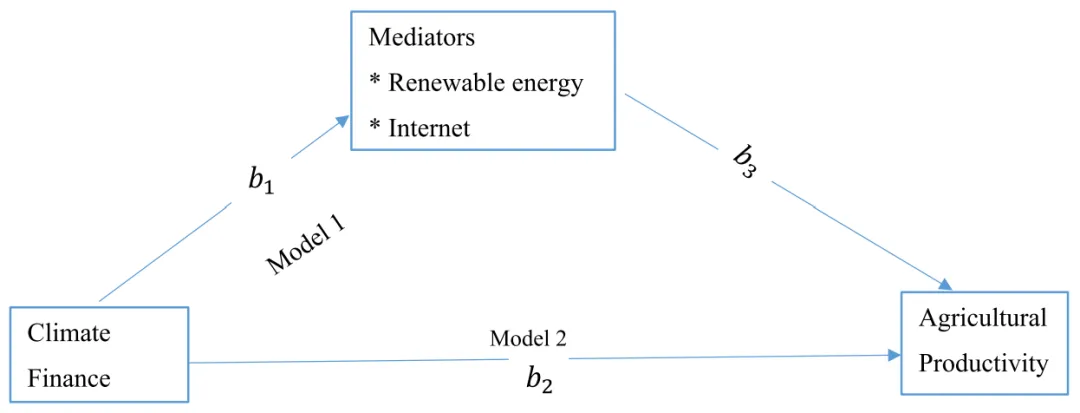
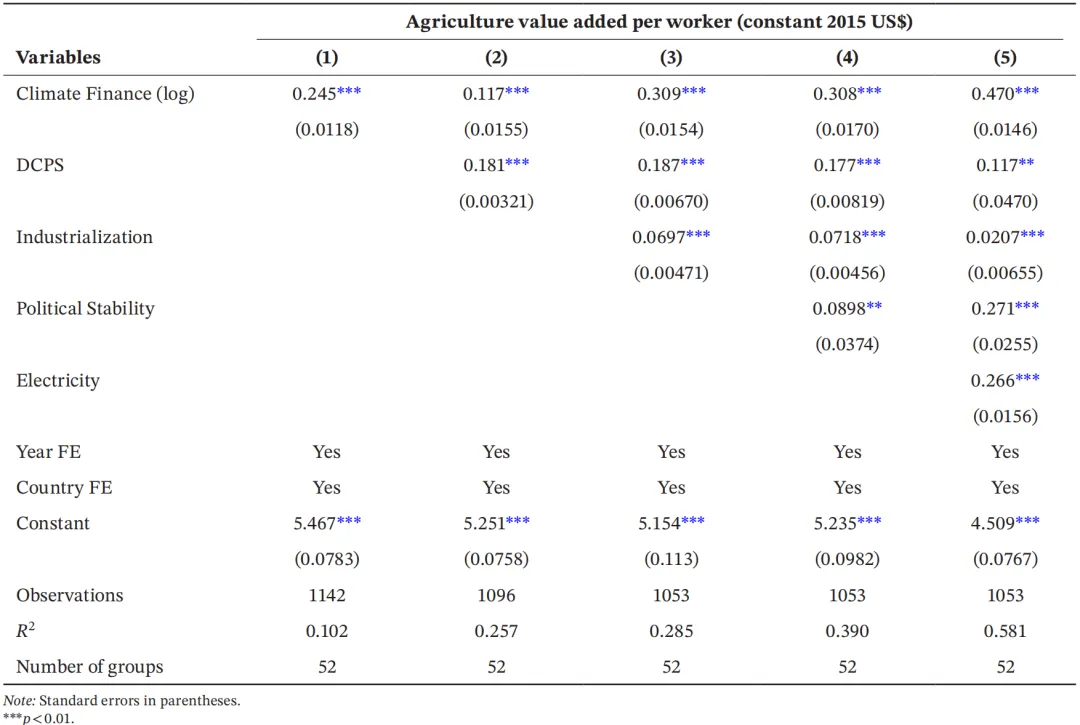
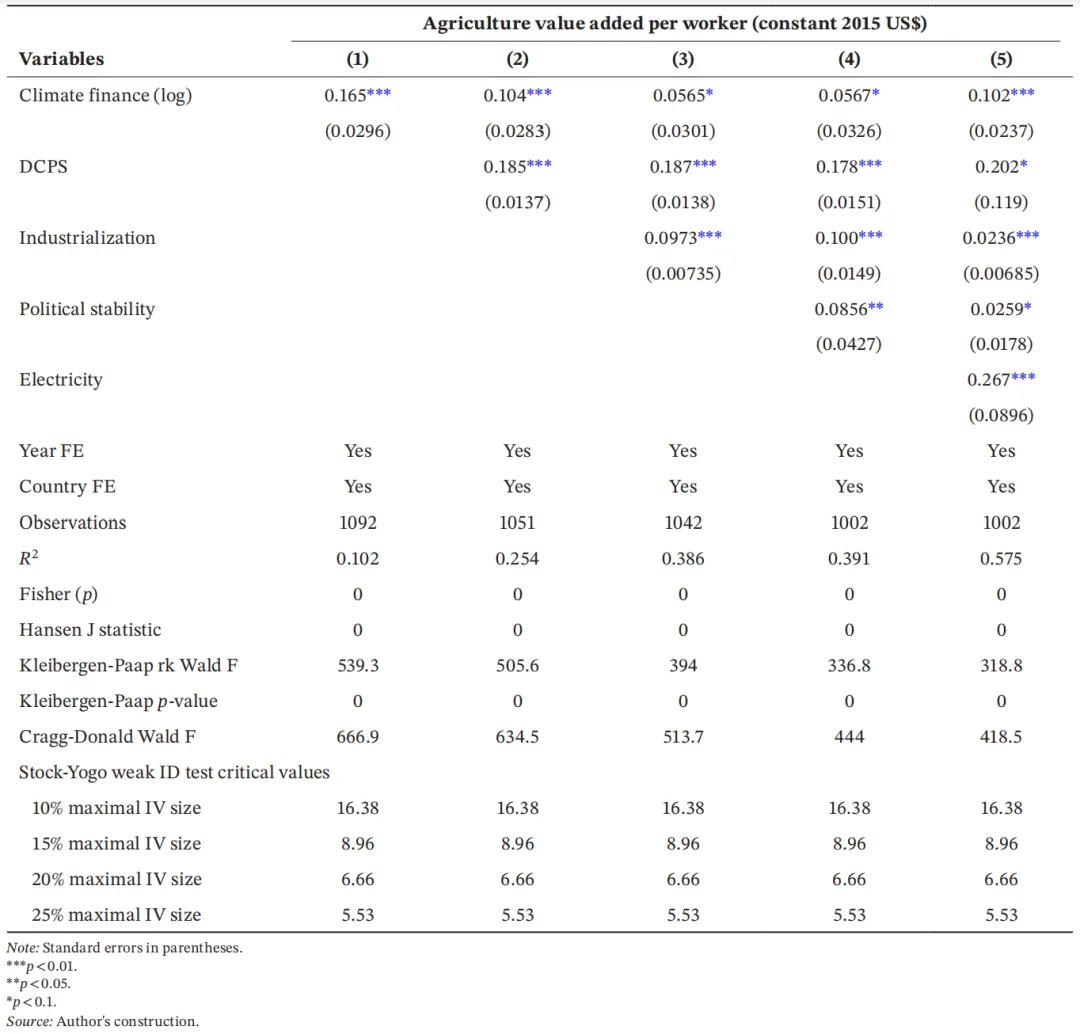
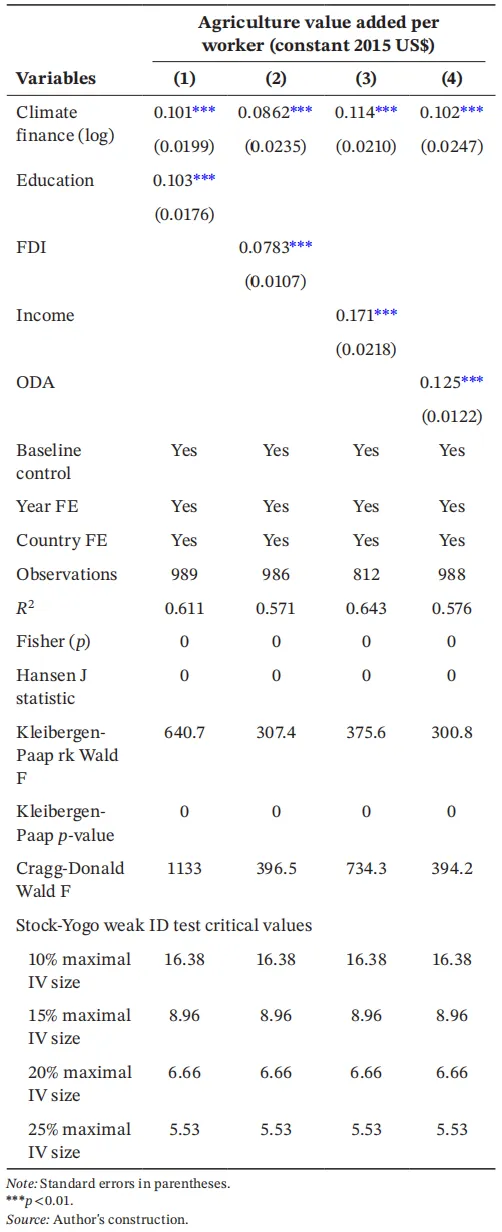
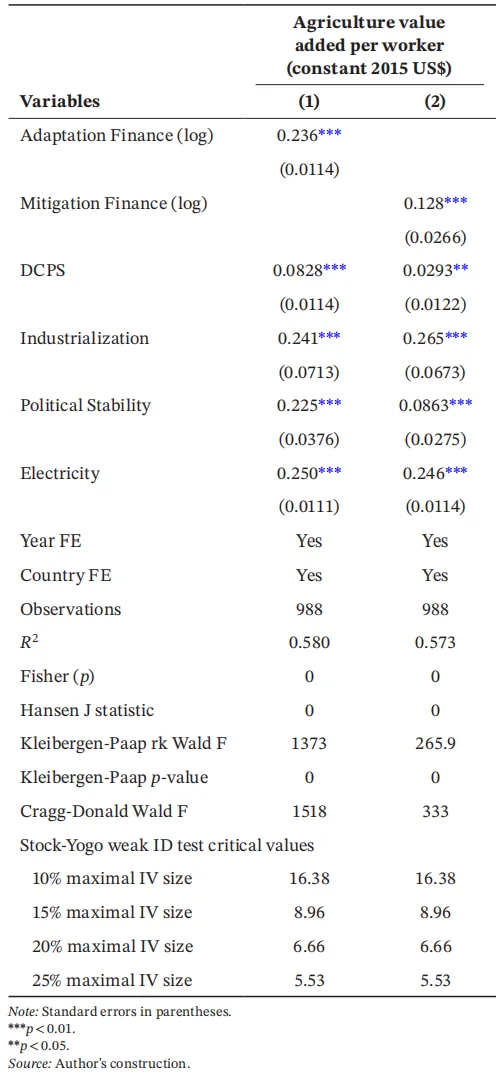
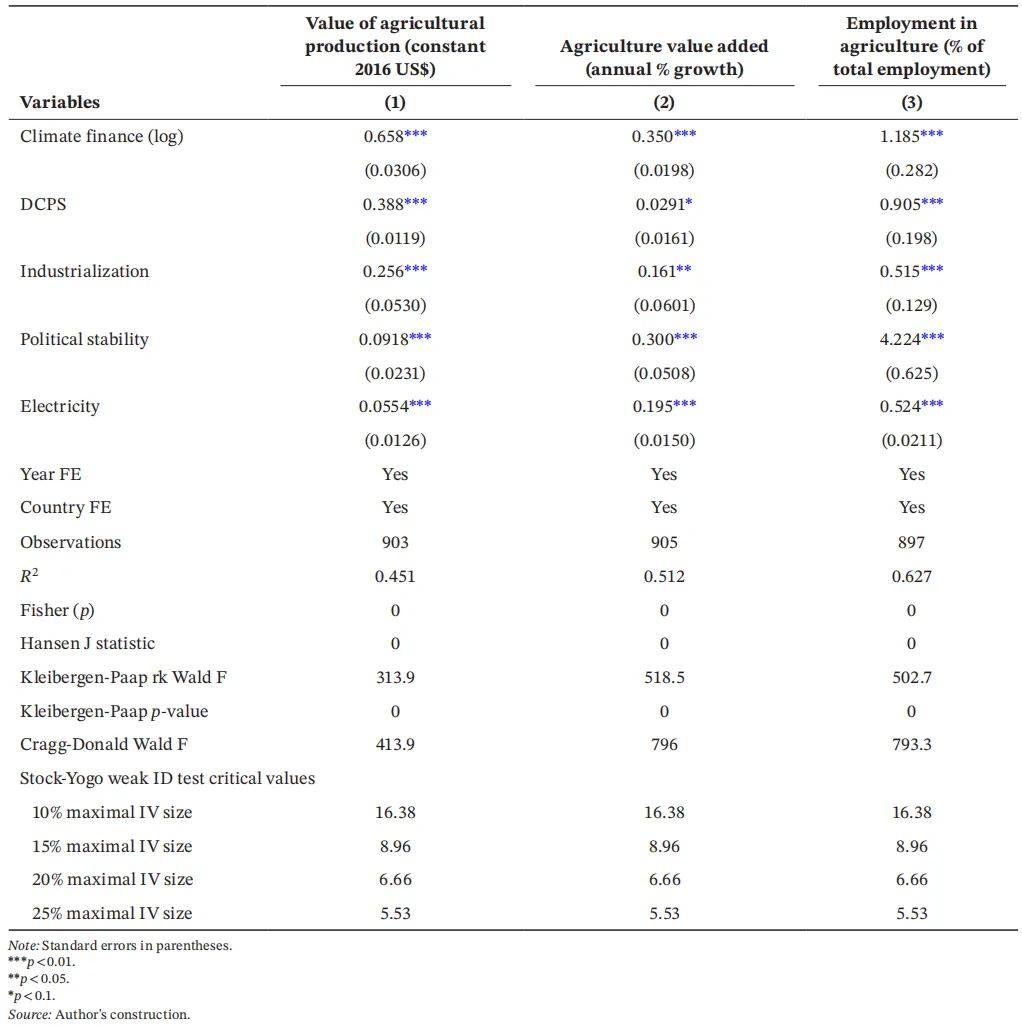
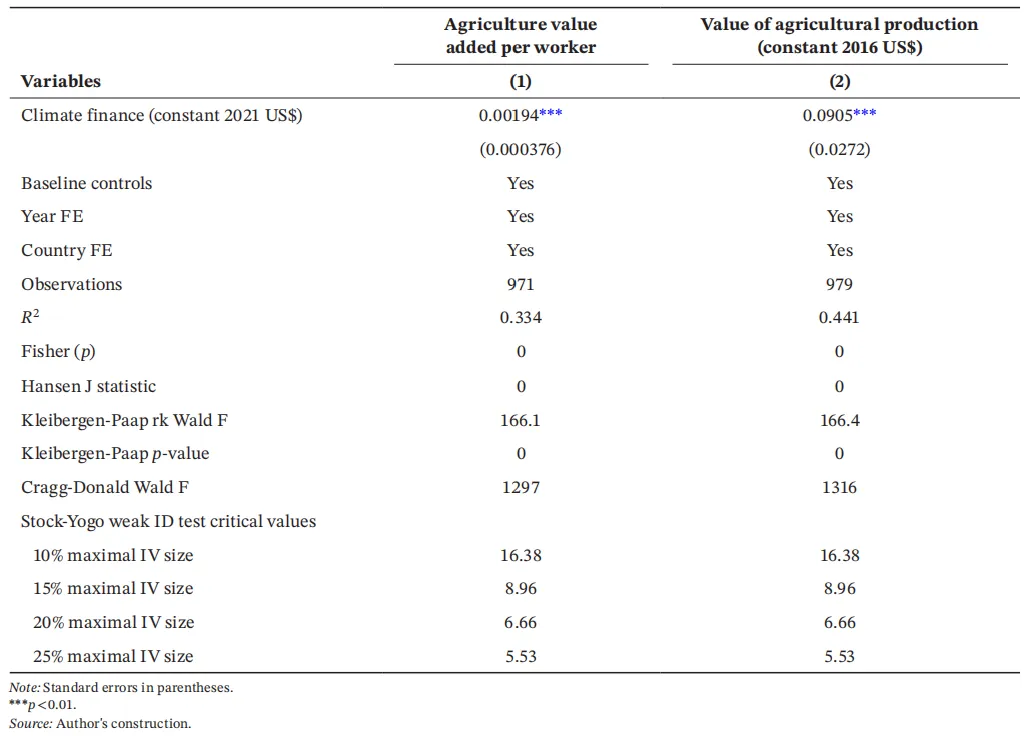
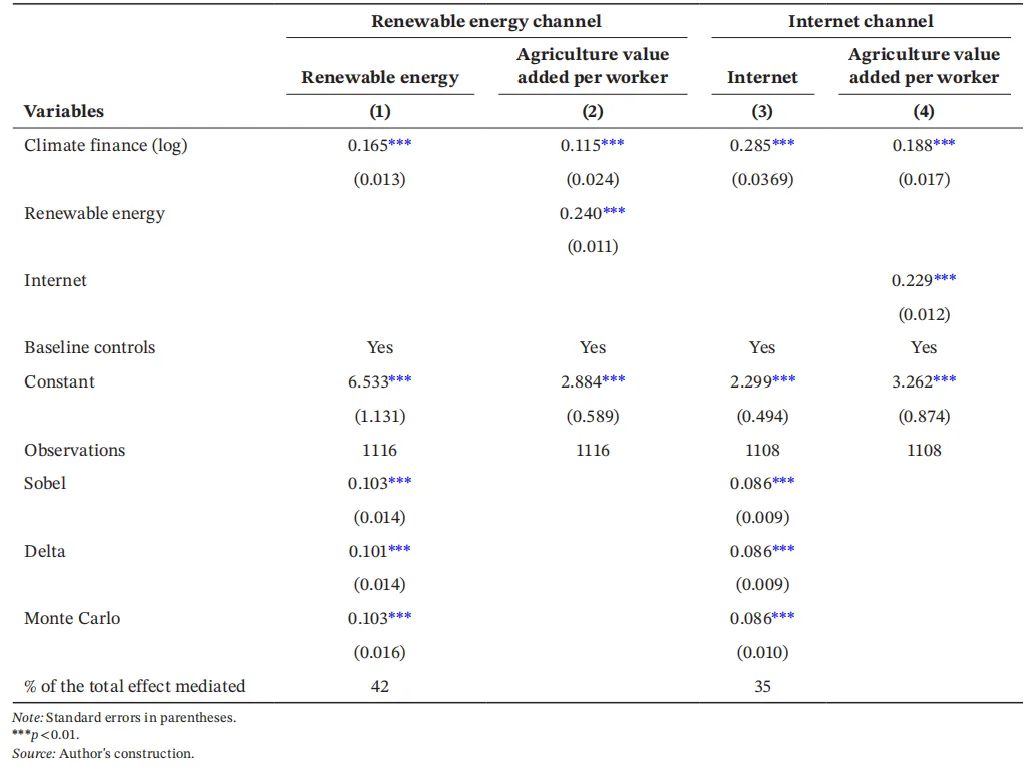
Achieving food security and sustainable agricultural development remains a central challenge for Africa in the context of Sustainable Development Goal 2 (SDG 2) on zero hunger and SDG 13 on climate action, as climate-related shocks continue to undermine agricultural productivity across the continent. Although climate finance has emerged as a key instrument to support climate adaptation and mitigation in developing economies, its direct contribution to agricultural productivity in Africa remains insufficiently explored, creating an important gap in the empirical literature. In an attempt to fill this gap and provide actionable solutions, the present study examines the effect of climate finance on agricultural productivity across 52 African countries over the period 2000–2022. The analysis employs Driscoll–Kraay and instrumental variable generalized method of moments (IV-GMM) estimators to account for cross-sectional dependence and endogeneity concerns. The results indicate that climate finance exerts a positive and statistically significant effect on agricultural productivity, with findings remaining robust across alternative specifications, estimation techniques, and productivity indicators. Further analysis of transmission mechanisms reveals that renewable energy adoption and internet access partially mediate the impact of climate finance on agricultural productivity, highlighting the importance of complementary infrastructure and digital connectivity. Based on the findings, the study provides evidence-based policy recommendations to support climate-resilient agricultural transformation and sustainable productivity growth in Africa.