AGEE最新综述 | 农业生产过程中的肥料使用和碳固存
文献信息:
Bolan Nanthi*, Lv Xiaofei, Xu Yue, Mondal Tilak, Bolan Shiv, Smith Pete, Campbell Grant A., Mukherjee Santanu, Kelbel Grace, Chadalavada Sreeni, Siddique Kadambot H. M. Fertiliser use and carbon sequestration in agricultural soils. Agriculture, Ecosystems and Environment, 2026, 407: 110462. https://doi.org/10.1016/j.agee.2026.110462Agriculture, Ecosystems & Environment最新(2023年)影响因子:6.0
Highlights:
Fertilizer manufacture and use leads to around 15% of GHG emissions in agriculture.
Soil carbon (C) sequestration is an important strategy to reduce GHG emissions.
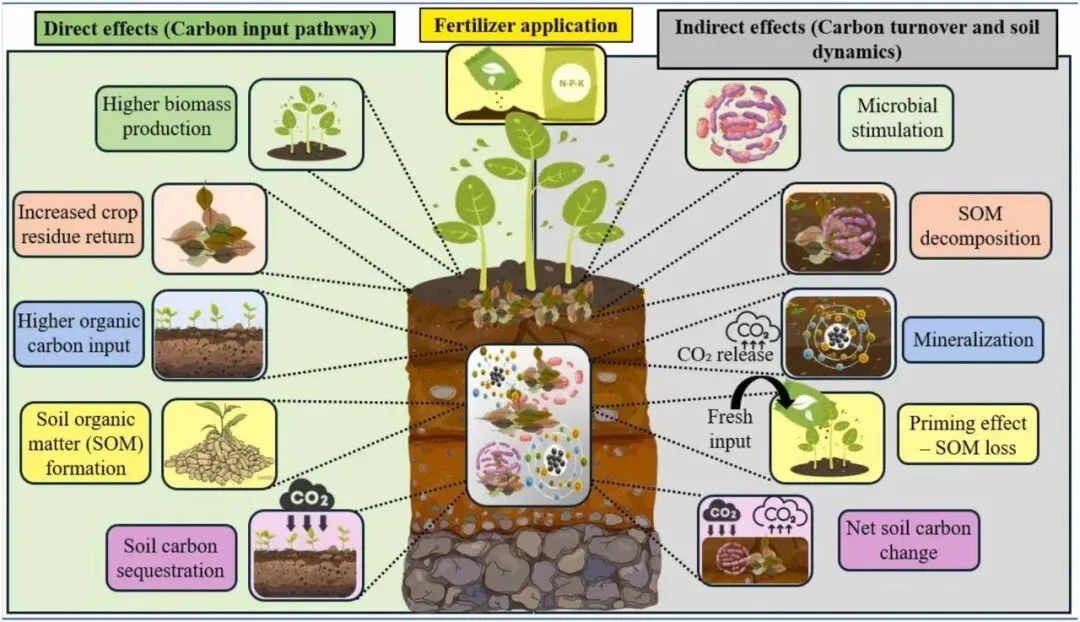
Fertiliser use promotes soil C sequestration by enhancing biomass C inputs.
Fertilizer input alters SOM elemental stoichiometry impacting decomposition.
In high fertility soils, fertilizer input accelerates the decomposition of SOM.
Abstract: Current initiatives to sequester carbon (C) in soils as a strategy to mitigate climate change are gaining momentum in many countries. While agriculture makes a significant contribution to greenhouse gas (GHG) emissions, it also plays a critical role in regulating global soil C pools, as almost 40% of the global soils are used for food and fibre production. Fertiliser manufacture and use in agriculture is a major contributor to GHG emissions. Agricultural management practices including tillage, pest and disease control, fertiliser input and irrigation impact soil C stocks and C sequestration potential, so improving agricultural soil management practices can help in mitigating climate change. This review provides a bibliometric analysis and critical discussion on the impacts of fertiliser use on soil C sequestration through increased C inputs resulting from greater biomass production, and formation of soil organic matter (SOM). Depending on the fertility status of the soil, fertiliser use can lead to either an increase or a decrease in soil C storage. In both low and high fertility soils, fertiliser use can promote soil C stocks by enhancing the amount of C inputs (e.g., crop residues) resulting from higher biomass yields, and improving stoichiometric relations of crop residues restored to the soil, thereby accelerating the rate of formation of SOM. In high fertility soils, fertiliser input can also accelerate the rate of decomposition of SOM, thereby impacting net C storage in the soil in relation to increased biomass yield. Fertiliser management practices, yields and soil conditions vary across regions, highlighting that recommendations on fertiliser use in relation to climate change mitigation strategies need to account for these differences.
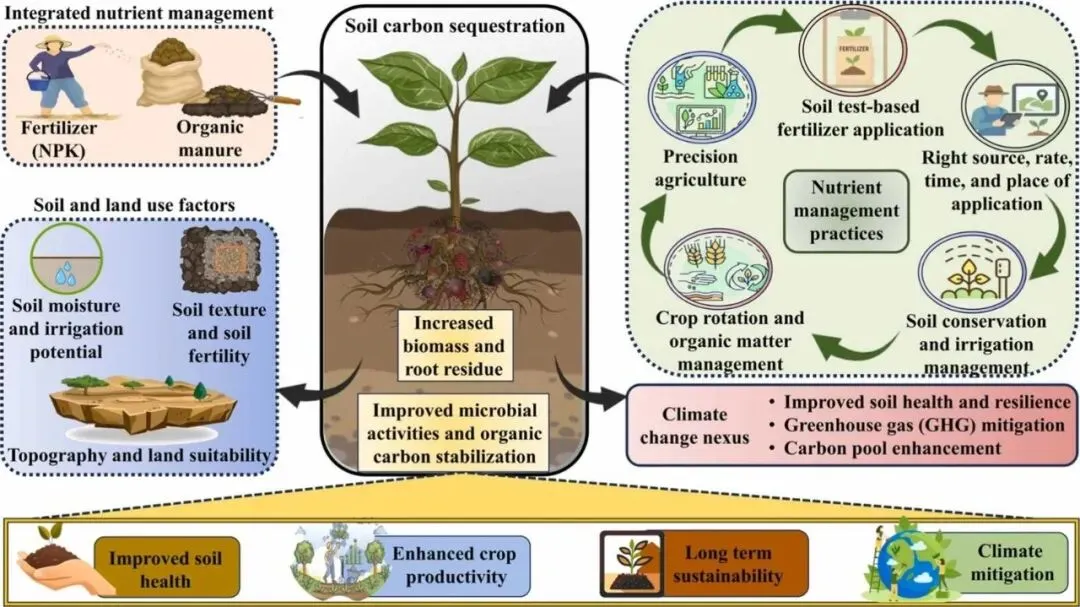
Graphical Abstract:
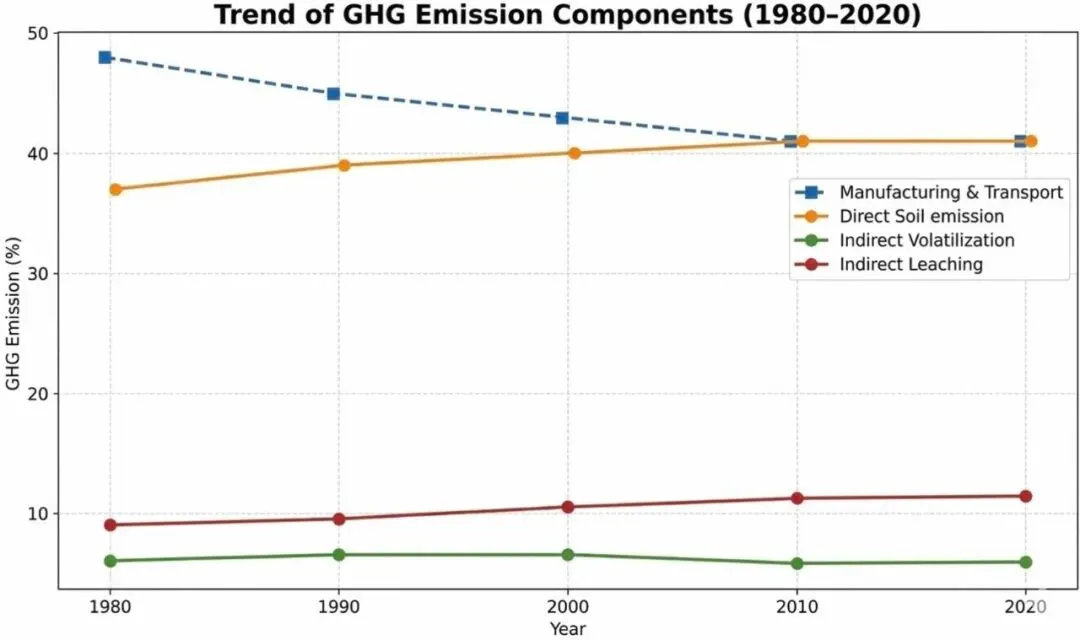
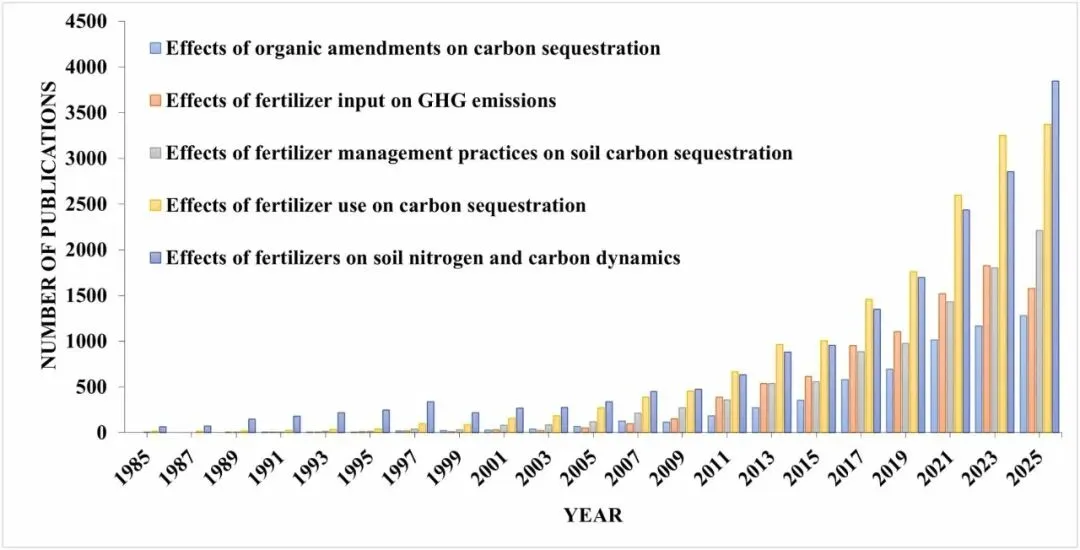
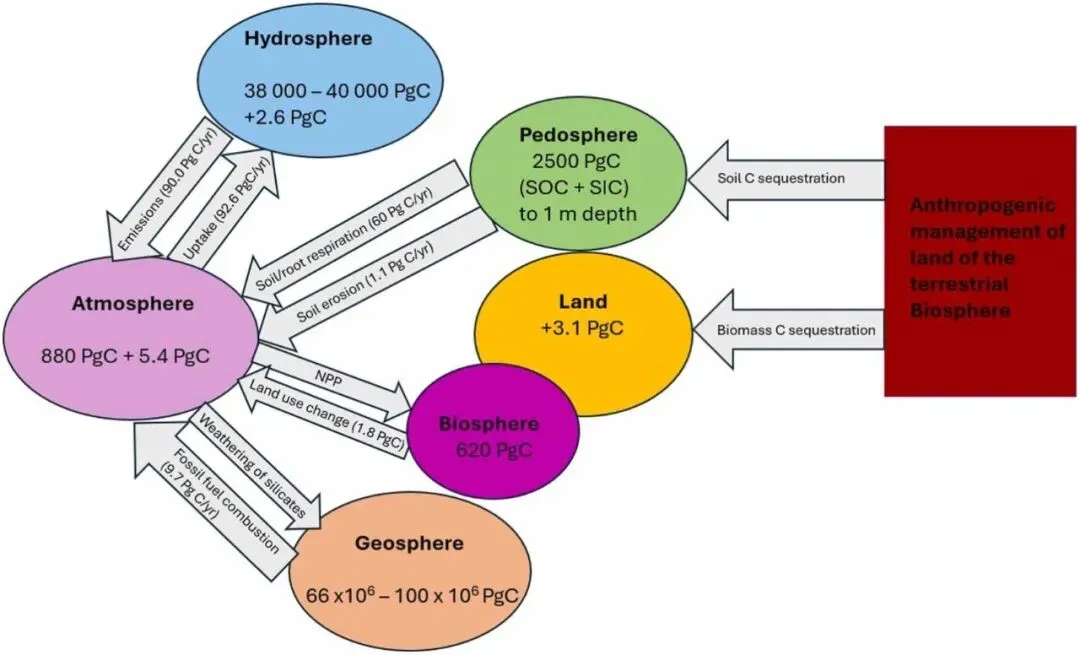
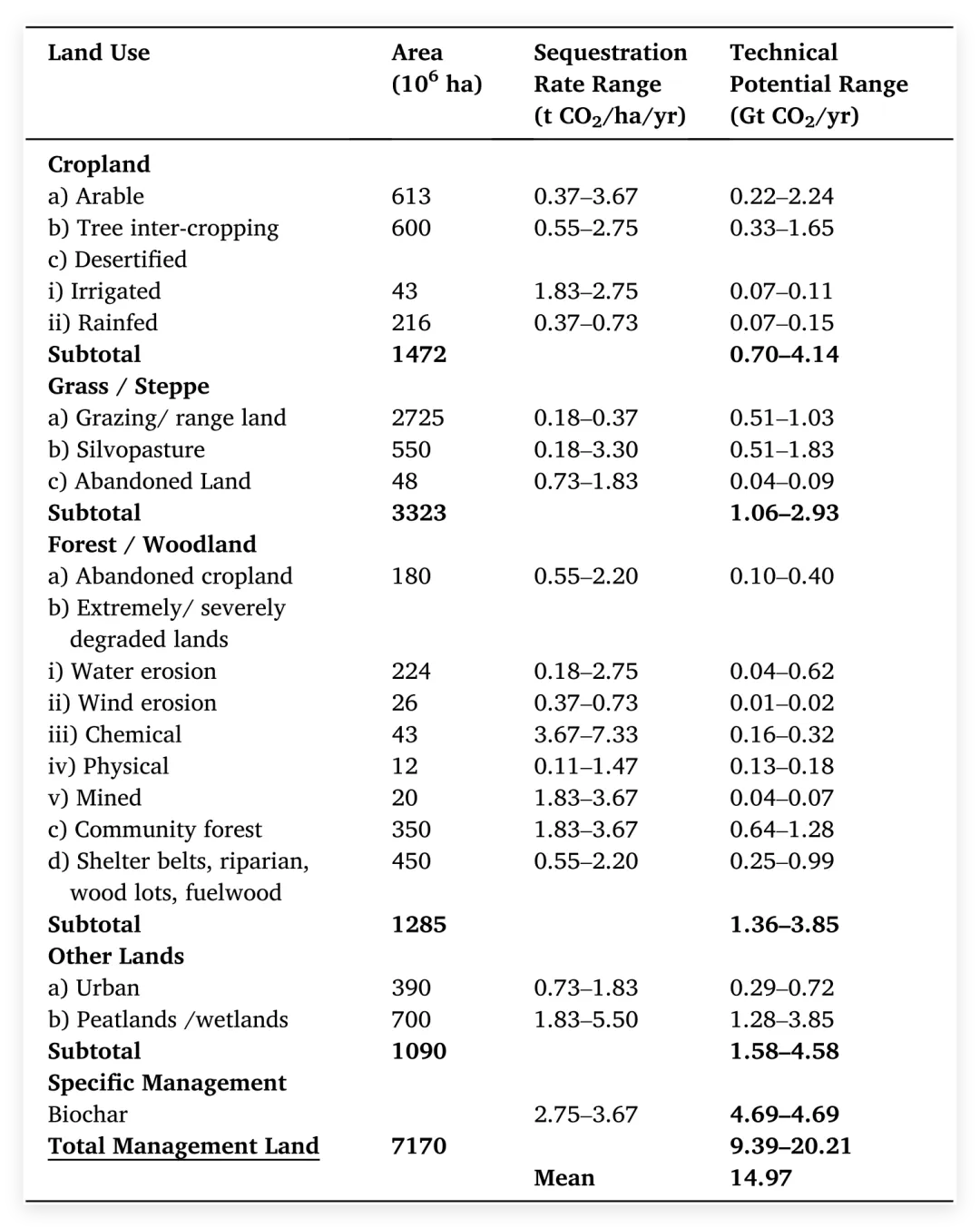
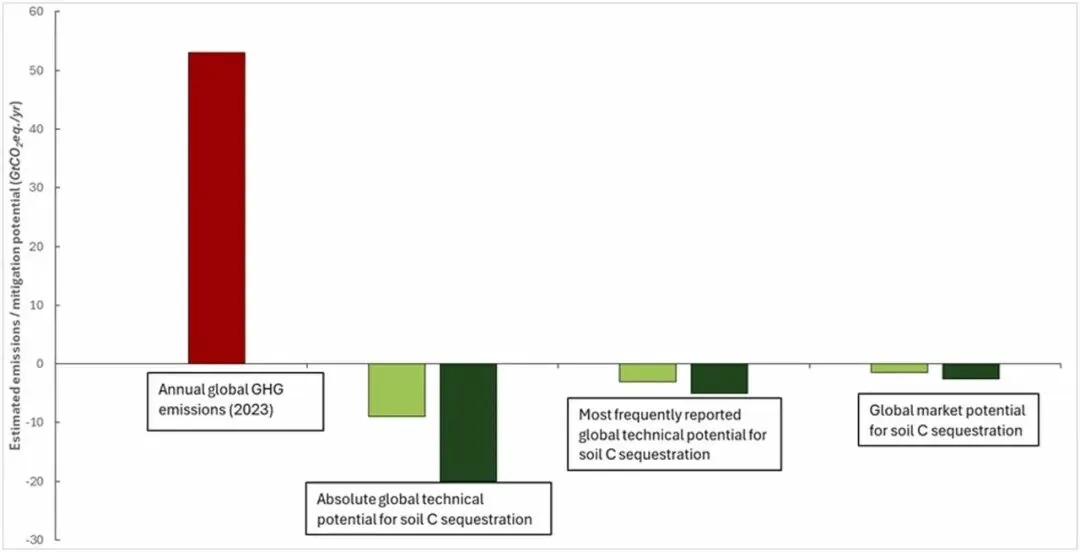
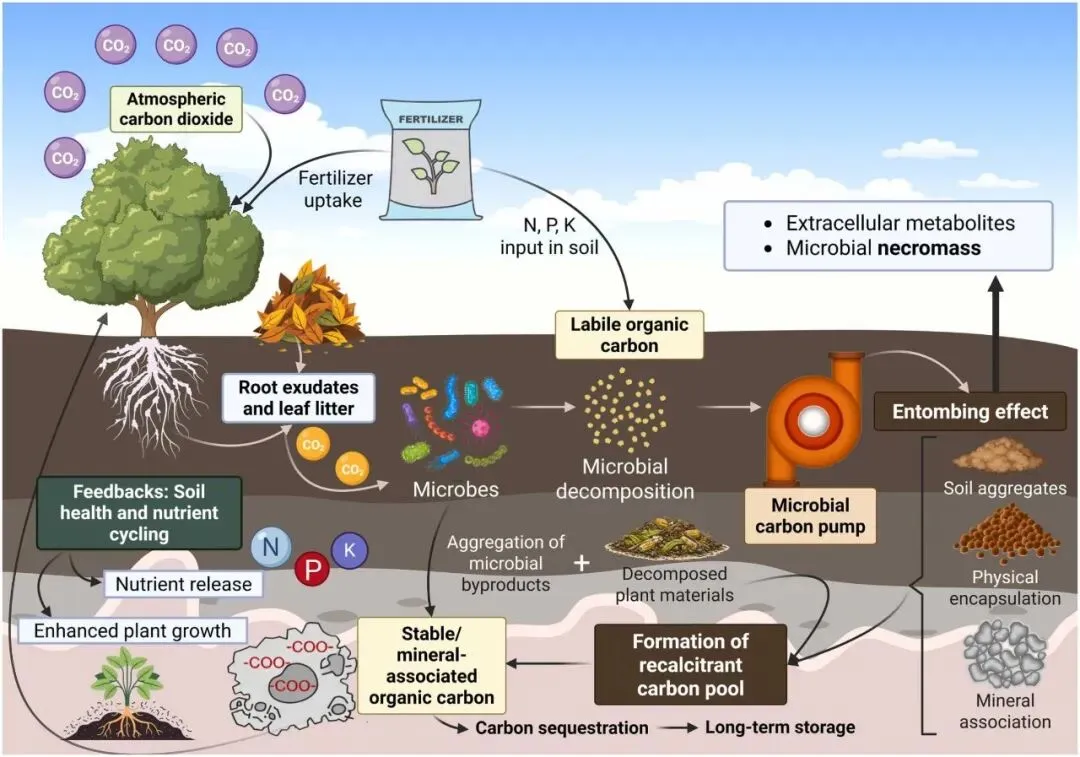
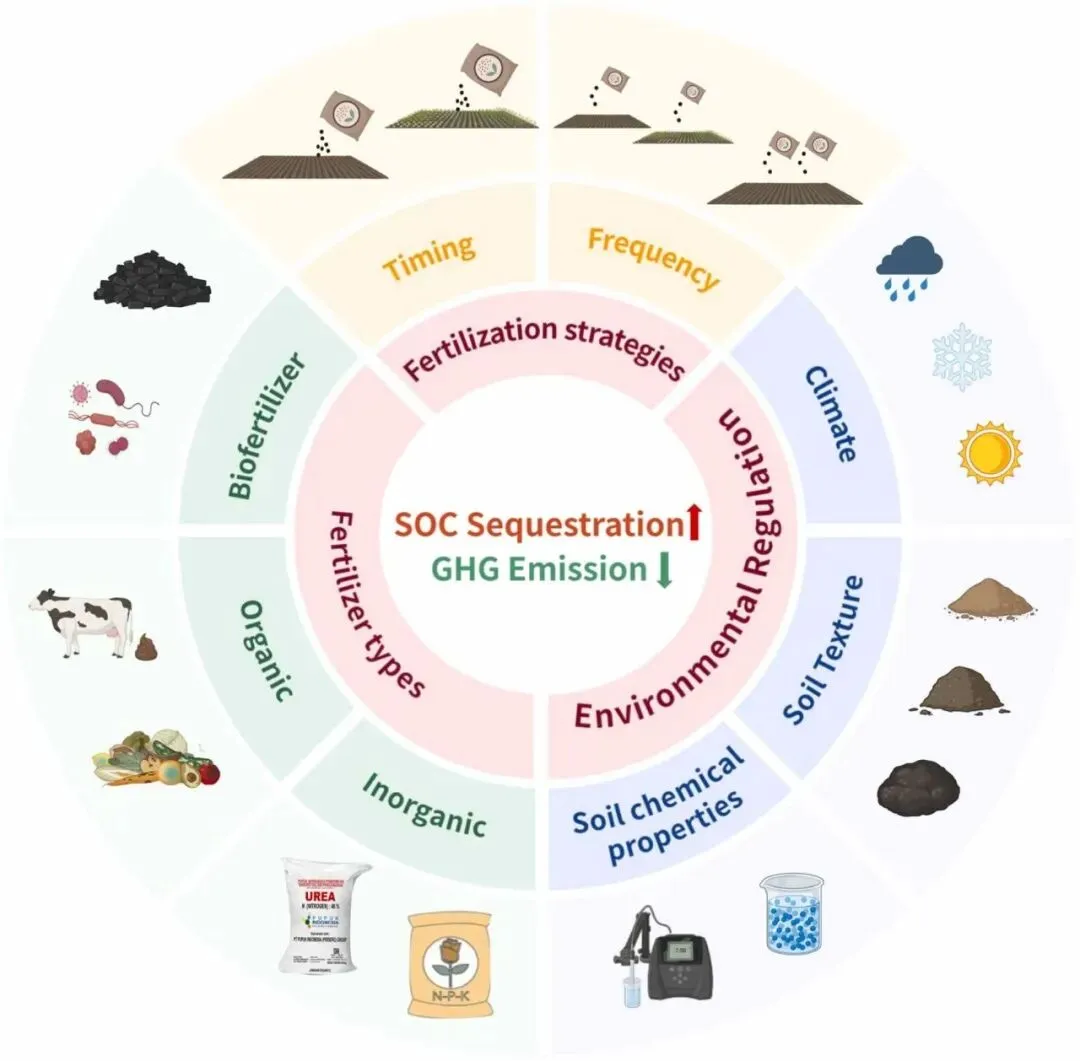
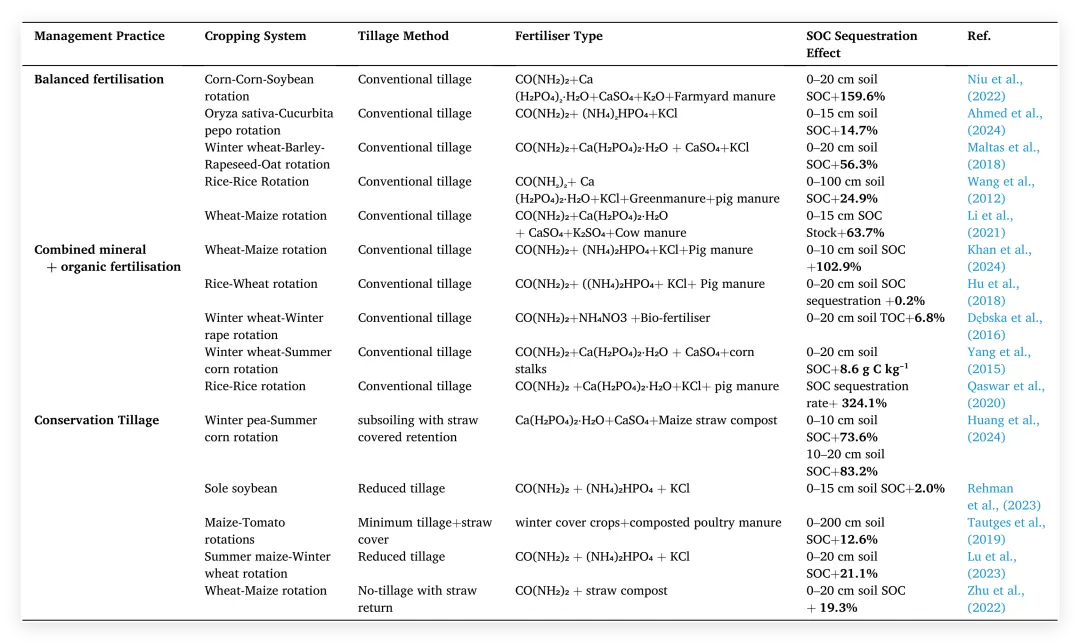
Fig. 1. Trend of life-cycle GHG emission from synthetic fertilisers (1980-2020) (Source: FAO (Food and Agriculture Organization of the United Nations), 2025, IPCC (Intergovernmental Panel on Climate Change), 2006, Menegat et al., 2022).Fig. 2. The number of publications on effect of fertiliser on greenhouse gas emission and carbon dynamics over the last 40 years.Fig. 3. The role of soil and its management in moderating the global carbon cycle, Stocks and flows are shown in Pg C (equivalent to Gt C) (redrawn and corrected from Lal et al., 2021).Table 1. Absolute technical potential of soil carbon sequestration globally assessed per land use. Data shown here are adopted from converting data of figures from C to CO2 (Lal et al. 2018).Fig. 4. Global GHG emissions (2023) and estimates of global annual soil carbon sequestration (Data from Statista, 2024, Fuss et al., 2018, Lal et al., 2018, Smith, 2016).Fig. 5. Schematic diagram illustrating the contribution of fertilisers to greenhouse gas emission, climate change and soil carbon sequestration.Fig. 6. Mechanistic diagram illustrating the feedback loops between fertilisers, plants, microorganisms, and soil organic carbon pools.Fig. 7. Factors affecting fertiliser use on soil carbon sequestration.Table 2. Fertiliser management practices to enhance soil carbon sequestration.
【拓展阅读】
 10个月宝宝每天需要喝多少奶粉?

