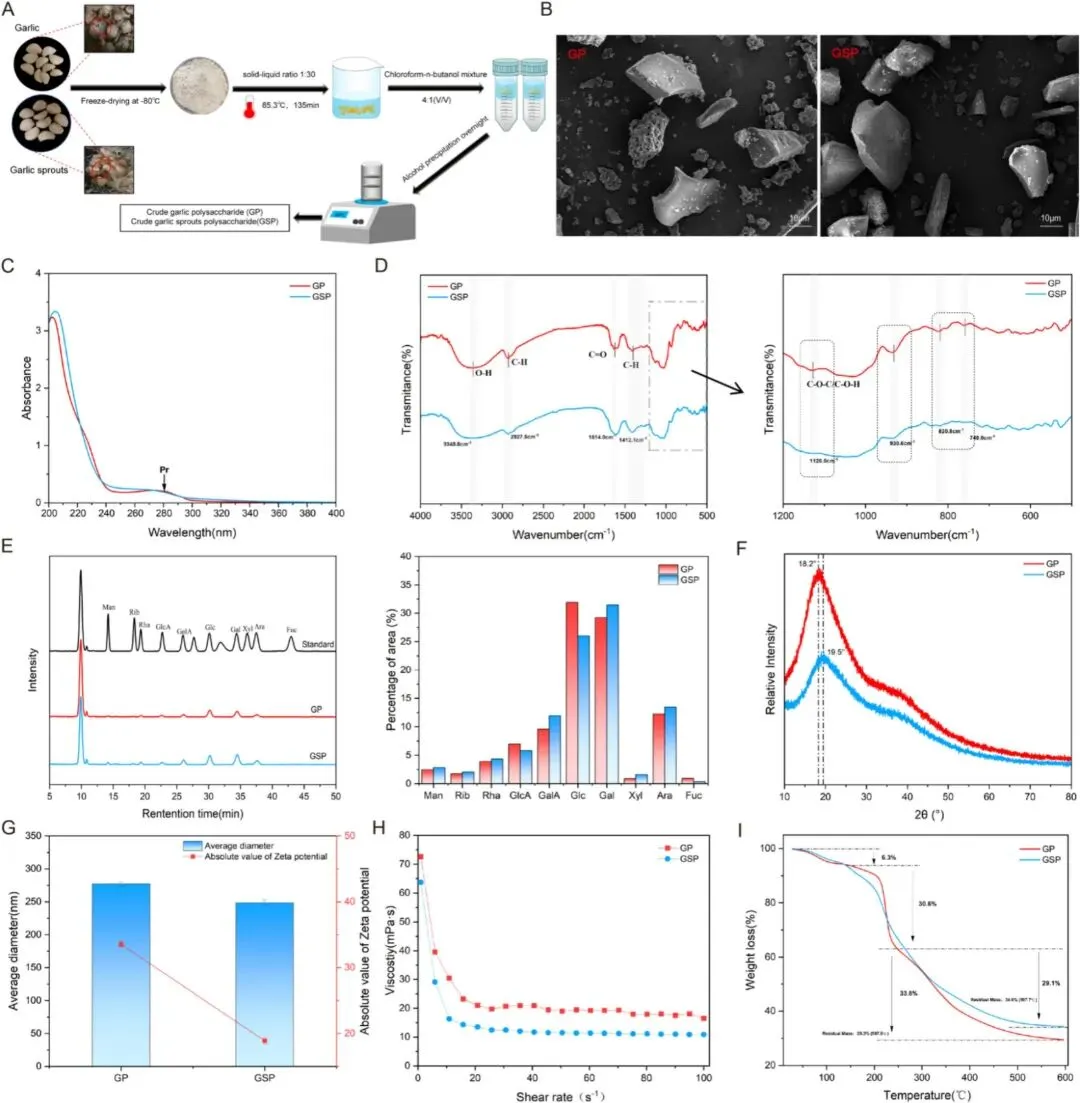
Fig. 1. Structural characterization of polysaccharide from garlic yellow seeds. (A) The extraction of polysaccharides from garlic yellow seeds. (B) Scanning electron microscope. (C) Ultraviolet spectral analysis. (D) Fourier transform infrared spectroscopy analysis. (E) Monosaccharide composition and changes of each monosaccharide. (F) X-ray diffraction analysis. (G) Particle size and absolute value of zeta potential. (H) Apparent viscosity. (I) Analysis of thermal stability.
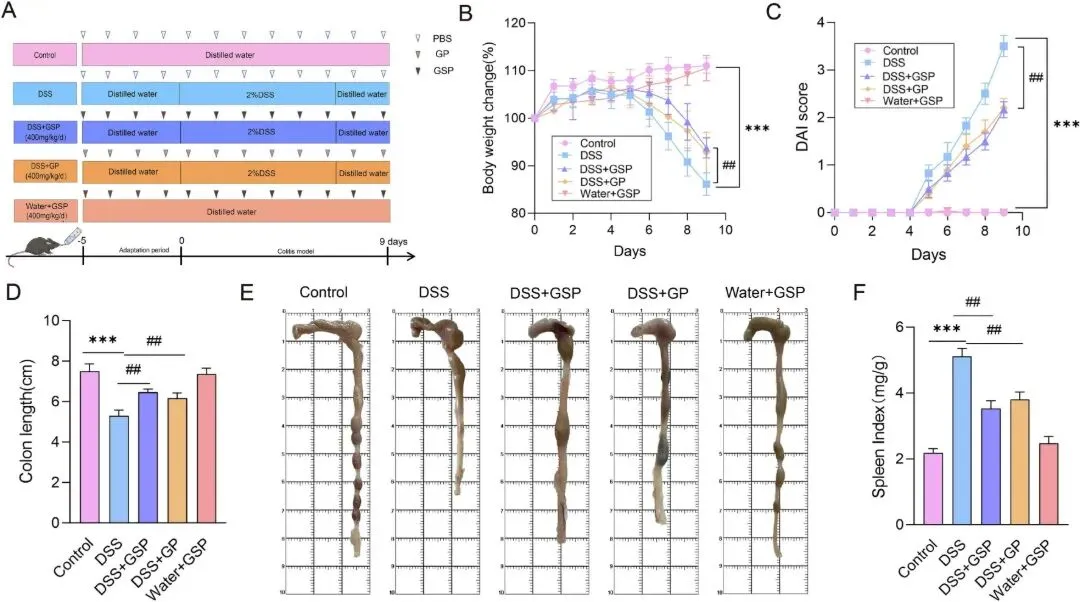
Fig. 2. Impact of garlic yellow seed-derived polysaccharides intervention on basal indicators in DSS-induced colitis mice. (A) Schematic diagram of the animal experimental design. (B) Body weight change. (C) Disease activity index (DAI) scores. (D) Colon length. (E) Representative colon images. (F) Spleen index.
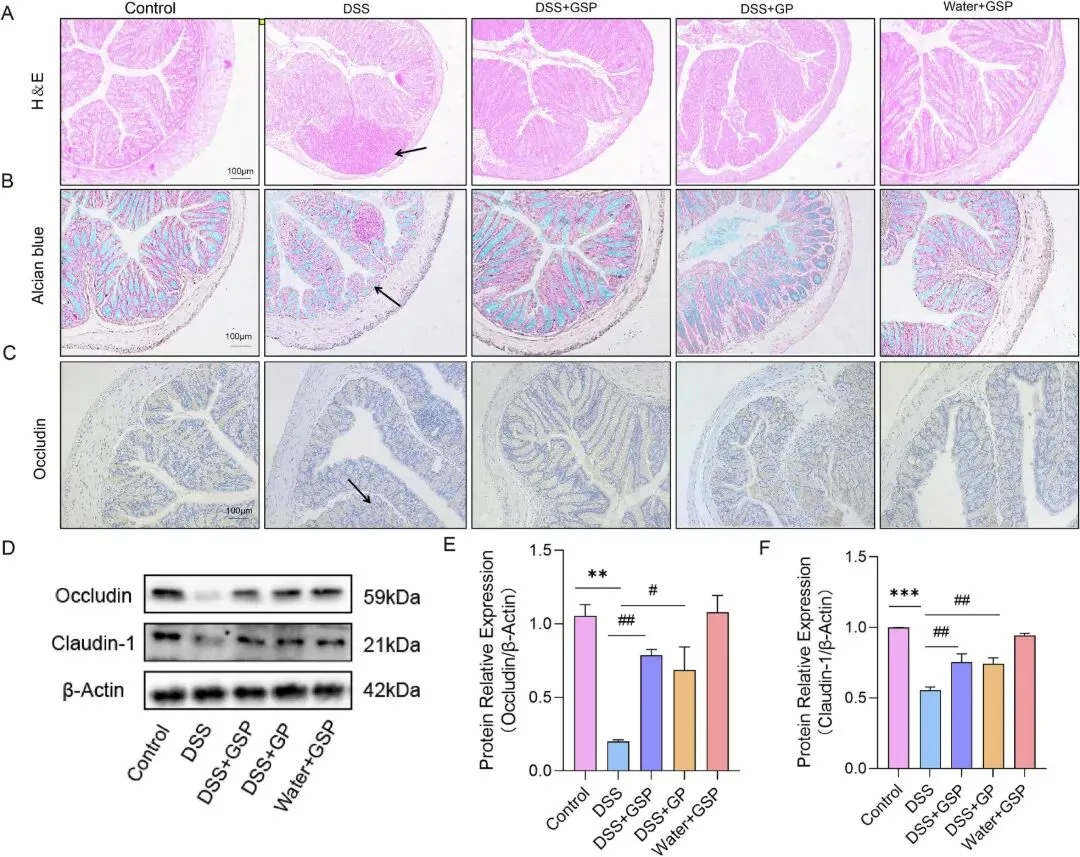
Fig. 3. Impact of polysaccharides intervention from garlic yellow seeds on colonic pathology and integrity of the intestinal barrier. (A) H&E staining of the colonic tissue for each group. (B) Alcian Blue staining of the colonic tissue for each group. (C) Immunofluorescence staining of Occludin expression of the colonic tissue for each group. (D) The representative results of Western blot analysis for Occludin and Claudin-1 in mouse colonic tissue are presented. (E-F) The density analysis of the relevant proteins was conducted.
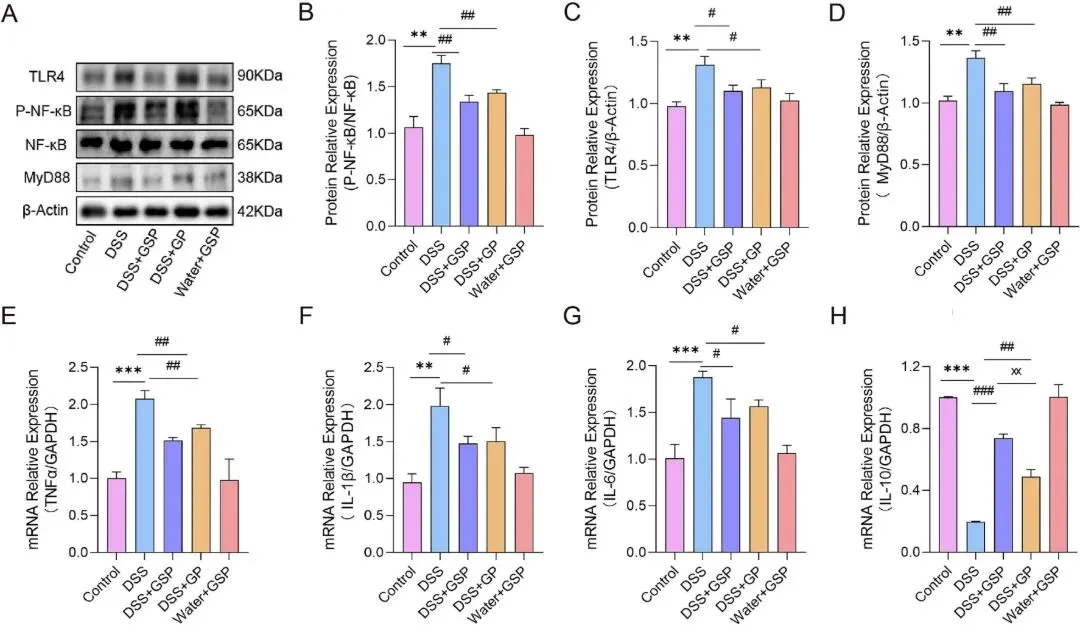
Fig. 4. Intervention of garlic yellow seed-derived polysaccharides in regulating intestinal inflammation levels and inhibiting the NF-κB pathway. (A-D) mRNA expression of TNF-α, IL-1β, IL-6, IL-10, β-Actin was used as control. (E) The representative results of Western blot analysis for TLR4, P-NF-κB, NF-κB and MyD88 in mouse colonic tissue are presented. (F-G) The density analysis of the relevant proteins was conducted.
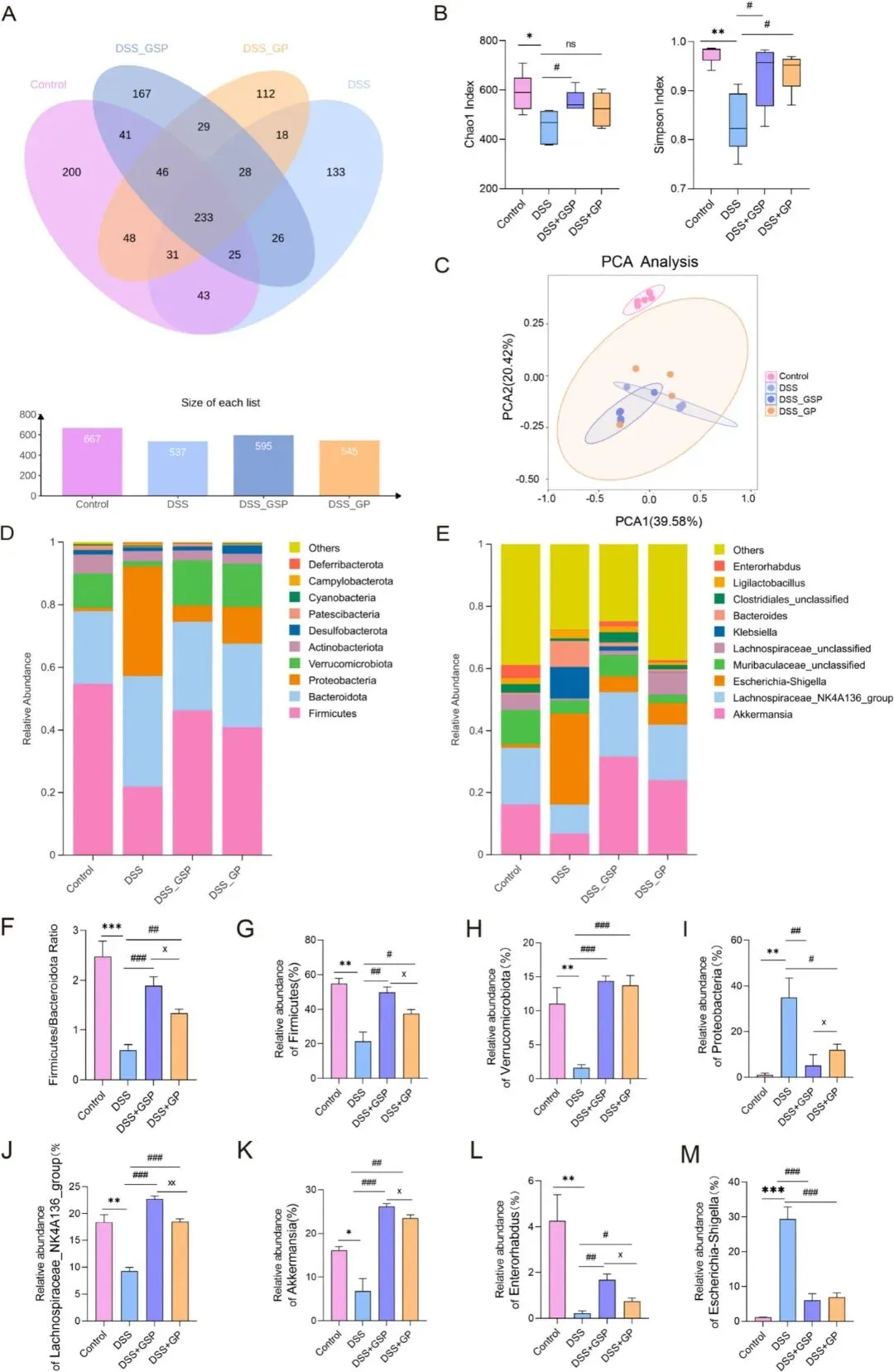
Fig. 5. The impact of garlic yellow seed-derived polysaccharides intervention on gut microbiota. (A) The Ven diagram illustrates the overlapping OTU identified, among the four groups. (B) Alpha diversity of each group. (C) Principal Coordinates Analysis of beta diversity. (D) Relative abundance of microorganisms at the Phylum level. (E) Relative abundance of Firmicutes. (F) Relative abundance of Bacteroidota. (G) Relative abundance of Firmicutes/Bacteroidota ratio. (H) Relative abundance of Verrucomicrobiota. (I) Relative abundance of Proteobacteria. (J) Relative abundance of Lachnospiraceae_NK4A136_group. (K) Relative abundance of Akkermansia. (L) Relative abundance of Enterorhabdus. (M) Relative abundance of Escherichia-Shigella.
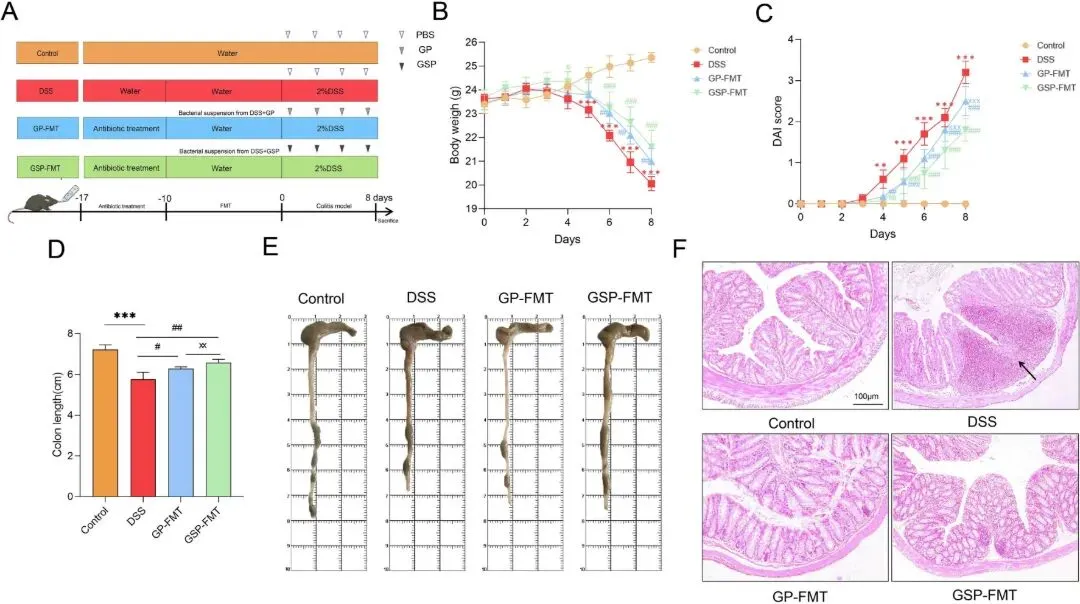
Fig. 6. Garlic yellow seed-derived polysaccharides combined with fecal microbiota transplantation can restore intestinal damage caused by colitis. (A) Construction of the model. (B) Body weight change within each group. (C) DAI scores. (D) Colon length in mice. (E) Representative colon. (F) H&E staining of the colonic tissue for each group.
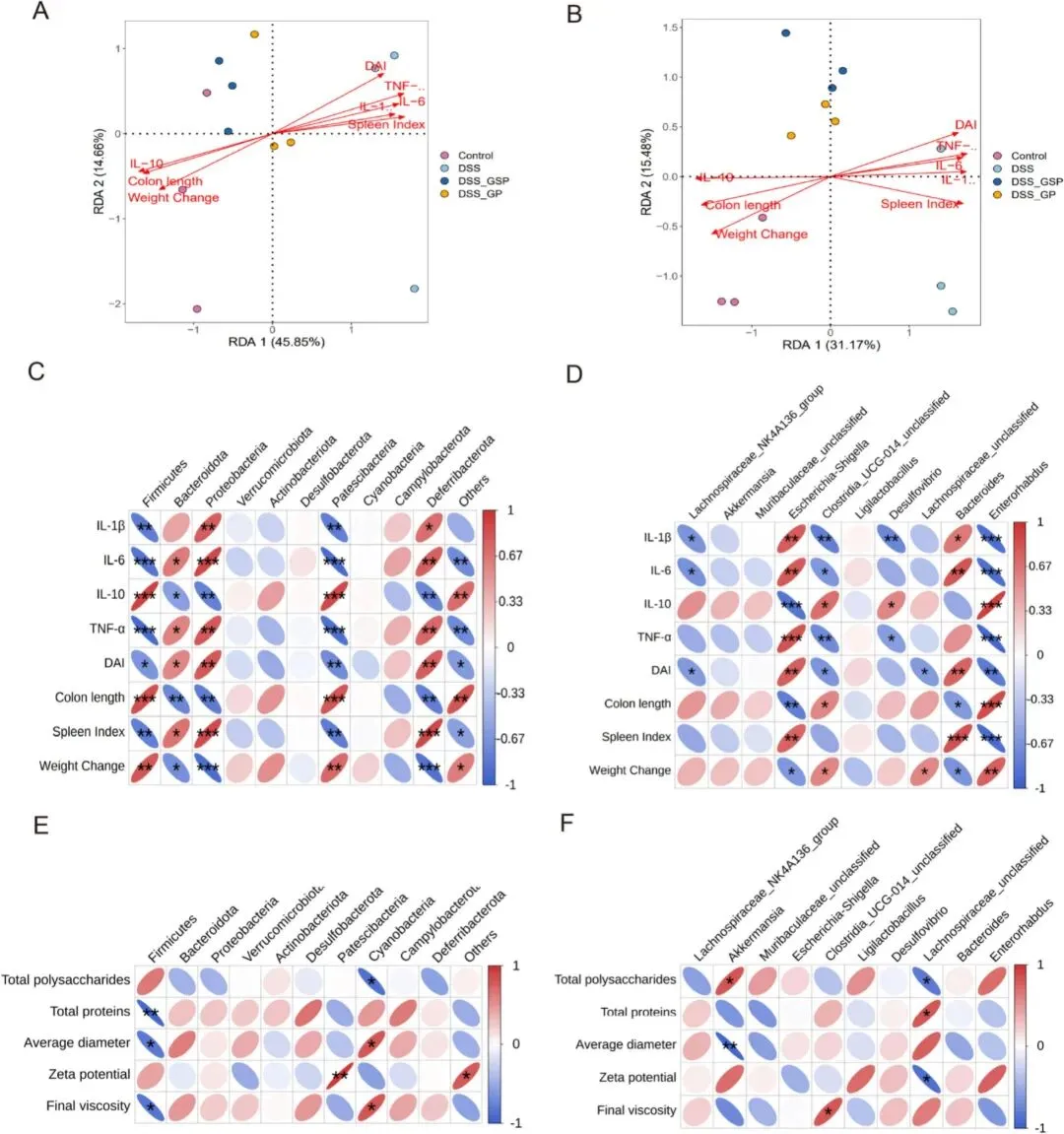
Fig. 7. Correlation analysis of intestinal microbiota with inflammatory indicators and polysaccharide properties of garlic yellow seeds. (A) RDA Analysis at the Phylum Level. (B) RDA Analysis at the Genus Level. (C) Spearman correlation analysis of the characteristics of enteritis and the microbiota at the phylum level. (D) Spearman correlation analysis of the characteristics of enteritis and the microbiota at the genus level. (E) Correlation analysis of structural characteristics of garlic yellows and microorganisms at the phylum level. (F) Correlation analysis of the characteristics of garlic Yellow and microorganisms at the genus level.
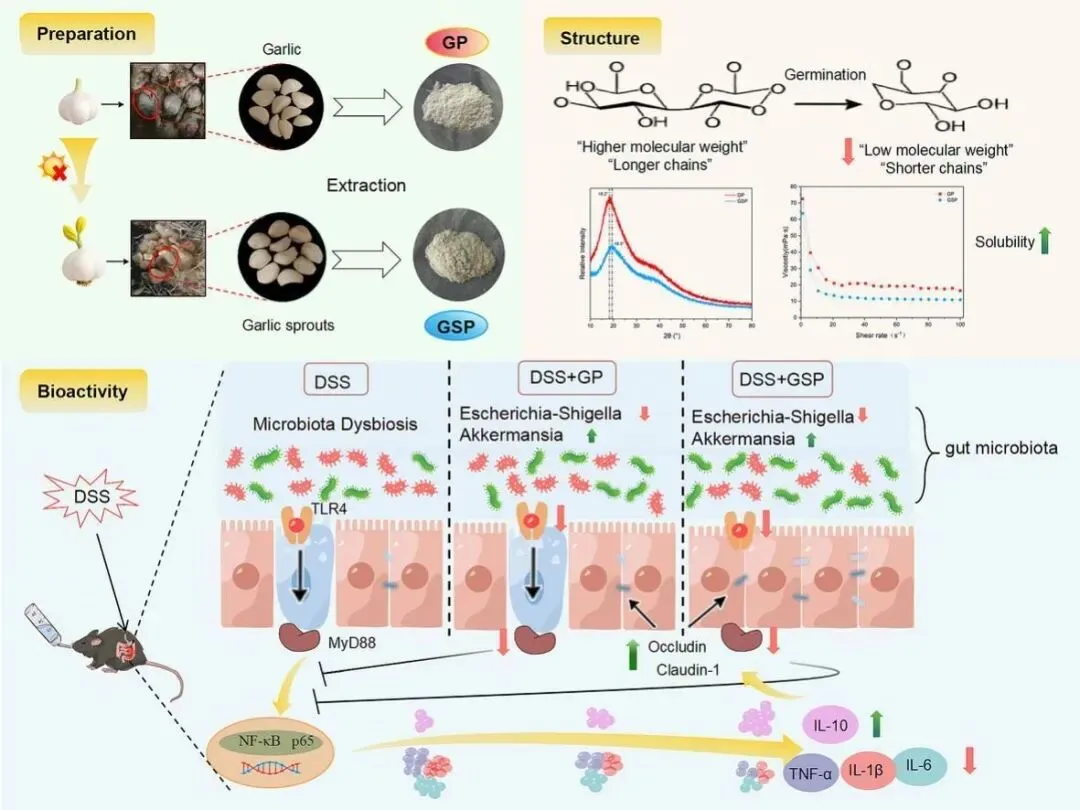
本研究从发芽前后的大蒜黄种子中提取了多糖,分析了这些多糖的结构变化,并评估了它们对DSS诱导结肠炎小鼠的影响。结果表明,发芽后多糖的分子量降低,这可能是由于酶解作用。糖苷键断裂等结构改变生成了可溶性的低分子量多糖,影响了它们的生物活性。GP和GSP均能有效缓解小鼠的结肠炎症状,其中GSP在增加IL-10表达方面表现出更强的效果。此外,GSP通过增加有益菌丰度和促进微生态平衡,显著调节了肠道菌群。
英文名称:Alterations in the structural properties of polysaccharides in garlic yellow seeds before and after germination and their mechanism for alleviating colitis
DOI:https://doi.org/10.1016/j.ijbiomac.2026.152129
点击下方即可获取原文:
山东农业大学.pdf
声明
本公众号发布的所有内容,包括但不限于文字、图片、音频、视频、图表、标志、标识、广告、商标、商号、域名、软件、程序等,版权归原作者或原出处所有。我们致力于保护原作者版权,若涉及版权问题,请及时联系我们进行处理。






 10个月宝宝每天需要喝多少奶粉?

