【农业发展&乡村振兴】高考英语热点专题训练:乡村振兴专题・语法填空(融合发展类)
- 2026-10-25 17:39:45
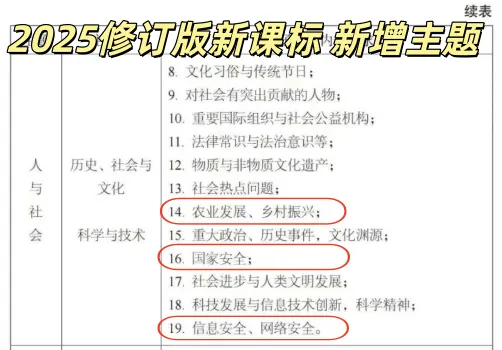
为大家汇总整理了 5 篇语法填空,大方向是 [乡村振兴(融合发展类)],助力考前冲刺,欢迎各位师生参考使用。
Passage 1
【细分方向】农民画家用画作记录乡村变迁,将艺术融入乡村振兴
【难度】0.65
Zhang Qingyi, a 71-year-old farmer painter from Shaanxi, captures modern rural scenes in his artwork. Growing up in Huyi district, a birthplace of Chinese farmer painting, he developed a profound interest 1 art when he was young.
After returning to the countryside in 1970, Zhang began creating paintings 2 mainly show rural China’s transformation. His works display thatched huts (茅草屋)replaced by tiled houses, manual labor by machinery, and 3 (tradition) clothing by modern fashion. “Every painting tells a story of farmers,” he says.
Zhang is among many painters who record rural revitalization (乡村振兴)through art. Farmer painting in Huyi 4 (date) back to the 1950s, when it promoted agricultural knowledge. 5 (support) by the local government’s push to combine agriculture, culture and tourism, a range of related 6 (project) have appeared, including the restoration of public art spaces and the establishment of art festivals.
As rural tourism continues to develop across the country, it not only offers tourists new travel experiences 7 brings farmers real benefits as well. At the same time, it is attracting more young people to return to their hometowns to start businesses, such as opening guesthouses and cafes.
Zhang still spends 8 to 10 hours 8 (paint) every day, and sometimes teaches at nearby primary schools. “Farmer painting is 9 local treasure. I hope to plant the seeds of 10 (creative) in the hearts of children, so that they will continue to picture fresh scenes of our rural life, ” he says.
Passage 2
【细分方向】传统汉服文化与数字创新相结合,推动当地产业发展
【难度】0.65
Hanfu, the country’s traditional clothing, has developed over the centuries. It allows women 1 (combine) comfort with culture, style and elegance. In recent years, it has enjoyed a revival (复兴), driven by a renewed interest in traditional culture among young people and its growing 2 (visible) on social media platforms.
Caoxian county, 3 is China’s key hanfu center, integrates silk tradition with digital innovation across its full industrial chain: design to marketing. When a few people in the county 4 (begin) experimenting with making hanfu costumes for photo studios and performances in the early 2000s, no one would expect they were creating 5 bright future for the county. The hanfu made in Caoxian, 6 (specific) the horse-face skirt, gained international recognition through appearances at many clothing design 7 (competition) and Milan Fashion Week. These clothes have been exported to Australia, Canada and the European Union, 8 (generate) 12 billion yuan ($1.6 billion) in total sales last year.
9 (fuel) by a youth-driven cultural revival, the county’s hanfu industry is an example of the successful integration of traditional heritage and digital innovation. It not only transforms the ancient aesthetics (美学) into symbols of modern Chinese identity on the global stage, but also serves 10 a new engine for increasing the income of local people and promoting rural revitalization.
Passage 3
【细分方向】编织技艺的传承与创新助力走向国际市场
【难度】0.65
Straw hats (草帽), once practically used daily, are now gaining a new life as fashionable and internationally popular products — thanks in part to a centuries-old craft from Shandong Province.
In Tancheng county, Linyi city, the tradition of growing Langya grass for weaving (编织) 1 (date) back over 200 years. The craft has deep 2 (root) in the local community. Known for its simplicity, practicality and accessibility, Langya grass weaving is a collective, hands-on skill 3 (pass) down through generations. The process, 4 involves starting the weave, placing it on a mold, layering grass, removing the mold, locking the edge and shaping, remains complex. The patterns are classified from two-way 5 five-way techniques, while the hand movements include pressing, picking, crossing and bending.
6 (preserve) this heritage, a workshop was founded, helping to pass on this traditional skill to the next generation and contribute to rural revitalization.
The workshop features 7 dedicated design and innovation team, who focuses on improving weaving techniques and developing new product lines. The workshop 8 (expand) beyond traditional Langya grass in the last few years, 9 (comprise) imported high-end materials and allowing the integration of traditional craftsmanship to meet modern market demands, including the US, Europe, Japan and South Korea.
To gain a10 (large) market share than before, the workshop also launched an e-commerce (电子商务) division and live-streaming accounts to reach online consumers and strengthen its digital presence.
Passage 4
【细分方向】现代咖啡生活方式与乡村发展相结合的新模式
【难度】0.65
In a coffee festival held in Tanzhesi, an ancient town in western Beijing, a long line of people waited 1 (patient) at a cafe stand. This scene was representative of a model 2 combines modern lifestyle with rural development.
“Specifically, our signature drink was created for cyclists 3 (refresh) their energy after intense effort,” says Zhu Mingbo, who runs the Snow Peak Cafe 4 (locate) on a famed cycling route. Since its opening, the cafe’s offerings 5 (earn) widespread recognition.
The festival aimed to combine the ancient town’s beauty with modern coffee culture. At the opening ceremony, local authorities revealed a Coffee Lifestyle Guide, 6 (feature) three coffee-themed tasting routes. “The rise of coffee here was a 7 (nature) effect. At first, it might have just been people bringing their own cups while cycling or sightseeing,” says Wu Jiajie, chief of Tanzhesi town. The local government then rolled out favorable 8 (policy) to support the local coffee business.
Zhu decided to open his cafe after recognizing the potential of combining coffee with cycling. Beyond drinks, the cafe also offers lightweight outdoor equipment. A unique “bicycle wall” inside the shop has become 9 popular check-in point.
Zhu’s cafe was among several awarded by the town government. Wu says the festival uses coffee 10 a specific point of entry, through which the entire tourism experience can be connected.
Passage 5
【细分方向】中国现代科技与古代农业文明的深度融合
【难度】0.65
In the heartland of China, near a 4,500-year-old farmland, a team of agricultural scientists is modernizing 1 ancient practice. They are using big data analytics and AI models 2 (improve) the output of a specific plot of land.
At the experimental field near the Baodun Site, 3 evidence of ancient rice cultivation was found, researchers from Sichuan Agricultural University are using AI-powered models to evaluate the result of different hybrid rice 4 (variety).
The modern research method has greatly saved time, 5 the conventional approach, which would require waiting until the harvest season of a certain rice hybrid, researchers said.
Chinese archaeologists have unearthed carbonized rice at the Baodun site, a walled settlement 6 (date) from 4,500 to 4,200 years back. This late Neolithic culture emerging on the Chengdu Plain in southwestern China, bears witness 7 the agricultural dawn of ancient Chinese civilization. Today, the site’s agricultural values, and also archaeological and 8 (economy) values are being explored and expanded by technological means.
In a nearby lab, researchers are constructing a 3D image of the site to study the impact of ancient floods and to understand 9 the special structures may have contributed to the wealth of the plain.
In addition to rice cultivation, silk-weaving, another ancient invention that originated at the Chengdu Plain, 10 (receive) a modern technological boost to date.

随机文章
-
 10个月宝宝每天需要喝多少奶粉?
- 【福州招聘】福建省农业科学院水稻研究所招聘
- 订单农业托底+全程技术护航!蓬安3000亩优质榨菜产销两旺
- 农业农村部召开座谈会强调 千方百计抓好奶业纾困 全力以赴推动奶业高质量发展
- 习水县农业农村局拟录用人员的公示
- 【乡村振兴】王小霞委员:让设施农业赋能乡村振兴与农业品牌建设
- 【农业生产】科学间伐优结构 提质增效促增收——瓦石峡镇扎实推进红枣树春季管护工作
- 2026年2月27日湖北潜江金巧农业小龙虾最新报价
- 农业农村部 高标准农田建设质量管理办法的通知
- 河池市召开实施乡村振兴战略指挥部工作暨农业经济稳增长工作调度会议
- 抚松县农业综合行政执法大队扎实开展明冰期渔业安全执法检查专项行动