Plant Biotechnology Journal, 4 Feb 2026
Lily Transcription Factors LlPLATZ1 and LlMYB4 Orchestrate the Homeostasis of Heat Stress Responses via Antagonistic Regulation of LlHSF24
Author
Gong X, Xiang J, Liao Z, Fang Q, Teng N*, Wu Z*
*: Key Laboratory of Landscaping Agriculture/Key Laboratory of Flower Biology and Germplasm Innovation, Ministry of Agriculture and Rural Affairs, College of Horticulture, Nanjing Agricultural University, Nanjing, China
Abstract
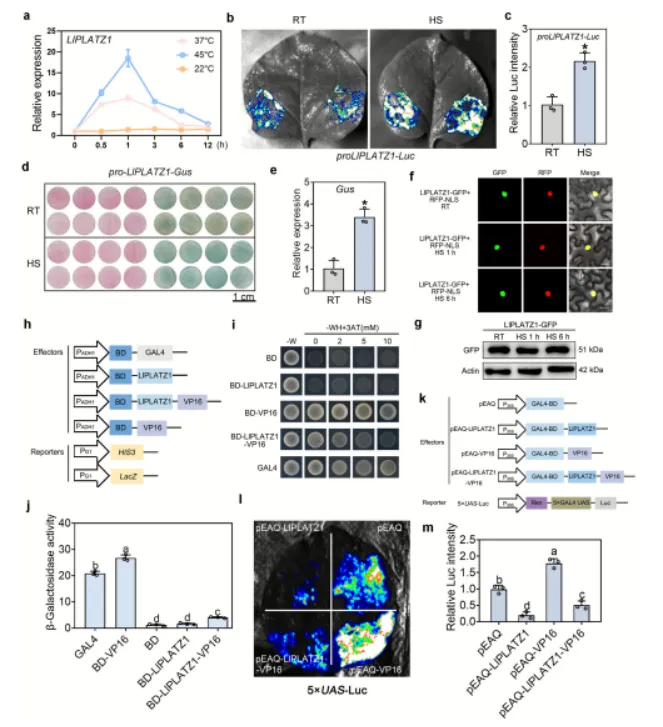
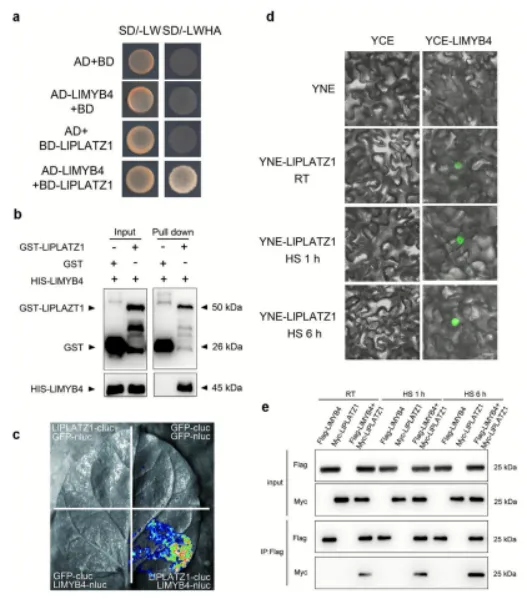
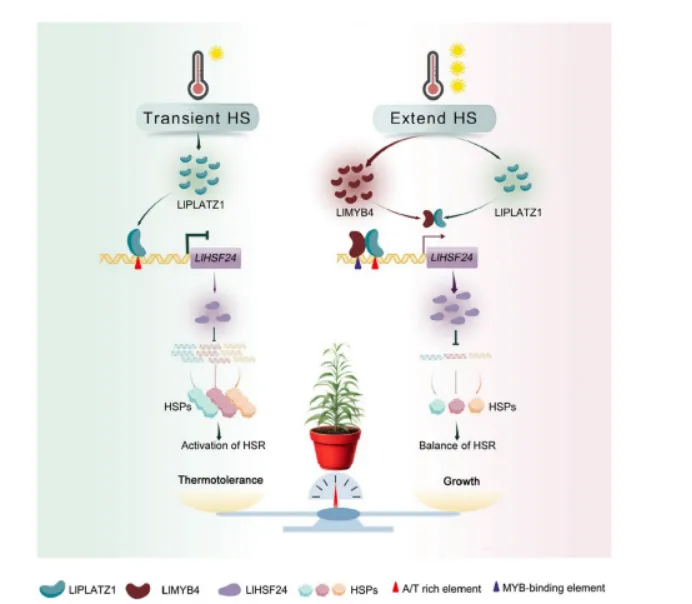
Heat stress significantly damages crop yield and quality. PLATZ (PLANT A/T-RICH SEQUENCE-AND ZINC-BINDING PROTEIN) transcription factors play pivotal roles in plant growth, development, and environmental stress responses. While the functions of PLATZ members in response to drought and salt stress are well characterised, their roles in heat stress remain largely unexplored. Here, LlPLATZ1, a heat-inducible member of the PLATZ family from lily (Lilium longiflorum), was identified.LlPLATZ1 was rapidly induced by high temperature, and its protein was localised to the nucleus, showing transcriptional repression activity. LlPLATZ1 bound to the promoter of a class B heat stress transcription factor gene, LlHSF24, to inhibit its expression. Stable overexpression of LlPLATZ1 in lily enhanced its thermotolerance, whereas silencing LlPLATZ1 had the opposite effect. Further analysis showed that LlHSF24 directly repressed the expression of heat-protective genes LlHSP22.0 andLlHSP70 to weaken thermotolerance. In addition, LlPLATZ1 interacted with LlMYB4, a later heat-inducible MYB transcription factor that bound to the LlHSF24 promoter to activate its expression. LlMYB4 limited the heat stress response by interacting with LlPLATZ1 to antagonise its DNA-binding ability. In combination, these results indicate that the LlPLATZ1/LlMYB4-LlHSF24 module may play a crucial role in maintaining a balanced heat stress response, enabling plants to adapt to complex environmental changes.