Food Hydrocolloids| 乙酸强化鲜切胡萝卜片细胞壁果胶酸钙交联:基于果胶免疫标记与钙定位的研究
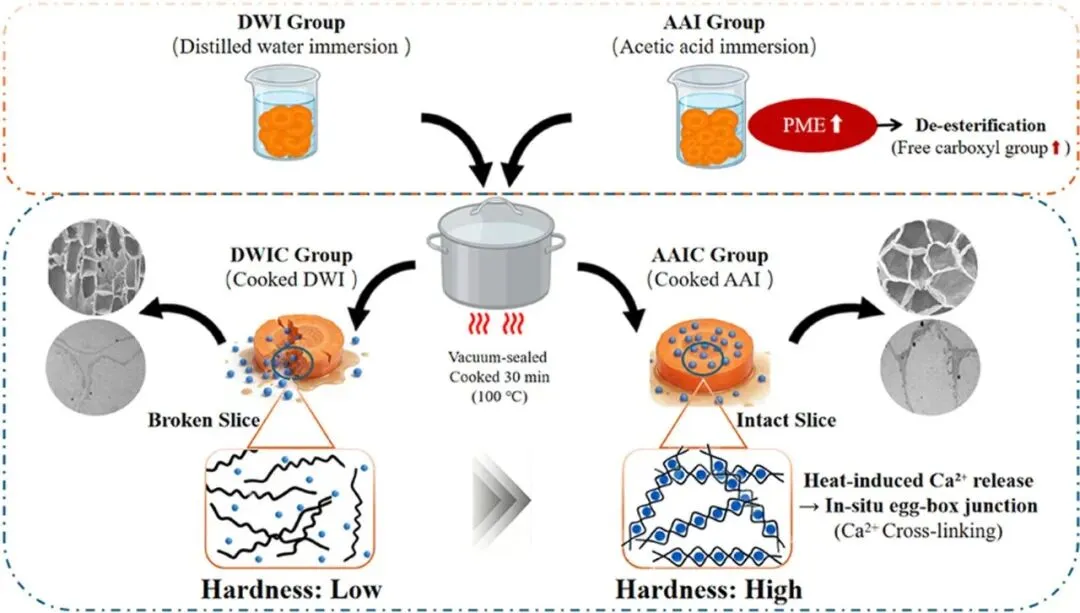
近日,华中农业大学团队在《Food Hydrocolloids》期刊(一区,IF:12.4)发表题为《Acetic acid strengthens cell wall calcium pectate cross-linking in fresh carrot slices: Insights from pectin immunolabeling and calcium localization》的研究论文。该研究针对罐头胡萝卜热杀菌中细胞壁降解导致的过度软化问题,探究 0.4% 乙酸处理改善质构的作用机制。结果显示,乙酸处理组热处理后硬度为对照组的 3.3 倍,其可抑制纤维素酶等细胞壁降解酶活性,提升果胶甲酯酶活性以促进果胶去酯化,推动内源钙与低酯果胶形成稳定的果胶酸钙交联网络。借助荧光成像与免疫标记等技术,研究证实乙酸能促进游离钙向结合态转化、减少钙流失,最终通过酶调控、果胶去酯化与钙交联网络形成,实现热加工蔬菜质构强化,为清洁标签罐头产品提质提供可行策略。
胡萝卜是全球广泛种植的重要根茎类蔬菜,营养丰富且加工适应性强,罐头制品是其主流即食加工形式。热杀菌是罐头生产的核心工艺,可实现食品商业无菌与常温长期贮藏,但高温处理会引发胡萝卜细胞壁果胶发生 β- 消除降解,导致组织过度软化、口感软烂,同时伴随营养流失与品质劣变,成为制约罐头胡萝卜产业高品质发展的关键技术瓶颈。在清洁标签与感官消费升级趋势下,无外源添加的质构改良技术成为研究热点。已有研究证实,乙酸作为食品级酸度调节剂,能有效调控果蔬细胞壁降解酶活性、抑制果胶热降解,且 0.4% 乙酸在质构提升与风味接受度间达到最优平衡,但其缓解胡萝卜热软化的分子机制、酶调控规律、果胶转化与内源钙交联的协同作用尚未被系统阐明。基于此,本研究以鲜切胡萝卜为对象,解析乙酸介导细胞壁结构稳定的内在机制,为热加工蔬菜质构强化提供理论依据与技术支撑。
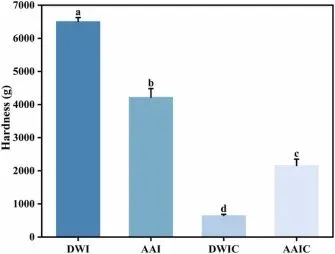
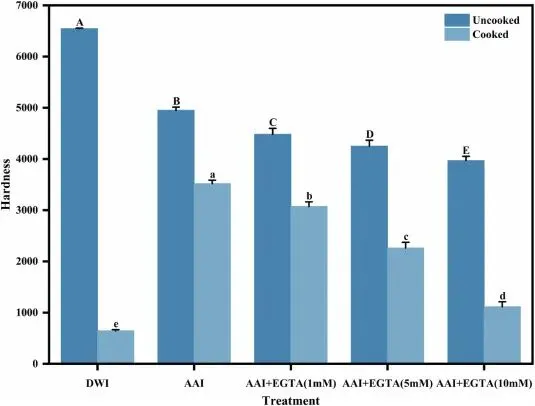
0.4% 乙酸预处理的胡萝卜片经 100℃、30 分钟热处理后,硬度达到 2162g,约为蒸馏水浸泡对照组(650g)的 3.3 倍,显著抑制热加工导致的组织软化,质构保留效果优异。
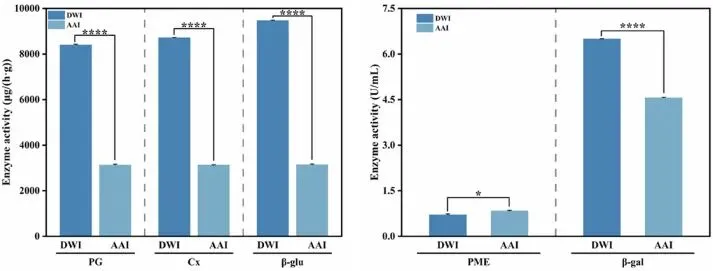
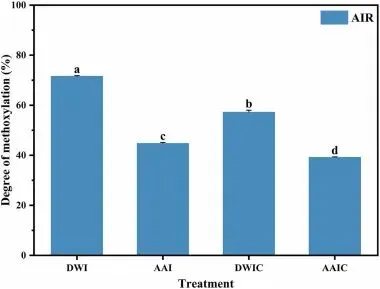
乙酸可显著抑制纤维素酶、β- 葡萄糖苷酶、β- 半乳糖苷酶等细胞壁降解酶活性,阻断细胞壁多糖主链与侧链的降解路径;同时上调果胶甲酯酶(PME)活性,高效催化果胶去酯化,降低果胶甲酯化程度,为钙结合提供充足位点。
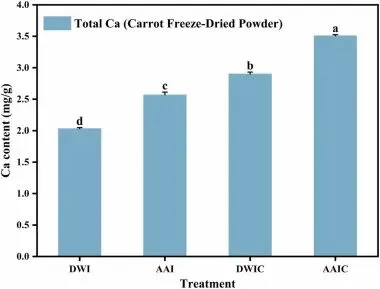
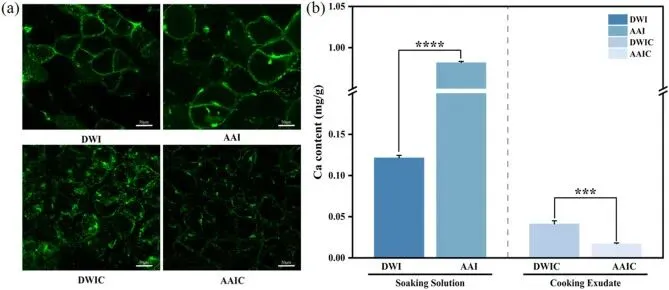
乙酸促进胡萝卜内源游离钙离子向结合态转化,去酯化果胶与钙离子通过 “蛋盒模型” 形成不溶性果胶酸钙三维网络;热处理过程中该交联结构稳定存在,有效减少钙离子向蒸煮液流失,提升细胞壁结构强度。
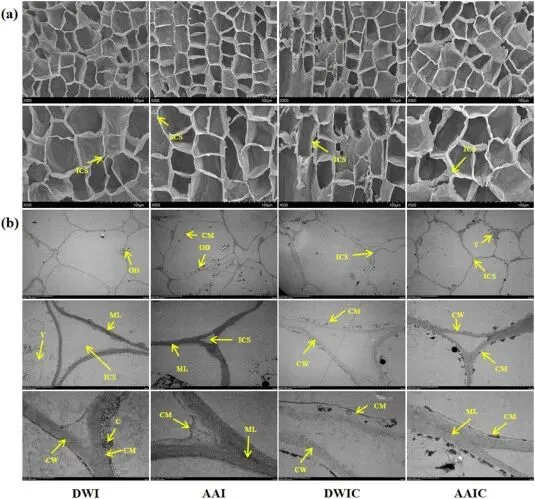
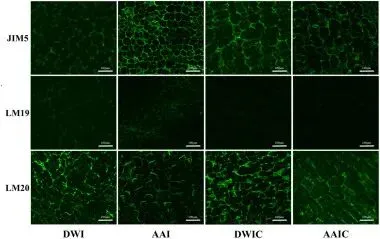
免疫荧光与电镜观测证实,乙酸处理使胡萝卜细胞壁形成连续致密的低酯果胶网络,细胞间黏附力增强,热加工后细胞分离、细胞壁塌陷与变形程度显著降低;同时抑制果胶 β- 消除反应,稳定细胞壁多糖组分分布。
Fig. 1. Effect of different treatment conditions on the thermal processing hardness of Carrots. DWI: distilled water immersion for 9 h; AAI: 0.4% acetic acid immersion for 9 h; DWIC: cooked DWI (100 °C, 30 min); AAIC: cooked AAI (100 °C, 30 min). Different letters indicate significant differences (p < 0.05).
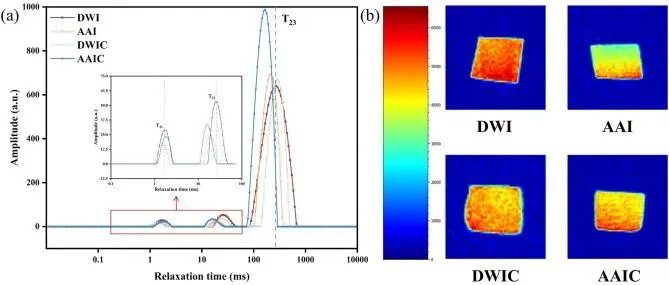
Fig. 2. (a) Hydrogen proton transverse relaxation behavior of carrot slices under different treatment conditions, as determined by low-frequency nuclear magnetic resonance (LF-NMR). (b) Hydrogen distribution in carrots under different treatment conditions. DWI: distilled water immersion for 9 h; AAI: 0.4% acetic acid immersion for 9 h; DWIC: cooked DWI; AAIC: cooked AAI.
Fig. 3. Effects of different treatment conditions on the activity of key cell wall degradation enzymes in carrots. PME: pectin methylesterase; PG: polygalacturonase; Cx: cellulase; β-glu: β-glucosidase; β-gal: β-galactosidase. DWI: distilled water immersion for 9 h; AAI: 0.4% acetic acid immersion for 9 h. Note: Fig. 3(a): The activities of PG, Cx, and β-glu are expressed as the activity per unit fresh tissue weight (μg/(h·g)); Fig. 3(b): The activities of PME and β-gal are expressed as the activity concentration of the enzyme extract (U/mL).
Fig. 4. Degree of methoxylation of pectin in carrot alcohol-insoluble residue under different treatment conditions. Different lowercase letters indicate significant differences between treatments (p < 0.05).
Fig. 5. (a) Scanning electron microscope images of carrot slices from different treatment groups, observed at magnifications of 300 × and 500 × . Abbreviations: ICS, intercellular space. (b) Representative TEM images of carrot tissue and cell walls under different treatments. Abbreviations: CW, cell wall; CM, cell membrane; ICS, intercellular space; ML, middle lamella; OD, osmium droplet; V, vacuole; C, chloroplast. DWI: distilled water immersion for 9 h; AAI: 0.4% acetic acid immersion for 9 h; DWIC: cooked DWI; AAIC: cooked AAI.
Fig. 6. Representative immunofluorescence images of carrot cell walls under different treatments. JIM5 recognizes linear, medium-to-low esterified pectin; LM19 labels highly deesterified or near-acidic pectin; LM20 specifically binds highly methyl-esterified pectin. DWI: distilled water immersion for 9 h; AAI: 0.4% acetic acid immersion for 9 h; DWIC: cooked DWI; AAIC: cooked AAI.
Fig. 7. Total calcium content (mg/g) in freeze-dried carrot powder under different processing conditions. DWI: distilled water immersion for 9 h; AAI: 0.4% acetic acid immersion for 9 h; DWIC: cooked DWI; AAIC: cooked AAI.
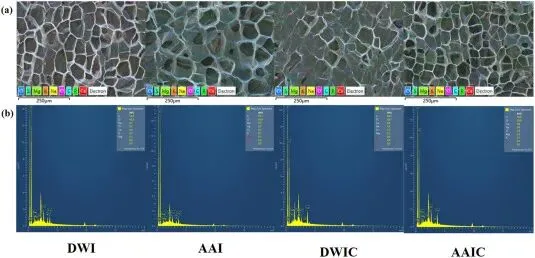
Fig. 8. (a) Elemental distribution (C, O, Na, Cl, Ca, K, Mg, P, S) in carrot slices under different treatments. (b) Representative SEM-EDS cross-sectional image of carrot slices. DWI: distilled water immersion for 9 h; AAI: 0.4% acetic acid immersion for 9 h; DWIC: cooked DWI; AAIC: cooked AAI.
Fig. 9. (a) Distribution of free calcium in Fluo-4 AM-labeled carrot slices under different treatment conditions. (b) Calcium ion loss via outward migration (soaking solution and cooking exudate). DWI: distilled water immersion for 9 h; AAI: 0.4% acetic acid immersion for 9 h; DWIC: cooked DWI; AAIC: cooked AAI.
Fig. 10. Effect of calcium ion chelating agent (EGTA) on the hardness of acetate-treated carrots. DWI: distilled water immersion for 9 h; AAI: 0.4% acetic acid immersion for 9 h; DWIC: cooked DWI; AAIC: cooked AAI.
https://doi.org/10.1016/j.foodhyd.2026.112796
免责声明:「原创」仅代表原创编译,水平有限,仅供学术交流,本平台不主张原文的版权,如有侵权,请联系删除。文献解读或作者简历如有疏漏之处,我们深表歉意,请作者团队及时联系《食探未来》主编(微信号:shitanweilai8077),我们会在第一时间进行修改或撤稿重发,感谢您的谅解!



 10个月宝宝每天需要喝多少奶粉?